


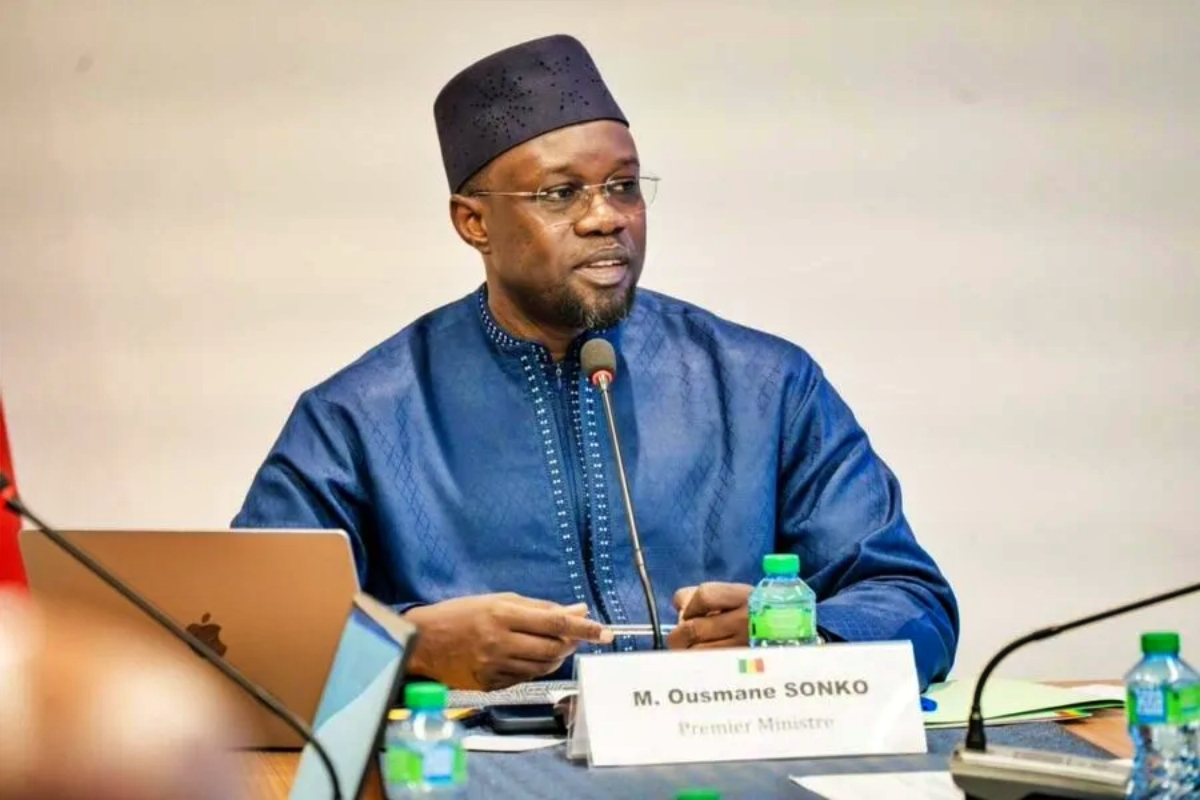
Gambiaj.com – (DAKAR, Senegal) – Lawyers for Ousmane Sonko have filed a 16-page submission before the Supreme Court of Senegal seeking a review of the defamation case that opposed the Senegalese prime minister to former minister Mame Mbaye Niang, in a move widely seen as part of an effort to remove legal hurdles that could threaten his eligibility for the 2029 presidential election.
The request aims at securing the outright annulment of the ruling delivered by the Dakar Court of Appeal on May 8, 2023. In that decision, Sonko – then an opposition leader and head of the PASTEF party – was sentenced to a six-month suspended prison term and ordered to pay 200 million CFA francs in damages to Niang in a defamation dispute.
The ruling, which became final, effectively rendered Sonko ineligible to contest the 2024 presidential election. Now, however, the legal battle has taken on new significance, with the prime minister’s camp seeking to ensure that no legal obstacle prevents him from running in the 2029 presidential race.
Legal Strategy to Reopen the Case
Sonko’s legal team argues that their request for revision is justified under Article 92.4 of the organic law governing the Supreme Court, which allows a case to be reopened if a new fact emerges that was unknown during the original proceedings.
According to the lawyers, cited by the Senegalese newspaper Les Échos, such a new element exists in the form of a report by the Inspection Générale des Finances (IGF). They claim the document constitutes a previously unavailable piece of evidence, as it was produced by a legitimate oversight body and bears the signatures of competent inspectors.
On the substance of the case, the defense maintains that the IGF report supports Sonko’s claims by confirming irregularities linked to the supervisory authority at the time, namely Mame Mbaye Niang. The lawyers argue that the absence of the report during the initial trial distorted the judgment and now raises what they describe as “serious doubt” about Sonko’s conviction.
Amnesties and Civil Claims
The defense also rejects suggestions that the adoption of an amnesty law makes the legal challenge meaningless. Sonko’s lawyers contend that such legislation cannot undermine the rights of third parties.
Since Niang is still pursuing damages linked to the civil component of the case, they argue that Sonko retains the legal right to contest the merits of the conviction in order to protect both his reputation and his financial interests.
For that reason, the defense is asking the Supreme Court to declare the appeal filed by the Prosecutor General admissible, annul both the Court of Appeal ruling and the original judgment, and refer the case to a new appellate court for a fresh trial that would incorporate the IGF report as a central piece of evidence.
Opposition Rejects “New Evidence” Claim
Allies of Niang, however, strongly dispute the claim that any new element exists. They argue that the IGF report was already known at the time of the trial and that Sonko himself read excerpts from it during a widely publicized press conference.
According to Niang’s camp, the report was referenced in the judgments that led to Sonko’s conviction. They further contend that a later endorsement of the document by finance minister Cheikh Diba – a political ally of the prime minister – cannot qualify as a “new fact” under the law because it occurred after the trial.
In their view, a new element must be a fact that existed during the proceedings but was unknown to the court at the time. They therefore dismiss the legal maneuver as an attempt to reopen a case that has already been conclusively adjudicated.
High Stakes for 2029
The outcome of the Supreme Court’s decision could have major political consequences in Senegal. If the ruling against Sonko were annulled, it could remove a key legal argument that some observers say might threaten his eligibility for the 2029 presidential election.
For Sonko and his supporters, the appeal represents a crucial step in ensuring that the leader of PASTEF faces no judicial barrier should he decide to seek the presidency in the next electoral cycle.




Leave a Reply