


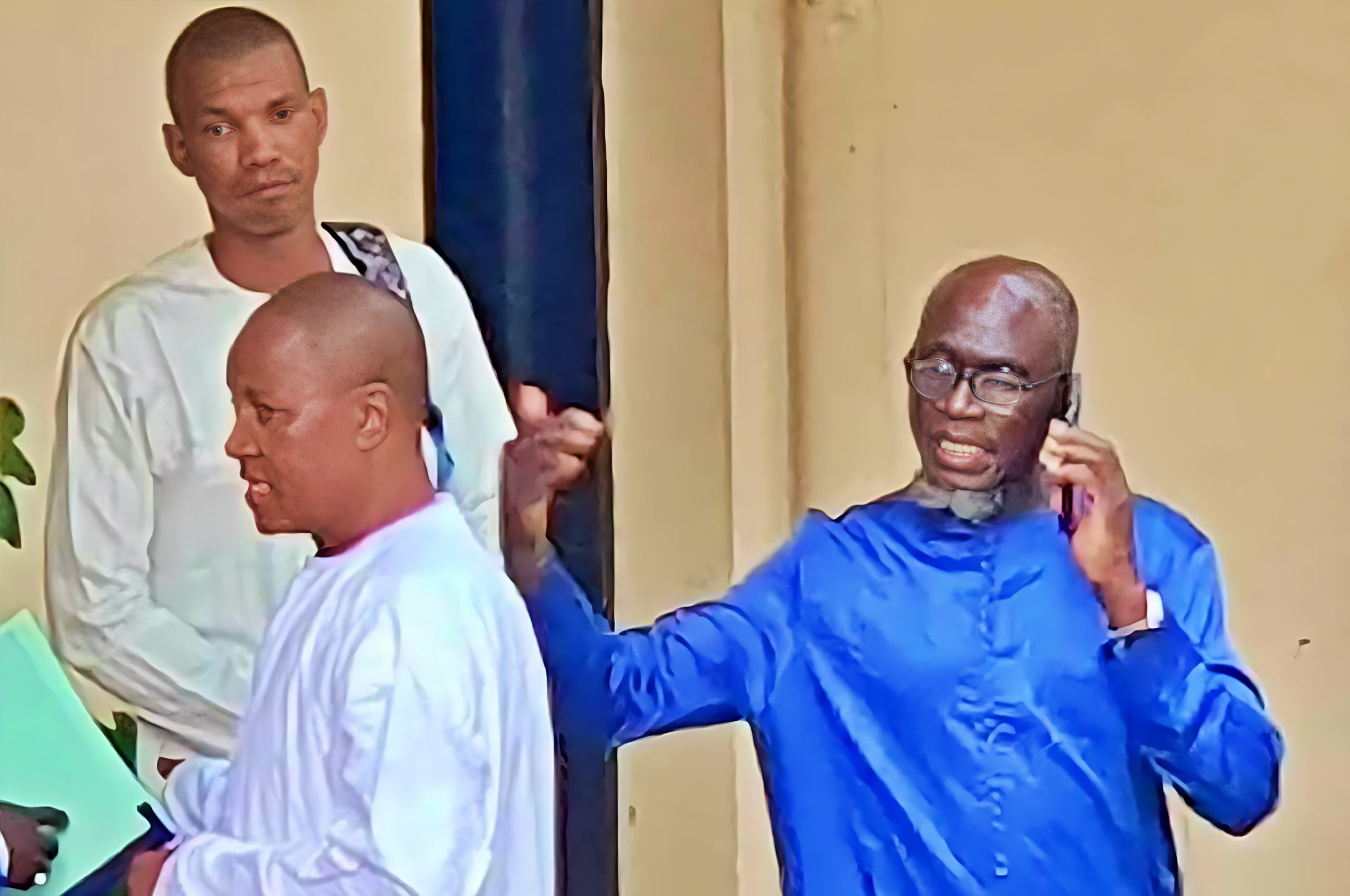
Gambiaj.com – (BANJUL, The Gambia) – Justice Ebrima Jaiteh of the High Court of The Gambia has admitted into evidence photographs showing the swollen feet and hand of former program manager of the National Malaria Control Program, Balla Kandeh, overruling objections raised by the prosecution in the ongoing criminal trial.
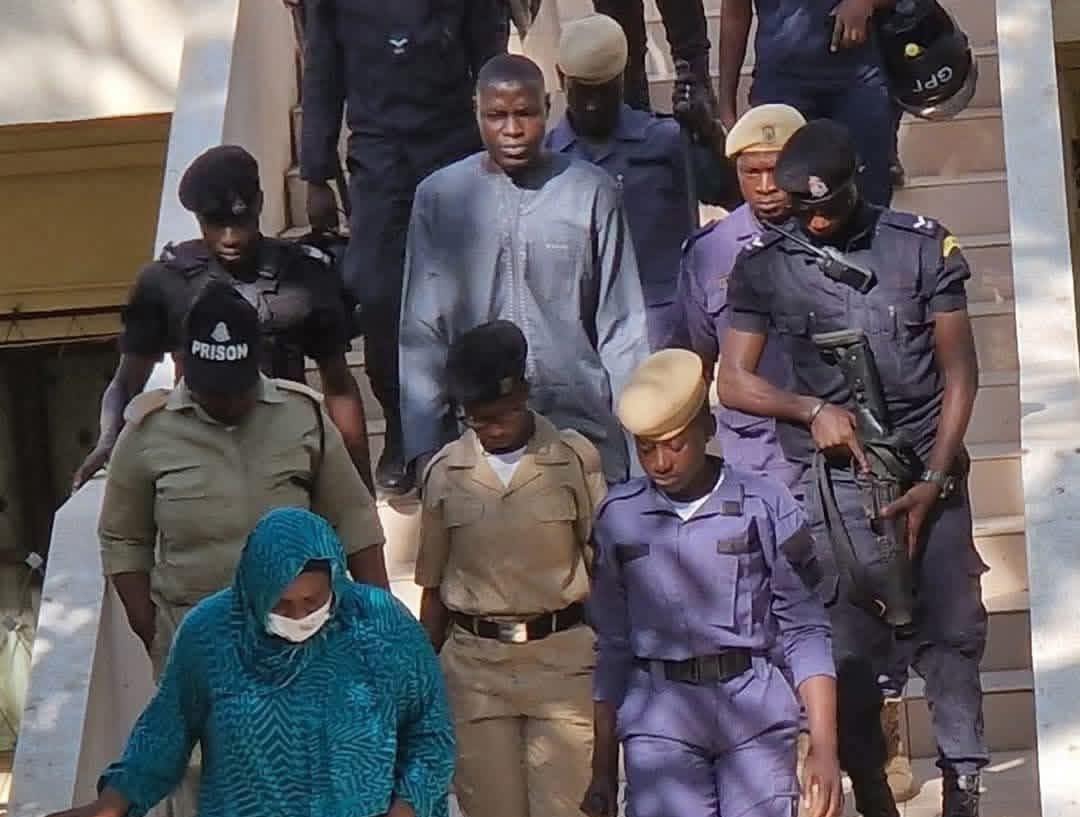
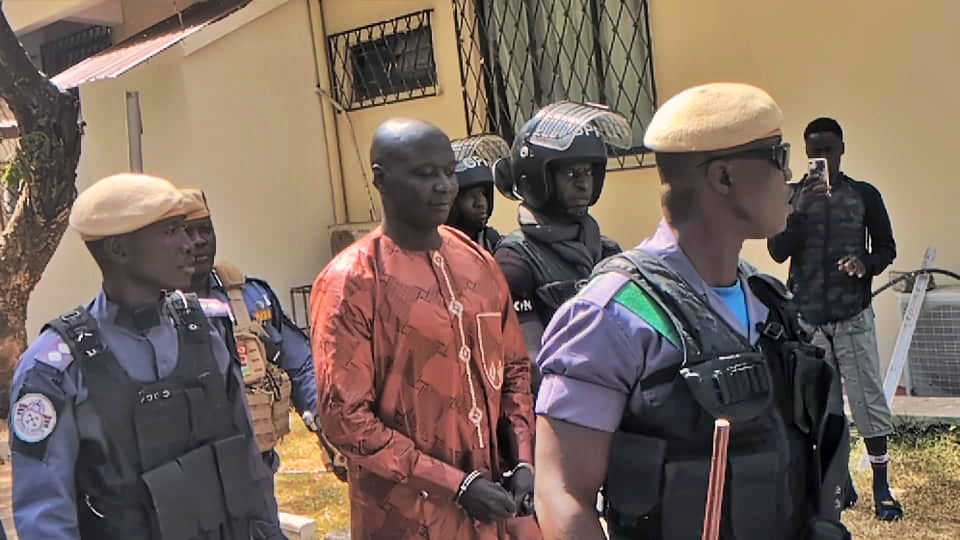
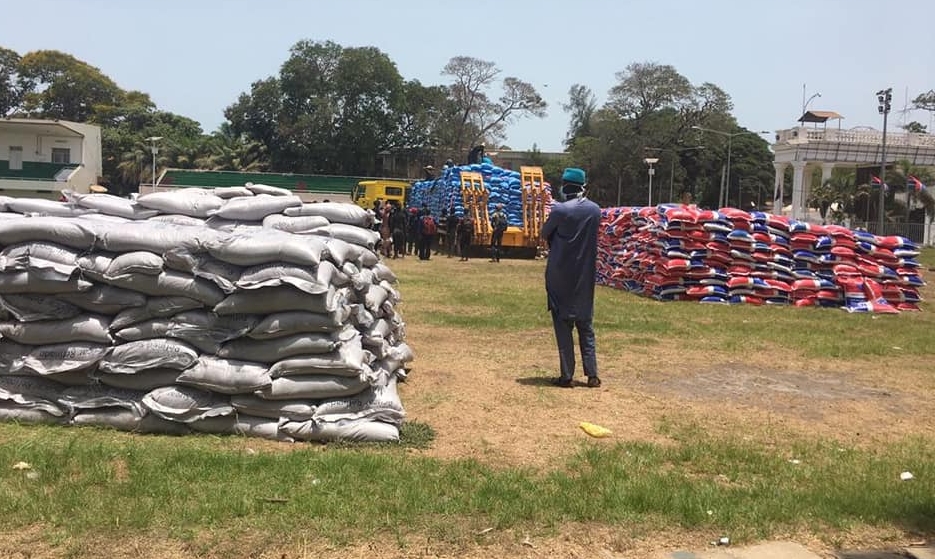
Kandeh, together with two other accused persons, is facing charges of obtaining money by false pretenses, forgery, economic crimes, and theft linked to transactions under the Global Fund malaria grant between 2018 and 2020. The grant was intended to support public health interventions in the country.
The issue arose during the testimony of Kandeh as defense witness one (DW1). His counsel, K. Jallow, applied to tender five printed photographs on an A4 sheet depicting what the witness described as his swollen feet and hand, asking the court to admit them as defense exhibits.
However, the application was opposed by the Director of Public Prosecutions (DPP), who argued that the photographs appeared to have been extracted from a video recording.
The prosecution further contended that the witness through whom the images were being tendered was not the maker of the document and therefore could not properly introduce them as evidence.
In response, defense counsel Jallow maintained that the prosecution had not cited any legal authority to support its objection. He also argued that Kandeh himself had taken the photographs and was therefore the proper person to identify and tender them before the court.
Delivering his ruling, Justice Jaiteh said the starting point for determining the admissibility of evidence is Section 3 of the Evidence Act 1994, which establishes the principle of relevance.
Under the law, evidence may be given in proceedings to establish the existence or non-existence of facts in issue, as well as other facts considered relevant to the case.
The judge noted that if evidence is relevant to a matter before the court, it is generally admissible unless specifically excluded by law.
Justice Jaiteh also referred to Section 98(4) of the Evidence Act, which recognises that where documents are produced through a uniform mechanical process such as photography, each copy constitutes primary evidence of its contents.
Section 99 of the Act also allows copies produced through mechanical processes to be admitted as secondary evidence where their accuracy is ensured.
According to the court, photographs fall within the category of documentary evidence and may therefore be proven either by producing the original image or a reliable mechanical reproduction.
During his testimony, Kandeh told the court that his hands and feet were swollen at the time police recorded his cautionary statements. He said the condition made it difficult for him to write, prompting a police officer to record the statement on his behalf. Kandeh further alleged that he was compelled to give the statement with the understanding that he would not be released from custody if he refused.
He also testified that after his release he visited the Medicare Clinic Annex, where he was medically examined and issued a prescription. That document had earlier been admitted into evidence as Defence Exhibit D6.
Justice Jaiteh observed that the photographs showing the swollen condition of Kandeh’s limbs were directly connected to the defence narrative and were intended to demonstrate his physical condition at the time the statement was recorded.
“Consequently, the photographs have probative value as they tend to support the defence claim that the witness was physically incapacitated at the time his cautionary statement was recorded,” the judge stated.
Addressing the prosecution’s argument that the witness was not the maker of the photographs, the court noted that Kandeh had testified that he personally took the images. If accepted, Justice Jaiteh said, this would make him the maker of the photographs.
The judge further explained that even where a witness is not the photographer, the law does not necessarily require the maker to be called before a document can be tendered. What is required is that a competent witness can identify the image and confirm that it accurately represents what it purports to show.
Justice Jaiteh also dismissed concerns about the photographs being printed on A4 paper, noting that printing digital images onto paper constitutes a mechanical reproduction process recognized under the Evidence Act.
He added that the prosecution’s claim that the images may have been extracted from a video recording did not automatically render them inadmissible. Even in such circumstances, the judge said, the images would still qualify as mechanical reproductions within the meaning of the law.
“At this stage, the court is concerned primarily with admissibility and not weight,” Justice Jaiteh stated, adding that questions about the reliability or authenticity of the photographs could be explored during cross-examination or considered when evaluating the evidence at the conclusion of the trial.
The court further noted that the photographs were not being introduced in isolation but were intended to support Defence Exhibit D6, the medical prescription note issued by the Medicare Clinic Annex following Kandeh’s consultation.
Justice Jaiteh therefore ruled that the photographs were relevant to the issues before the court and that the witness had sufficiently identified them and explained the circumstances under which they were taken.
The objection raised by the DPP was accordingly overruled, and the five photographs depicting the swollen feet and hand of Balla Kandeh were admitted into evidence as Defence Exhibit D7 (a) to (e).
The judge added that the probative value and evidential weight of the photographs would ultimately be determined during the court’s final judgment after considering the totality of the evidence.





Leave a Reply