


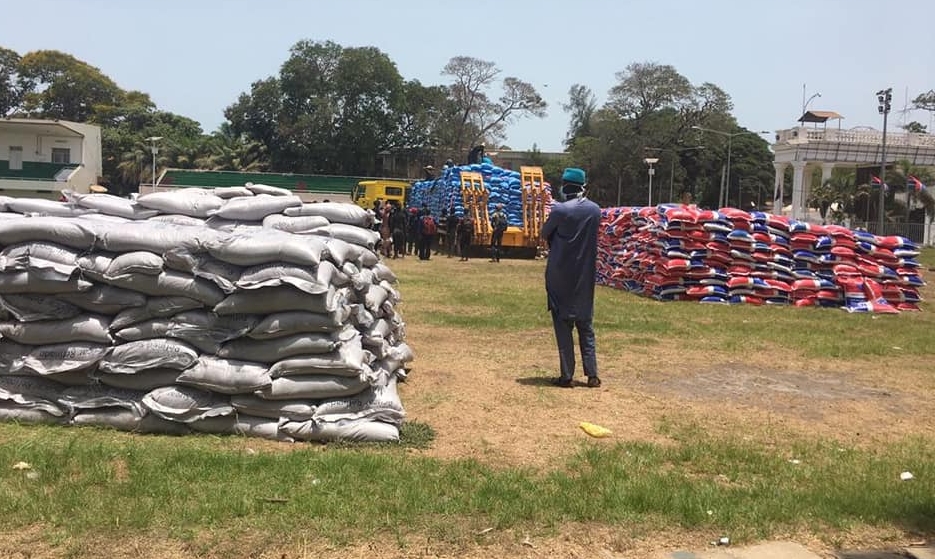
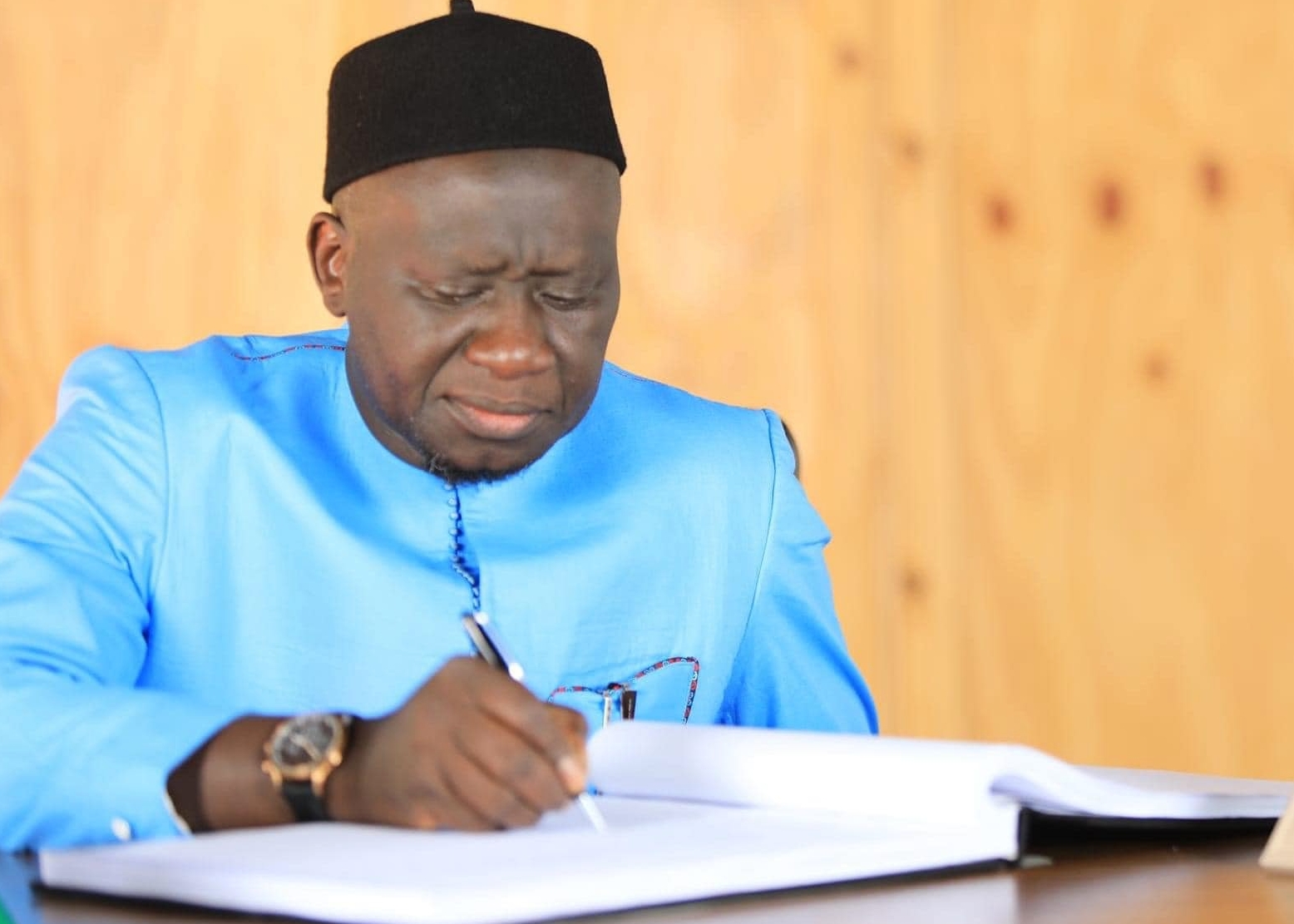
Gambiaj.com – (BANJUL, The Gambia) – The Chief Executive Officer of Winwin Oil Company, Alagjie Kebbeh, on Monday began presenting his defence before the High Court, claiming he is being unfairly targeted in connection with the alleged D64 million rice scandal.
Kebbeh, who faces charges of economic crime, theft, obtaining goods by false pretences, and cheating, told the court that the case against him is misplaced because the transactions under scrutiny were conducted through his company rather than in his personal capacity.
The trial followed a ruling by the High Court that the prosecution had established a prima facie case requiring Kebbeh to open his defense after his lawyer, Counsel K. Jallow, unsuccessfully applied for a no-case submission.
According to the amended information before the court, the State alleges that between 2020 and 2021 Kebbeh intentionally refused or failed to supply the government of The Gambia with 41,404 bags of 50 kg rice, an outstanding portion of 58,500 bags allegedly paid for by 39 government-financed vendors.
Prosecutors further claim that Kebbeh stole the 41,404 bags of rice belonging to the government and obtained D64,080,000 from the vendors by falsely representing that he had secured 58,500 bags of rice intended for government supply.
The State also alleges that he fraudulently induced the government to pay the vendors under the pretext that the rice had already been purchased and stored for collection.
Defense Alleges Unfair Prosecution
Taking the stand as the first defense witness, Kebbeh testified that during the period in question he was serving as CEO of Winwin Oil Company (Gambia) Limited and had administrative responsibility for the company’s day-to-day operations.
He told the court that around 2020 several vendors approached the company to procure rice intended for supply to the World Food Programme (WFP) on their behalf. According to him, Winwin then engaged a local supplier because of the limited time available to fulfill the order.
Kebbeh said the issue leading to his prosecution only arose in July 2023 when he was arrested at his home and asked to report to police headquarters in Banjul. He testified that he spent a month in police custody during the investigation before being granted bail under conditions approved by the Solicitor General’s office.
“After one month I was given bail. I reported three times a week at police headquarters,” Kebbeh told the court.
He further alleged that he was later summoned again to police headquarters and taken to the office of the Inspector General of Police, where he was asked to sign an agreement with the government on how to repay money allegedly not used to procure the rice.
Kebbeh said he refused to sign the document without consulting his lawyer.
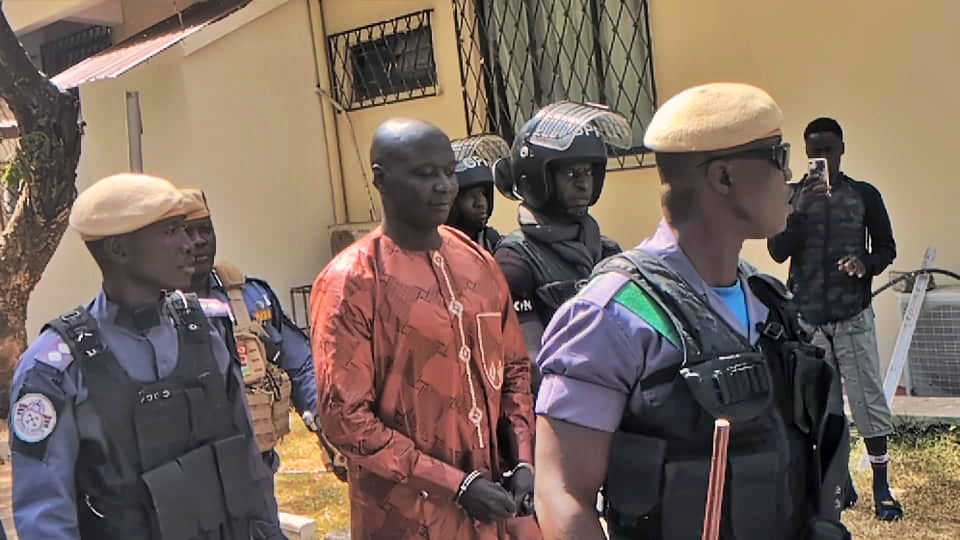
“After refusing to sign that agreement, I went into another prolonged detention for three months at police headquarters,” he testified, adding that during the last month of that detention, two armed Police Intervention Unit officers were assigned to guard him inside the station.
Procurement Process and Supplier Dispute
The accused also told the court that Winwin Oil Company has another shareholder, Buba Khan, though he described Khan as a dormant partner not involved in the company’s day-to-day operations.
Explaining the procurement process, Kebbeh said a committee comprising representatives of Winwin, the Ministry of Trade, the Ministry of Agriculture, and WFP inspected the rice at a store in Banjul before WFP requested samples for quality testing in Dakar.
According to him, the samples were later approved by WFP and the confirmation was formally communicated to the Minister of Trade, after which government payments to vendors commenced. The vendors, he said, subsequently paid WinWin.
Kebbeh testified that Winwin transferred the funds to a supplier identified as Toni, stating that about D44.1 million was paid to the supplier’s account. He added that the supplier initially delivered 854 metric tonnes of rice but failed to complete the remaining supply.
He also told the court that the supplier had provided a bank guarantee of D54 million through Bloom Bank, which could have been invoked in the transaction.
Kebbeh further argued that the Director of Public Prosecutions should have charged the company rather than him personally.
“What is even more surprising is that the office of the Director of Public Prosecution does not bring Winwin as a party to the charges. They charged me personally, and because of that I spent four months in police custody,” he told the court.
He also disputed claims that funds for the rice supply were paid to Winwin, insisting that payments were instead made to accounts belonging to vendors involved in the transaction.
“Not even a single coin was paid to Winwin,” he testified.
Due to time constraints, the presiding judge adjourned the proceedings, with Kebbeh’s testimony expected to continue on Tuesday.








Leave a Reply