


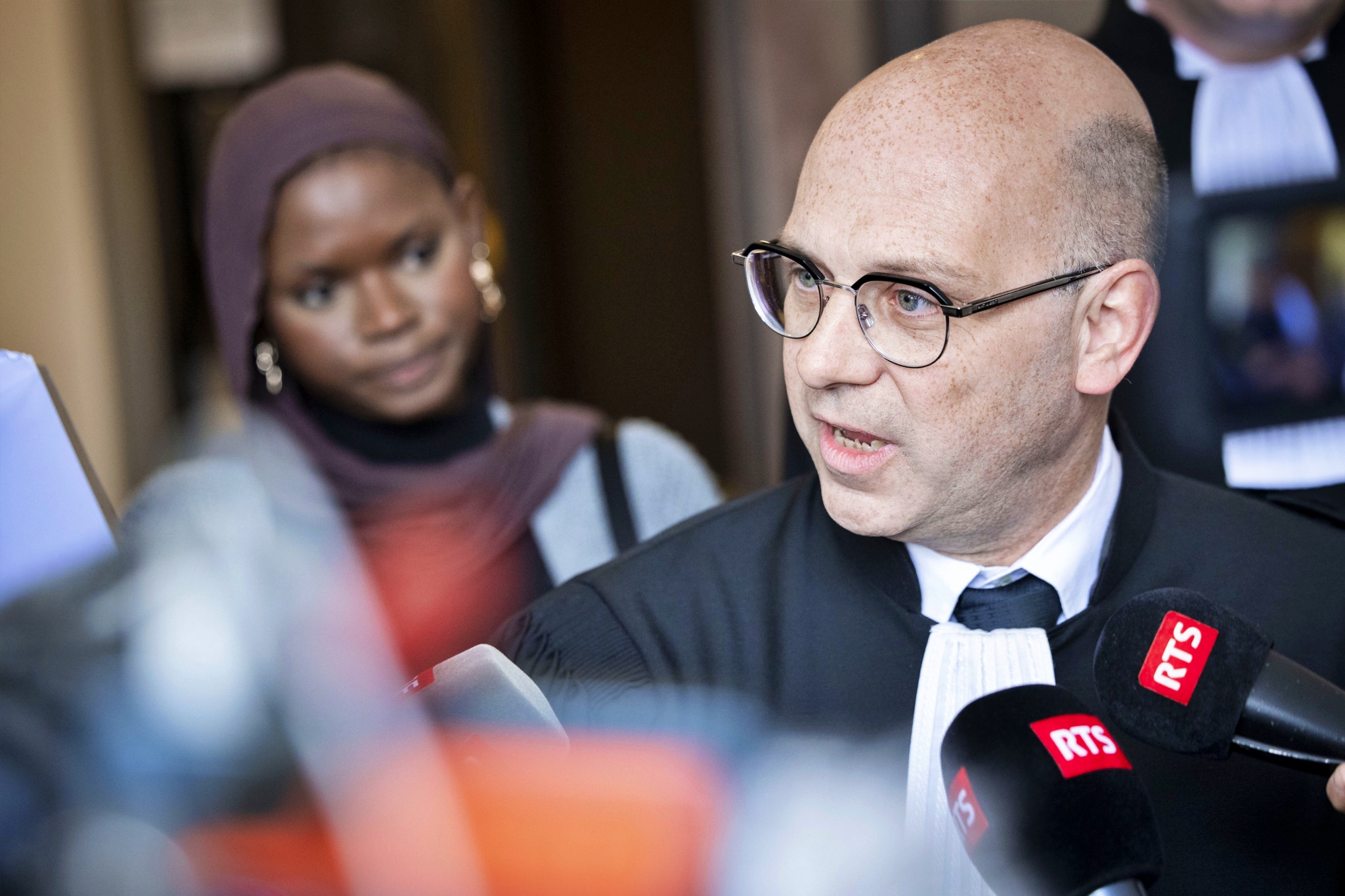
Gambiaj.com – (BELLIZONA, Switzerland) – Appeal proceedings in the case of former Gambian Interior Minister Ousman Sonko opened Monday in Bellinzona, with his defense team renewing objections to Switzerland’s jurisdiction over parts of the case.
On the first day of hearings, Sonko’s lawyers argued that Swiss authorities should not prosecute alleged crimes committed between 2000 and 2006, raising procedural concerns similar to those presented during the initial trial that led to his conviction.
Sonko was sentenced in May 2024 by Switzerland’s Federal Criminal Court to 20 years in prison for crimes against humanity linked to abuses committed during the rule of former Gambian president Yahya Jammeh.
Defense Challenges Retroactive Jurisdiction
During preliminary arguments, Sonko’s lawyer, Philippe Curat, contested what he described as an unlawful modification of the indictment during the first-instance trial and questioned the retroactive application of Swiss universal jurisdiction.
Curat argued that Switzerland’s legal framework allowing prosecution for crimes against humanity only came into force in 2011, the same year such crimes were formally incorporated into Swiss law.
According to the defence, the principle that crimes against humanity are not subject to statutes of limitation cannot be applied retroactively to acts committed before the relevant legal provisions entered into force.
“There is no legal provision that applies before January 1, 2011,” Curat told the court. “For what happened after that date, I have no problem. But for what happened before, we face a problem of retroactivity.”
He also argued that customary international law does not provide a sufficient legal basis for Swiss courts to prosecute alleged offenses committed prior to 2011, saying there is no long-standing and established legal practice supporting such jurisdiction.
The defence further requested that appeals lodged by the plaintiffs be dismissed on procedural grounds.
Victims’ Lawyers Stress Importance of Case
Lawyers representing the victims pushed back against the defense’s arguments, emphasizing the significance of the proceedings for those who claim to have suffered abuses under Jammeh’s regime.
“It is important that the judges realize that there are people concerned who are here, that they see directly the people for whom this procedure is very important,” said Fanny de Weck, who represents two plaintiffs in the case.
“These are opposition figures who were arrested and tortured,” she added at the opening of the appeal hearing.
Court to Decide Scope of Proceedings
The prosecution and lawyers for the victims are expected to respond to the defence’s procedural objections on Tuesday.
After hearing those submissions, the court will decide whether the case will proceed in its current form or whether certain elements, particularly those related to acts allegedly committed before 2011, should be excluded from the proceedings.
In its 2024 ruling, the Swiss Federal Criminal Court concluded that the crimes attributed to Sonko, including killings, unlawful ddetention,and torture, were part of a systematic attack against the Gambian civilian population.
The judges found that during his tenure as Interior Minister, Sonko was part of a coordinated system that silenced political opponents and journalists while intimidating the broader population.
Following his dismissal in September 2016 by Jammeh, Sonko fled to Switzerland, where he applied for asylum and lived in an asylum seekers’ center until his arrest.






Leave a Reply