


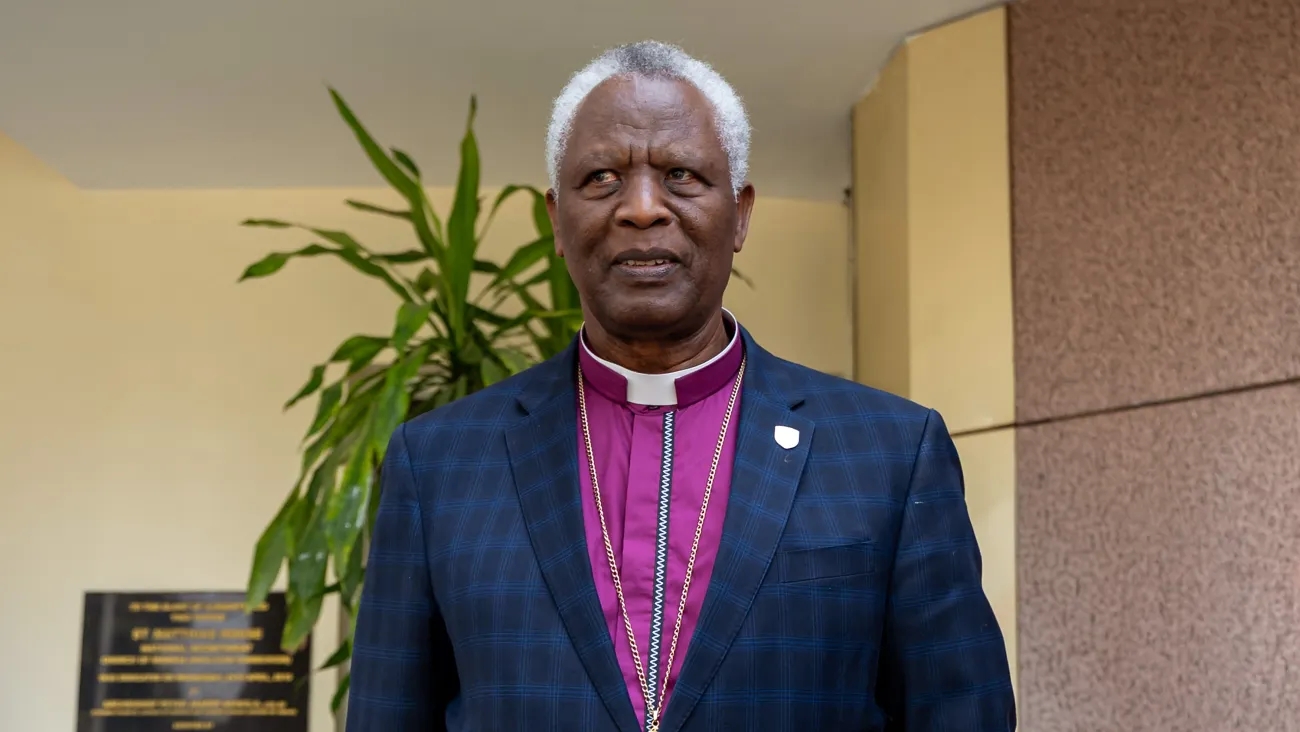
Gambiaj.com – (ABUJA, Nigeria) – A historic rebellion is unfolding within the global Anglican Church as African bishops spearhead a movement challenging the centuries-old authority of the Archbishop of Canterbury and the traditional leadership of the Church of England.
The rupture crystallized last week in Abuja, Nigeria, when conservative Anglican leaders affiliated with the Global Anglican Future Conference (GAFCON) announced the creation of a new global governing body for Anglicans.
The newly established council will be led by Rwandan archbishop Laurent Mbanda, marking the first time a figure from Africa has been placed at the center of a rival global structure within Anglicanism.
The move directly challenges the historic authority of the Archbishop of Canterbury, currently Sarah Mullally, who traditionally serves as the spiritual leader of the worldwide Anglican Communion.
According to figures reported by French newspaper Le Monde, the Abuja gathering brought together 347 bishops out of the Communion’s roughly 650 bishops worldwide, representing 27 of the Church’s 42 provinces. The scale of participation signals one of the most serious internal crises in Anglicanism in decades.
African Leadership at the Center
The rebellion is being driven largely by African church leaders, reflecting the demographic transformation of Anglicanism. Of the approximately 100 million Anglicans worldwide, about 63.5 million now live in Africa, giving the continent enormous influence within the church.
African clergy have long criticized what they see as theological liberalization in Western churches. The tensions reached a breaking point following the October 2025 appointment of Mullally as the first woman Archbishop of Canterbury.
Nigerian archbishop Henry Ndukuba described the appointment as “devastating,” according to reports cited by Le Monde. Conservative leaders argue that the Bible requires male-only episcopal leadership.
GAFCON spokesman Justin Murff said the movement believes the majority of Anglicans still uphold the view that the episcopate should remain exclusively male.
A Crisis Decades in the Making
The current confrontation is the culmination of tensions that have been building for nearly two decades. GAFCON itself was created in 2008 in Jerusalem by conservative Anglican leaders who believed the church was drifting away from biblical orthodoxy.
Disputes intensified over several issues, including the ordination of women, approved in the Anglican Communion in 1992, and the blessing of same-sex couples in some Western dioceses.
For conservative bishops, the conflict goes beyond gender or sexuality and instead concerns the authority guiding the church.
Murff summarized the core question facing the Anglican Communion as whether “Scripture or contemporary culture” should shape the church’s teachings.
Global Power Shift
The confrontation also reflects a broader shift in global Christianity. While church attendance has steadily declined in Europe and North America, Anglican congregations in Africa have grown rapidly, transforming the continent into the faith’s demographic center.
This growth has strengthened calls among African leaders for greater independence from Western theological trends, which they often view as culturally imposed.
Despite the dramatic challenge to Canterbury’s authority, the dissident bishops have stopped short of declaring a full schism.
Historian Pauline Piettre noted that members of GAFCON themselves do not yet describe the situation as a formal break with the Anglican Communion. Instead, they frame the conflict as a struggle over the future identity of the church.
For its part, the Church of England has so far appealed for unity as the crisis unfolds amid what some observers describe as a profound “civilizational fracture” between Western and Global South interpretations of Anglican faith and authority.






Leave a Reply