


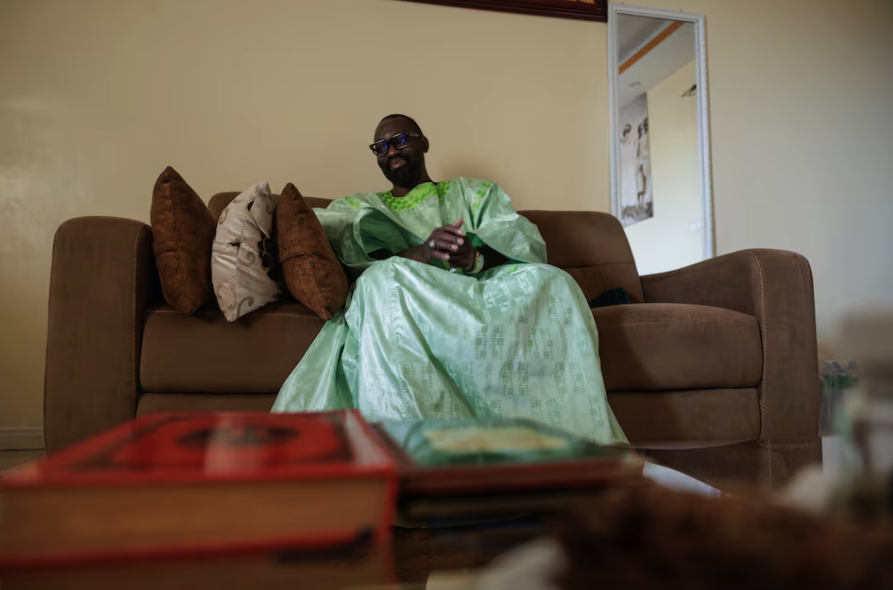
Gambiaj.com – (DAKAR, Senegal) – A U.S.-based conservative advocacy group has been advising Senegalese activists campaigning for tougher anti-LGBT legislation in a collaboration that highlights the growing influence of transnational “pro-family” movements across Africa.
According to a Reuters report, the Massachusetts-based organization MassResistance has been working with the Senegalese coalition “And Samm Jikko Yi” to discuss campaign strategies, mobilization, and advocacy aimed at strengthening laws against homosexuality.
The partnership comes as Bassirou Diomaye Faye’s government and Prime Minister Ousmane Sonko oversee the passage of a new law tightening penalties for same-sex relations in Senegal.
New Law Raises Penalties
Senegalese lawmakers last week approved legislation that doubles the maximum prison sentence for same-sex sexual acts to 10 years while also criminalizing what authorities describe as the “promotion” of homosexuality.
The country’s previous penal code provision punished “acts against nature” with prison terms of up to five years.
The new law fulfills campaign promises made by President Faye and Prime Minister Sonko during the 2024 election campaign to introduce stricter legislation addressing homosexuality.
While Reuters said it could not determine the direct impact of the American group’s involvement on the parliamentary vote, analysts say it marks the first publicly known case of a U.S. organization assisting a successful push for anti-LGBT legislation in Africa since the return of Donald Trump to the White House in January 2025.
Strategy Talks With Senegalese Activists
Leaders of “And Samm Jikko Yi” said they began lobbying for a stronger law as far back as 2020, arguing that Senegal’s existing legal provisions were insufficient.
According to the network’s former coordinator and honorary president, Ababacar Mboup, the group contacted MassResistance in December 2024 to discuss how to advance the legislative effort and explore the possibility of establishing a local chapter of the U.S. organization in Senegal.
The discussions reportedly focused on awareness campaigns, mobilizing grassroots support and engaging Senegalese authorities on the proposed law.
MassResistance describes its mission as promoting “pro-family laws and policies” and opposing what it calls the normalization of LGBT rights.
Its field director Arthur Schaper told Reuters that the group believes the global environment for such advocacy has improved under the current U.S. administration.
Expanding Influence Beyond Senegal
The organization has also been active in Ghana, where lawmakers are considering new legislation that would increase penalties for same-sex relations and introduce jail sentences for people accused of promoting or supporting LGBT activities.
Activists in Ghana said they had exchanged educational materials and held discussions with MassResistance on strategies to counter what they view as the spread of LGBT rights campaigns.
Observers say such cross-border collaborations illustrate the growing coordination between conservative advocacy networks in the United States and Africa.
Health Concerns Raised
However, health experts warn that the tougher law could complicate efforts to combat HIV/AIDS, particularly among vulnerable populations.
Medical workers say fear of arrest could drive men who have sex with men (MSM) underground, making it harder for public health programs to reach them with testing and treatment services.
Although national HIV prevalence in Senegal remains relatively low at around 0.3%, government figures indicate significantly higher rates among MSM, reaching as high as 49% in some parts of Dakar.
Human rights organizations also reported that 27 suspected MSM were arrested in February on charges including “acts against nature” and, in some cases, alleged voluntary transmission of HIV.
Activists say the tightening legal environment has forced some individuals to go into hiding or leave the country for neighboring states such as The Gambia, Mauritania, and Ivory Coast.
The Senegalese government and security authorities have not publicly commented on the reported arrests or the broader concerns raised by health and human rights groups.




Leave a Reply