


Gambiaj.com – (BANJUL, The Gambia) – As The Gambia moves steadily toward the December 2026 presidential election, a new national opinion poll suggests that voter attitudes are crystallizing around a clear set of performance-based concerns, chief among them the cost of living, economic management, and government responsiveness.
Findings from the Center for Policy, Research, and Strategic Studies (CepRass) The Second Series National Opinion Poll indicates that while Gambians remain strongly committed to democratic values, their confidence in how the country is being governed is increasingly strained, creating a volatile electoral environment.
Economy and Cost of Living Dominate Electoral Calculus
The data paints a stark picture of economic dissatisfaction. A commanding 76% of respondents rate the national economy negatively, with only 18% expressing a positive view.
At the center of this discontent is the rising cost of living. About 75% of respondents say the government is handling prices poorly, while 42% identify rising prices as the single most important economic problem facing the country, far ahead of unemployment and agriculture.
This trend signals a decisive shift in electoral behavior: voters are no longer responding primarily to political identity or rhetoric but to tangible economic realities. As the poll notes, “public opinion is becoming explicitly performance-based” ahead of the 2026 vote.
Even at the household level, pressure is evident. Nearly half of respondents (49%) report difficult living conditions, confirming that macroeconomic strain is translating into everyday hardship, an issue likely to weigh heavily on voter decisions.
Governance, Corruption, and Responsiveness Under Scrutiny
Beyond the economy, the poll reveals deep dissatisfaction with governance. Only about 32% of respondents express satisfaction with the state of democracy, while 62% are dissatisfied with overall governance.
Corruption remains a critical flashpoint, with roughly 68% saying the government is handling the fight against corruption badly. At the same time, more than half of respondents believe leaders are not listening to citizens, underscoring a widening gap between government and the electorate.
Land disputes, another politically sensitive issue, are also poorly rated, reinforcing perceptions of weak institutional responsiveness.
Taken together, these findings suggest that accountability and credibility, rather than just policy promises, will be central to voter judgment in December.
Security, Trust, and Rights: A Mixed but Telling Picture
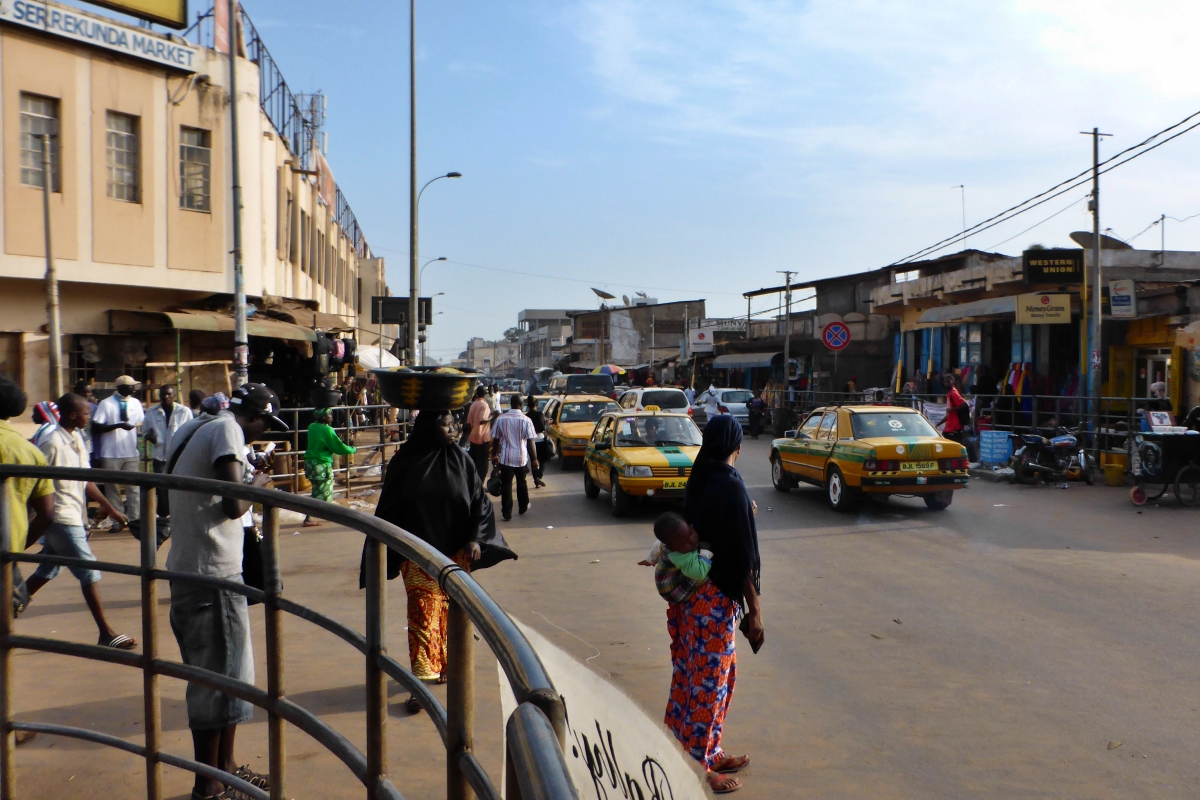
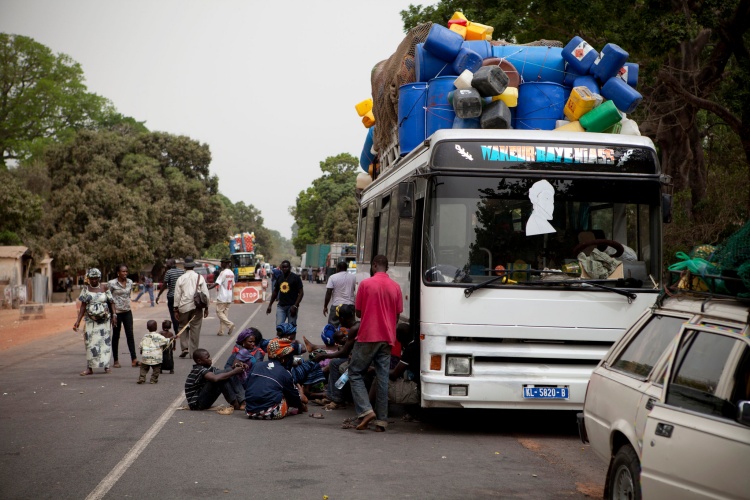
Sayerr Jobe Avenue, the junction towards the Serekunda mosque and the Serekunda police station
Public trust in state institutions varies sharply. While the military enjoys relatively strong confidence (about 65% trust), trust in the police is significantly weaker, with 52% expressing little or no trust.
Concerns about policing are compounded by perceptions of abuse: 66% of respondents believe police brutality occurs at least sometimes, a finding that could influence urban and youth voting patterns in particular.
Yet, despite these concerns, democratic values remain deeply entrenched. Around 90% of Gambians say citizens must be free to criticize the government, and a strong majority consider recent protests justified.
This contrast, strong support for democratic principles but dissatisfaction with their implementation, points to an electorate that is both politically aware and increasingly demanding.
Youth, Participation, and Civic Space Emerging as Election Factors
The poll highlights a growing frustration among young people, with 56% saying they have little or no opportunity to express their views on national issues.
Given the demographic weight of youth voters, this perceived exclusion could become a decisive factor in the election, particularly if opposition or reform-oriented campaigns succeed in mobilizing this segment.
At the same time, widespread support for protests suggests that civic pressure may intensify in the lead-up to the polls.
Foreign Policy Secondary, but Senegal Relations Sensitive
While foreign relations are not a primary electoral issue, public opinion reveals underlying concerns. About 41% rate the government’s foreign policy positively, but uncertainty remains high, indicating limited public engagement with international affairs.
More significantly, 61% of respondents believe relations with Senegal are exploitative of The Gambia, a sentiment that could carry political implications, particularly in border communities and among nationalist-leaning voters.
Diaspora engagement is also viewed negatively, with over half of respondents dissatisfied with government support.
Service Delivery and Everyday Governance Matter
Across key sectors like health, water and sanitation, roads, and employment, public assessments tend to be more negative than positive.
The implication for the election is clear: voters are paying close attention to visible, practical outcomes. Where government delivery is tangible, approval improves; where it is absent or uneven, dissatisfaction deepens.
A Performance-Driven Election Ahead
Overall, the CepRass poll points to a decisive shift in The Gambia’s political landscape. The electorate remains committed to democracy, but increasingly judges leaders based on results rather than rhetoric.
Economic relief, particularly on prices, along with credible anti-corruption measures, improved service delivery, and stronger engagement with citizens, are likely to be the defining issue at the ballot box.
With public sentiment broadly critical but not disengaged, the December 2026 election is shaping up to be less about political loyalty and more about performance, accountability, and the lived realities of Gambian voters.






Leave a Reply