


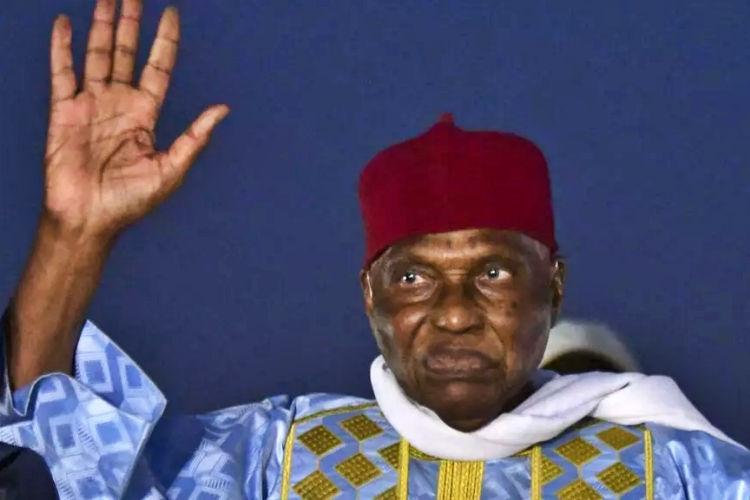
Gambiaj.com – (DAKAR, Senegal) – He was a lawyer before he was a politician, a professor before he was a president, and an opponent of the state long before he became the state. On Friday, May 29, 2026, Senegal marked what few nations ever witness, the 100th birthday of a former head of state who remains very much alive in both body and the national imagination.
Abdoulaye Wade, affectionately known as the “Pape du Sopi,” the Father of Change, turned 100 years old, and the tributes that poured in from across the political spectrum told the story of a man whose life became almost indistinguishable from the modern history of Senegal itself.
A Nation That Is Younger Than the Man It Honours
Perhaps the most striking tribute came from Senegal’s current President, Bassirou Diomaye Faye, who captured in a single observation the extraordinary nature of the day: that the Republic of Senegal, not yet seventy years old, is younger than the man being celebrated.
“He saw it born,” President Faye wrote on his official platforms, “and he helped it grow.” Faye prayed that God would allow Senegalese to keep Wade among them for many years still, closing his message with a simple but heartfelt “Jërëjëf, Président Wade,” a Wolof expression of deep gratitude.
It was a moment of remarkable national introspection, a republic pausing to acknowledge that its founding era is still living among it.
From Opposition Trenches to the Seat of Power
The arc of Abdoulaye Wade’s life reads less like a political biography and more like a historical epic. Born in 1926, he would eventually hold doctorates in law, serve as a university dean, practice as a barrister, and found one of Senegal’s most enduring political parties, the Parti Démocratique Sénégalais (PDS). Yet for much of his adult life, he was not the man in power but the man challenging it.
Former Prime Minister Idrissa Seck, in one of the most expansive tributes of the day, recalled the trials Wade endured as an opposition figure: accusations of possessing Libyan arms, charges of plotting against state security, multiple arrests, and prosecutions for unauthorized demonstrations.
Through four failed presidential bids, Wade never abandoned what Seck described as his defining principle: to reach the palace without stepping over corpses.
That patience was finally rewarded in March 2000, when Wade won Senegal’s presidency at his fifth attempt, a moment that Seck and others described not merely as a political victory but as a foundational event in the democratic history of the African continent. It was the first peaceful transfer of power in independent Senegal.
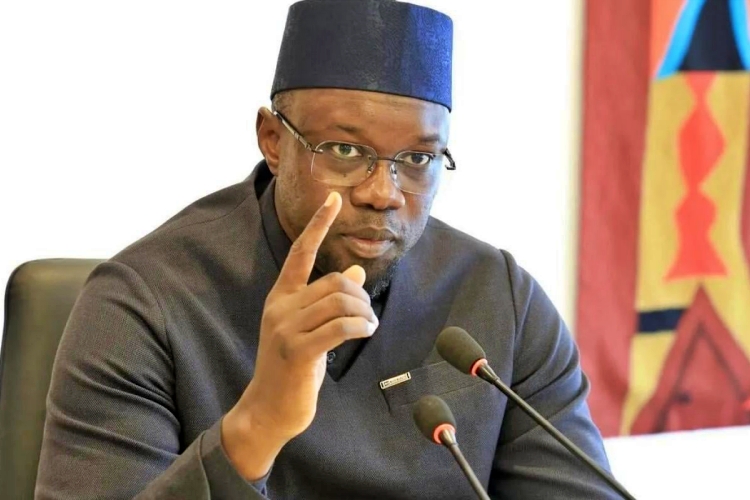
Prime Minister Ousmane Sonko, in a tribute he titled “Abdoulaye Wade, A Hundred Years of Useful Life,” called that 2000 alternance “a founding event in the political history of the country and the African continent.” Sonko credited Wade’s resilience with blazing a trail for future political generations, including his own.
The President Who Built Beyond Politics
What struck many of those writing tributes was not just Wade’s political longevity but also the breadth of what he attempted and achieved while in office.
Idrissa Seck cataloged these accomplishments with visible awe, from peace mediations in Côte d’Ivoire and Madagascar to the conception of the Plan Omega, which eventually became the NEPAD continental development framework; from the Monument of African Renaissance to the launch of the Great Green Wall; and from the Grand National Theatre to the Museum of Black Civilizations.
Wade also championed the repatriation of the intellectual and spiritual legacy of El Hadj Omar Foutiyou Tall, portions of which remain housed in the cold archives of France’s national library, and he closely followed Senegal’s historic 2002 World Cup campaign in Japan, interpreting the team’s defeat of France as the most beautiful definition of sovereignty: being better.
For good measure, Seck noted, Wade also found time to write books and play the guitar.
A Bond That Transcends Party Lines
Among the most emotionally textured tributes came from Ousmane Sonko, who revealed that he privately addresses Wade as “my grandfather” during their personal meetings, a term of endearment that he said transcends political divisions.
Sonko recalled two pivotal moments in his own career: counsel received from Wade in 2017 and a public declaration of support in 2019, both of which he described as acts of generational transmission, not of power or party machinery but of trust and legitimacy.
Former President Macky Sall, who succeeded Wade in office in 2012 after a tenure marked by political tension between the two men, set those complexities aside on Friday and offered a statesman’s tribute. He described Wade as a man whose “commitment, vision, and attachment to democracy will leave a lasting mark for posterity,” wishing him peace, health, and happiness.
A Witness in the Inner Circle
Perhaps the most intimate tribute came from Dr. Sonhibou Ndiaye, described as one of Wade’s closest and most trusted confidants, a man who, by his own account, Wade has introduced to others as “his son, his friend, and his confidant.”
Writing with what he called immense emotion, Ndiaye reflected that reaching one hundred years is itself a rare grace, but reaching one hundred while remaining a deeply respected and admired figure in the collective conscience of a people is something altogether exceptional.
“We are celebrating a man whose words, guidance, and determination have inspired several generations,” Ndiaye wrote, “and left an indelible mark in memory.”
One Century, Many Lives
Idrissa Seck, drawing on a personal conversation with Wade himself, offered perhaps the most evocative framing of the centenary: that the former president once told him he descended from “Ndiack,” the figure invoked in a famous Wolof adage.
“He has lived several lives in a single one,” Seck wrote. “Some of those lives may still be waiting to be discovered.”
From instituteur to barrister, from opposition prisoner to president, from peacemaker to monument builder, and from guitarist to grandfather of a generation, Abdoulaye Wade turns 100 not as a relic of history, but as a living argument that a life of ideas and struggle, sustained long enough, can outlast almost everything that tried to stop it.
As Friday’s sun set over Dakar, the tributes from across the political divide, rivals, successors, proteges, and confidants alike, pointed to a singular truth: that whatever one’s reading of his presidency, the man who spent four decades trying to change Senegal changed it nonetheless. And Senegal, in return, was pausing to say so.




Leave a Reply