


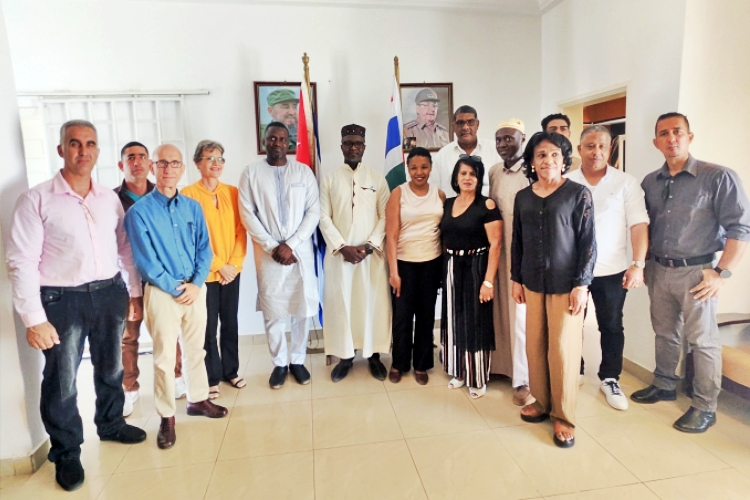
Gambiaj.com – (BANJUL, The Gambia) – The administration of Donald Trump is intensifying diplomatic pressure on The Gambia to terminate its long-running Cuban medical cooperation, an intervention that places Banjul at the intersection of geopolitics and public health vulnerability.
At the core of Washington’s push is its broader strategy to isolate Cuba and weaken what U.S. officials frame as the “Máximo” regime. The policy has recently escalated into legislative measures threatening sanctions and aid cuts against countries in Africa and Latin America that continue to host Cuban medical brigades.
The U.S. characterizes the program as “forced labor” and “human trafficking,” citing Havana’s control over parts of doctors’ earnings.
Havana rejects that framing, arguing the campaign is an extension of a six-decade economic embargo aimed at suffocating its economy and diplomatic reach. Cuban officials say the medical missions, long a pillar of its foreign policy, are rooted in solidarity and bilateral agreements, not coercion.
A Strategic Squeeze Meets a Fragile Health System
For Banjul, the timing of Washington’s pressure is particularly consequential. The Trump administration has simultaneously scaled back American-funded health interventions across Africa, including sweeping reductions in USAID and PEPFAR programs.
Across the continent, those cuts have been linked to clinic closures, interruptions in HIV/AIDS treatment, and shrinking reproductive health services.
In that context, the Cuban medical presence in The Gambia functions less as a diplomatic accessory and more as a structural pillar of the national health system.
Since their first deployment in 1996, following a request by former leader Yahya Jammeh to Fidel Castro, Cuban doctors have filled critical human resource gaps.
Today, approximately 125 Cuban specialists serve across the country, embedded in key public facilities including Edward Francis Small Teaching Hospital and regional hospitals in Serekunda, Farafenni, Bwiam, Bansang, and Basse.
Their roles are not peripheral. According to a senior hospital administrator, Cuban doctors constitute the entirety of certain specialties, dermatology and ENT care among them, while also underpinning psychiatric services and medical training pipelines.
Capacity Constraints and Systemic Dependence
The dependence is both clinical and institutional. Cuban practitioners have been instrumental in establishing and staffing the University of The Gambia’s medical training programs, effectively shaping the country’s domestic doctor pipeline.
This creates a structural dilemma: withdrawing Cuban personnel would not merely reduce service delivery capacity; it risks disrupting the long-term localization of medical expertise.
“We don’t have the capacity to do without expatriates,” a senior health official said, underscoring the absence of sufficient locally trained specialists. “Cubans play a critical role in our health sector.”
Such realities complicate Washington’s expectation that partner countries can rapidly disengage from Cuban cooperation without systemic fallout.
Diplomacy Versus Public Health Priorities
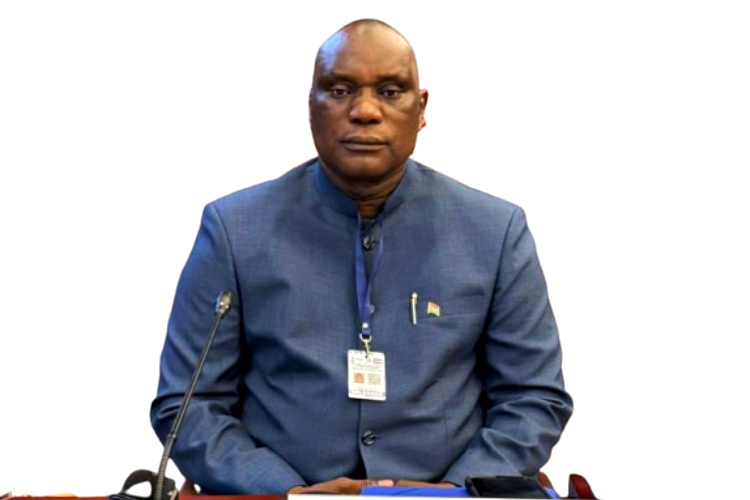
The Gambia Foreign Affairs Minister Serign Modou Njie has signaled Banjul’s cautious stance, framing the Cuban partnership as a humanitarian necessity rather than an ideological alignment. The government maintains that the arrangement directly addresses critical healthcare shortages and improves population health outcomes.
Cuba’s ambassador to The Gambia, Carmelina Ramirez Rodriguez, confirmed that Washington has formally urged multiple countries, including The Gambia, to end the programme, noting that some states have already complied under pressure.
Yet she stressed that Cuba’s presence in The Gambia is demand-driven: “We are here because we were requested to come.”
A Policy Collision With Real-World Consequences
The emerging standoff illustrates a broader contradiction in U.S. foreign policy toward Africa: pressing governments to abandon Cuban medical assistance while simultaneously reducing American health aid risks creating service vacuums in already strained systems.
For The Gambia, the policy collision is stark. On one side lies the geopolitical cost of defying a major donor; on the other, the immediate risk of eroding healthcare delivery in a system still heavily reliant on external expertise.
In practical terms, the departure of Cuban doctors could translate into the disappearance of entire medical specialties, longer patient wait times, and weakened training capacity for future Gambian physicians, outcomes that would reverberate far beyond diplomatic circles.
As Washington sharpens its campaign against Havana, Banjul’s decision will likely hinge less on ideological alignment and more on a fundamental calculus: whether its health system can withstand the loss of one of its most critical external supports.



Leave a Reply