


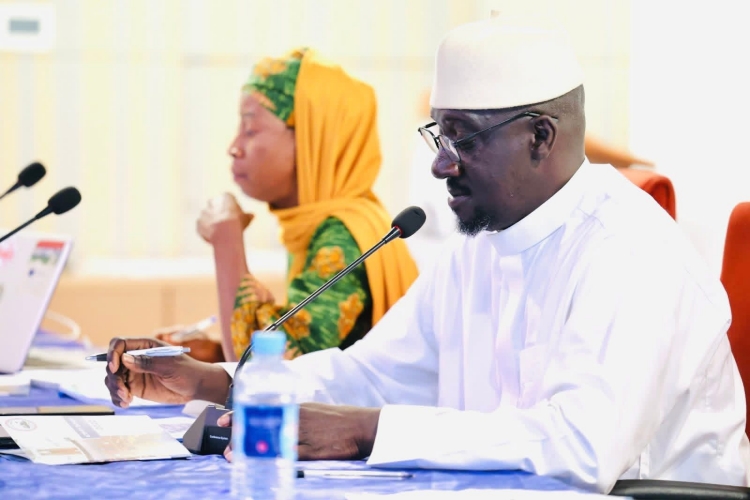
Gambiaj.com – (BANJUL, The Gambia) – The Finance and Public Accounts Committee (FPAC) of The Gambia’s National Assembly on Wednesday acknowledged a series of administrative and oversight weaknesses within Parliament as it concluded scrutiny of the institution’s 2022 Annual Activity Report and Audited Financial Statements.
The session, chaired by Sulayman Jammeh, ended with the adoption and passage of the reports after extensive deliberations involving committee members, officials of the National Assembly Service, and auditors from the National Audit Office.
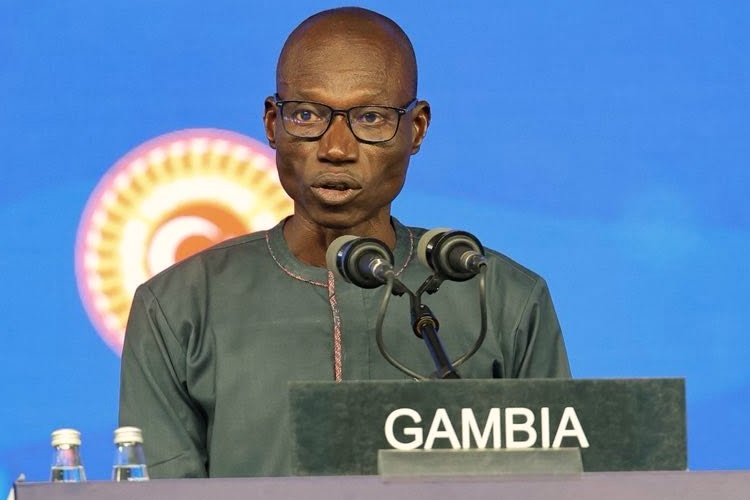
The National Assembly delegation was led by Clerk and head of the National Assembly Authority Kalipha M.M. Mbye, while Auditor General Cherno Amadou Sowe and his team presented findings from the audit review of Parliament’s 2022 accounts.
The hearing formed part of Parliament’s constitutional oversight mandate and examined procurement compliance, project implementation, asset management, and internal control systems within the National Assembly Service.
Concerns Over Constituency Projects
A major focus of the proceedings was the implementation of Constituency Development Fund (CDF) projects, with FPAC members raising concerns about project delays, alterations, incomplete works, and questions surrounding value for money.
Auditors told the committee that verification visits conducted in several constituencies revealed that some projects were either unfinished, modified from their original objectives, or facing operational difficulties.
Officials of the National Assembly Service admitted that implementation challenges existed in some constituency projects but said reforms were being introduced to improve compliance and monitoring mechanisms.
In response to questions from lawmakers, officials disclosed that the National Assembly Authority established a procurement subcommittee in 2025 to vet constituency project proposals before approval.
According to officials, the committee was created to assess project feasibility, ensure adherence to procurement regulations, and prevent projects from exceeding approved funding allocations.
Asset Management Gaps Identified
The hearing also highlighted weaknesses in Parliament’s asset management system.
Auditors observed that some assets acquired during the review period had not been properly tagged or entered into the institution’s asset register.
Management acknowledged shortcomings in the existing manual tracking process and informed FPAC that plans were underway to introduce a QR code-based digital asset management system aimed at improving inventory control and accountability.
Throughout the deliberations, committee members stressed that institutions tasked with overseeing public accountability must themselves uphold high standards of transparency and financial discipline.
Officials from both the National Assembly Service and the National Audit Office emphasized the need for continued reforms to strengthen internal controls and improve public financial management practices within Parliament.
Auditor General Sowe commended the National Assembly Service for cooperating during the audit exercise and underscored the importance of ensuring Parliament remains current with its financial reporting obligations.
He further disclosed that audits of the National Assembly’s outstanding 2023, 2024, and 2025 accounts would be prioritized after completion of ongoing national audit assignments.
For his part, Clerk Mbye thanked FPAC members, auditors, and National Assembly staff for their cooperation during the scrutiny process, describing the exercise as part of broader efforts to reinforce institutional accountability.
At the end of the session, FPAC formally adopted and passed the National Assembly’s 2022 reports while urging continued improvements in project monitoring, procurement oversight, and financial management systems within the institution.









Leave a Reply