



Gambiaj.com – (BANJUL, The Gambia) – The opposition United Democratic Party (UDP) has rejected the government’s claim that it created 163,660 jobs since 2023, arguing that the figures are misleading and instead reflect worsening employment conditions and growing economic hardship across The Gambia.
In a statement issued Monday, UDP Administrative Secretary for Media and Communications Saikou Camara said the government had misrepresented findings from the official Gambia Bureau of Statistics (GBoS) Labour Market Report by portraying increased labor participation as evidence of genuine job creation.
“The report itself states the increase reflects ‘increased labor absorption rather than a direct measure of jobs created,’” Camara said. “The government is deliberately confusing survival-driven economic activity with genuine job creation.”
According to the UDP, many Gambians classified as employed are in fact surviving through unstable informal activities because formal jobs remain scarce.
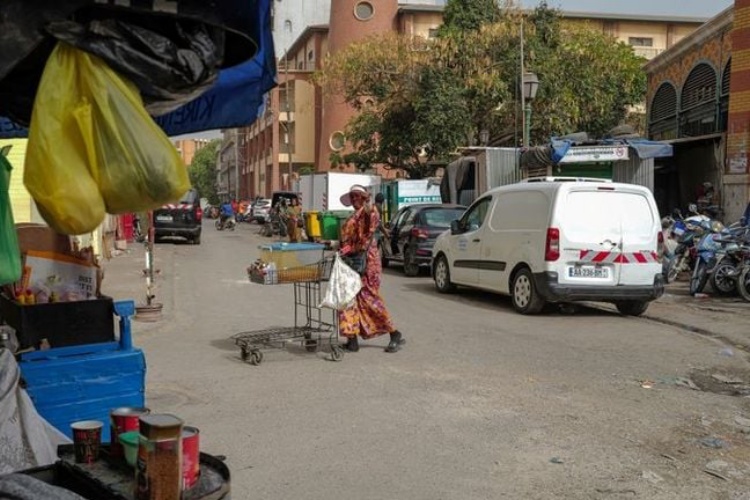
Camara argued that people forced into private tutoring, petty trading, food vending, and other small-scale economic activities are technically counted as employed, even though such work often lacks security and sustainability.
“A university graduate giving private tuition, or someone selling food at trade fairs because they cannot find formal employment, is counted as employed, but this is not what Gambians should celebrate,” he said.
The UDP based its criticism on figures contained in the GBoS Labour Market Report cited earlier by the government. The report indicates that 85.8 percent of employed Gambians work in the informal sector, while self-employment rose from 52.9 percent to 64.3 percent over the past three years.
The party said the figures point to a shrinking formal economy that is increasingly pushing citizens into precarious forms of self-employment with limited access to social protection and stable income.
The opposition also cited income disparities highlighted in the report, noting that half of Gambian workers earn GMD 3,000 or less per month. It added that self-employed workers earn, on average, GMD 4,609 less than workers in the formal sector.
“This is not economic transformation. This is survival under hardship,” Camara said. “A majority of the population has now become ‘managers’ — people merely managing to get through each day.”
The UDP further pointed to labor underutilization figures contained in the report, which place underemployment at 23.6 percent. Average weekly working hours were also reported at 36.6 hours, below the estimated 44 hours the party said are needed for workers to meet basic living requirements.
“Thousands of Gambians remain underworked, underpaid, and economically vulnerable despite being counted as ‘employed,’” Camara stated.
Young people were identified as among the hardest hit by the country’s labor challenges. The report found that 33.7 percent of Gambians aged between 15 and 35 are classified as NEET — not in education, employment, or training — a figure the UDP described as unacceptable for a government claiming progress on job creation.
The opposition accused the government of using headline employment statistics for political purposes while ignoring broader indicators measuring the quality and sustainability of work.
“The Gambian people deserve honesty, not statistical manipulation,” Camara said.
The UDP said it would continue advocating for policies aimed at creating “real jobs,” including industrial development, private sector expansion, youth empowerment initiatives, vocational and skills training, and stronger support for agriculture and small businesses.
“We will continue to advocate for policies that promote sustainable, productive, and dignified employment capable of lifting families out of poverty,” Camara added.
A government spokesperson was not immediately available for comment. However, the Ministry of Finance and Economic Affairs has previously defended the employment figures, arguing that rising labor absorption reflects the early stages of economic recovery.
The GBoS Labour Market Report remains the country’s principal source of official labor and employment statistics.
Economists note that rising labor absorption can signal both genuine employment growth and economic distress that forces more people into informal survival activities, making indicators such as wages, job security, working hours, and access to social protections critical in assessing the true state of the labor market.












Leave a Reply