


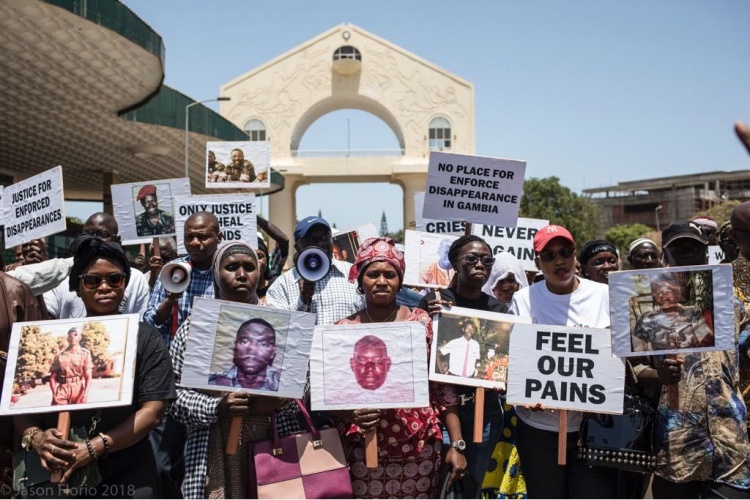
Gambiaj.com – (BANJUL, The Gambia) – The Gambia Center for Victims of Human Rights Violations has called on the government to accelerate reparations for victims, invest in forensic efforts to locate and identify the remains of those who disappeared under former President Yahya Jammeh, and urgently criminalize enforced disappearance under Gambian law.
In a statement marking the International Day of Enforced Disappearances, the Victims’ Centre said The Gambia has made significant progress in addressing past human rights violations but warned that key commitments remain incomplete nearly a decade after the country’s democratic transition.
Progress Made, but Major Gaps Remain
Since 2017, the organization said it has provided psychosocial, medical, and educational support to survivors and families affected by human rights violations, including the wives, children, and relatives of people who disappeared.
Its psychosocial support program has provided spaces for families to share their experiences, process trauma, and rebuild their lives, while medical and educational assistance has helped ease the economic burden on families who lost breadwinners through enforced disappearance.
The Centre also pointed to its Canvas of Courage memorialization project, which seeks to preserve the memory of victims and reinforce the country’s commitment to ensuring that such violations are never repeated.
However, it said progress at the institutional level has yet to translate into complete justice and closure for many families.
The Reparations Act of 2024 established a Reparations Commission and a Victims’ Fund, and some payments have already begun. But the Centre said obtaining sufficient funding to compensate all victims remains a major challenge.
It also raised concern over the absence of a clear public timeline indicating when all eligible victims will receive their reparations.
Families Still Waiting for Answers
One of the most pressing concerns, according to the organization, is the failure to establish the recommended international forensic effort to locate, exhume, and identify remains believed to be buried at known sites.
As a result, many families of the disappeared still do not know what happened to their relatives or where their remains are located.
The Centre said the lack of forensic capacity and a coordinated recovery process continues to deny families the answers and closure they have sought for years.
It called on the government to invest in forensic expertise and infrastructure capable of locating burial sites, conducting exhumations, and scientifically identifying human remains.
Call to Criminalize Enforced Disappearance
The Victims’ Centre also highlighted what it described as a major legal gap in The Gambia’s transitional justice process.
Although The Gambia ratified the International Convention for the Protection of All Persons from Enforced Disappearance in 2018, enforced disappearance has still not been established as a standalone offense under domestic law.
The organization said the issue of domestication must now be urgently addressed.
The government pledged in January 2025 to finalize legislation criminalizing enforced disappearance, while the UN Committee on Enforced Disappearances has called for a firm timeline for completing the process.
The Victims’ Centre urged the government to fulfill its pledge to pass the enforced disappearance bill and fully domesticate the Convention by 2027.
Demands for Immediate Action
The organization further called on the Ministry of Finance to release the necessary funds for reparations payments without further delay.
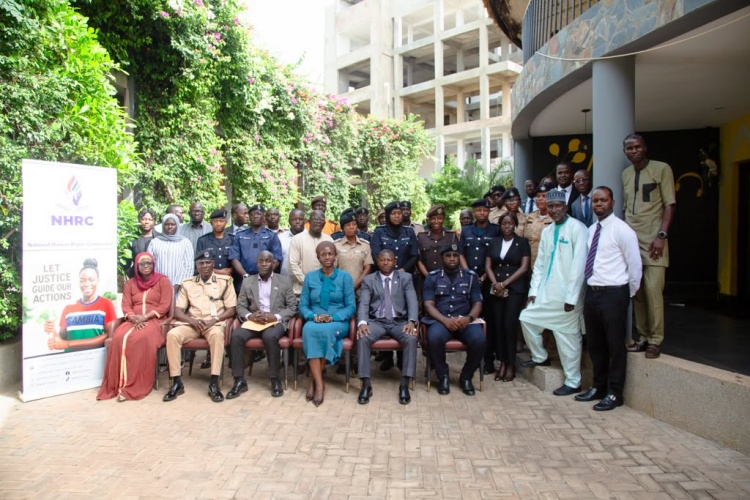
It also urged authorities to bar perpetrators implicated in past abuses from holding public office and to introduce mandatory human rights training for members of the security services.
In addition, it called for psychosocial, medical, and educational assistance for families of the disappeared to be maintained for as long as necessary.
The statement comes as The Gambia continues efforts to implement its transitional justice agenda. In December 2024, ECOWAS approved the establishment of a hybrid Special Tribunal for The Gambia to prosecute alleged crimes committed during the Jammeh era, including enforced disappearances.
But the Victims’ Centre stressed that institutions and commitments alone are not enough without implementation.
“The disappeared will never be forgotten, and neither will the promises made in their name,” the organization said, calling on the government to turn its commitments on justice, accountability, and reparations into concrete action for families still waiting for answers.












Leave a Reply