


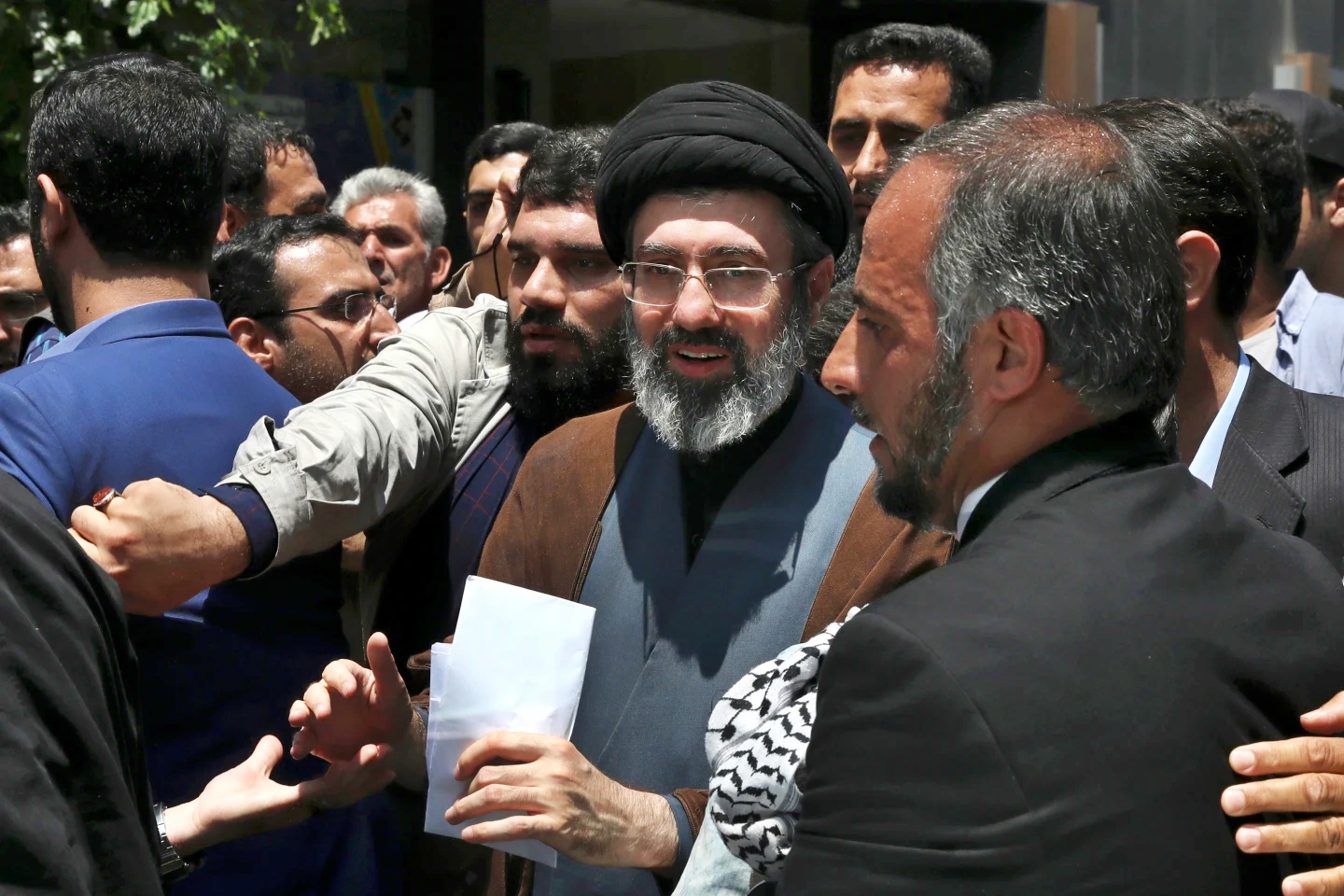
Gambiaj.com – (TEHRAN, Iran) – Iran has named Mojtaba Khamenei as the new Supreme Leader following the killing of his father, Ali Khamenei, in a strike blamed on the United States and Israel, a decision that analysts say could push the Islamic Republic toward a more radical and confrontational phase in its war with Washington.
The announcement, made early Monday by Iranian state television, confirmed that the 56-year-old cleric had been chosen by the powerful Assembly of Experts after days of uncertainty and internal tensions within the Iranian leadership.
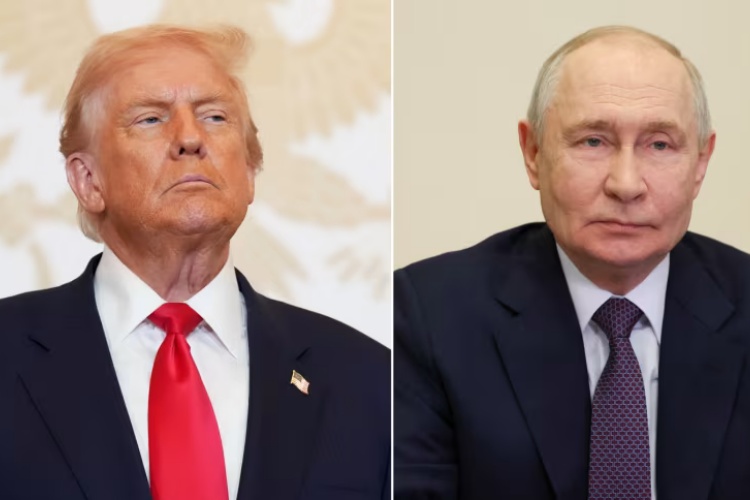
The selection comes amid an ongoing regional war and escalating hostilities with the United States under President Donald Trump, who had openly signaled opposition to Mojtaba’s potential rise to power.
A Wartime Succession After a Historic Assassination
The leadership change follows the assassination of Ali Khamenei less than two weeks ago in an Israeli strike during the expanding confrontation between Iran, the United States, and Israel.
It marks only the second transfer of power in the office of Supreme Leader since the Iranian Revolution.
State television reported that Mojtaba Khamenei secured “strong votes” in the Assembly of Experts. The broadcast showed crowds celebrating in parts of Tehran while authorities called for national unity behind the new leader.
However, the process leading to his appointment was widely described as contentious. Reports indicated deep divisions within the clerical body, with some members threatening to boycott follow-up meetings amid disputes over the legitimacy and suitability of the younger Khamenei.
A Controversial Choice
Mojtaba Khamenei’s elevation is controversial because he lacks some of the traditional religious credentials typically expected for the role.
Unlike his father, he is not a Grand Ayatollah and does not hold the rank of a fully qualified Islamic jurist required under Iran’s interpretation of the doctrine of Velayat-e Faqih. It’s a Shia Islamic political doctrine, central to Iran’s government since 1979, asserting that a qualified Islamic jurist (faqih) should govern state affairs in the absence of the 12th Imam.
Instead, he holds the clerical rank of Hojjatoleslam, an Islamic honorific title for mid-ranking Shi’a Muslim clerics, translating to “authority on Islam” or “proof of Islam“.
and has never held an elected government position or senior administrative office in the state apparatus.
Critics inside the Iranian establishment had argued these shortcomings should disqualify him. Yet his deep connections to Iran’s security institutions and ideological hardliners ultimately proved decisive.
A Hardline Profile
Born in Mashhad in 1969, Mojtaba Khamenei grew up during the revolutionary transformation of Iran that brought his father to prominence.
He later studied Islamic theology in Tehran and Qom under senior clerics, including Mahmoud Hashemi Shahroudi.
During the late stages of the Iran–Iraq War, he joined the Islamic Revolutionary Guard Corps, establishing ties that would later define his political influence.
Analysts describe Mojtaba as one of the most ideologically hardline figures within Iran’s conservative camp. He maintains close relationships with radical clerical networks and security institutions that advocate a confrontational stance toward Western powers.
Several Western analysts believe he supports Iran developing nuclear weapons, a position that would reverse the religious prohibition his father once issued against such arms.
The Revolutionary Guard’s Crucial Role
Perhaps the most decisive backing for Mojtaba Khamenei came from the Islamic Revolutionary Guard Corps (IRGC), the powerful military institution that oversees Iran’s missile forces and plays a central role in the current war.
Shortly after the announcement, the Guard issued a statement pledging allegiance to the new leader and promising to carry out his orders.
“The Guard, as a powerful soldier and arm of the Supreme Leader, is ready to follow the orders of Supreme Leader Mojtaba Khamenei,” the statement said.
The endorsement underscores the military establishment’s role in consolidating power behind him and signals that the new leader may rely more heavily on the IRGC than his father did.
Observers say the alliance between Mojtaba and the Guard effectively unites several hardline factions within Iran’s political system, turning him into a rallying figure for the country’s most radical camps during wartime.
Long-Standing Hardline Credentials
Mojtaba Khamenei has long been associated with Iran’s most conservative political forces.
He was closely linked to former Iranian president Mahmoud Ahmadinejad and reportedly supported Ahmadinejad during the disputed 2005 and 2009 presidential elections.
Opposition figures accused him of orchestrating the suppression of protests following the contested 2009 vote, allegedly overseeing the paramilitary Basij forces involved in the crackdown.
Those accusations helped cement his reputation as a hardline operator deeply embedded in Iran’s security apparatus.
Trump Rejects the Choice
The leadership change also carries significant geopolitical implications.
Before the decision was finalized, President Donald Trump dismissed the possibility of Mojtaba Khamenei becoming Supreme Leader, calling him a “lightweight” and declaring the selection “unacceptable.”
Trump even suggested that Washington should be involved in determining Iran’s leadership, a remark that further inflamed tensions between the two countries.
Analysts say Mojtaba Khamenei is unlikely to respond with compromise.
Some Western assessments suggest he views the United States as an “implacable enemy” and may escalate confrontation rather than seek negotiations.
A Radicalized Leadership In Wartime
Mojtaba Khamenei’s rise comes at a moment when Iran’s leadership is increasingly shaped by security institutions and ideological hardliners rather than traditional clerical authorities.
His appointment is widely seen as a victory for the most radical factions within the regime, including militant networks aligned with Iran across the Middle East such as Hezbollah, which quickly hailed him as the “leader of the blessed Islamic revolution.”
With the IRGC firmly behind him and Iran already engaged in direct confrontation with the United States and Israel, analysts say the new Supreme Leader could usher in a more militarized and uncompromising era for the Islamic Republic.
Whether that approach stabilizes Iran’s ruling system or deepens internal fractures may determine the trajectory of the conflict now unfolding between Tehran and Washington.





Leave a Reply