


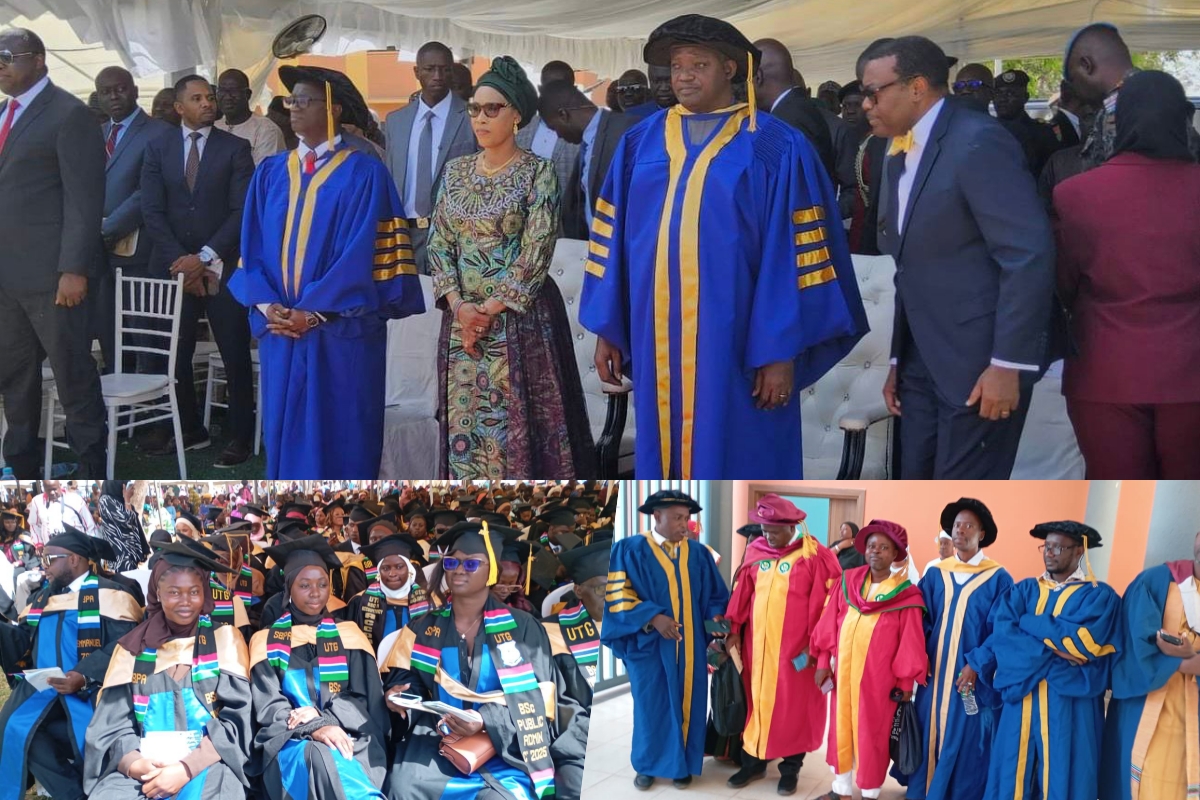
Gambiaj.com – (FARABA BANTA, The Gambia) – The 18th Convocation Ceremony of the University of The Gambia (UTG) has underscored what officials describe as tangible progress in the country’s higher education sector, with a record 1,633 students graduating across nine schools.
The figure marks the highest number of graduates since the institution’s establishment in 1999, reflecting what authorities attribute to sustained investment, targeted policy direction, and a renewed focus on expanding access to tertiary education.
President Adama Barrow, serving as Chancellor of the university, presided over the ceremony alongside members of the UTG Senate and Governing Council, signaling the government’s continued emphasis on higher education as a key driver of national development.
From Access to Achievement
The convocation ceremony brought together graduates, families, and faculty in what many described as a moment of collective pride and achievement.
Scenes at the venue highlighted the growing inclusivity of the education system, with many families witnessing firsthand the culmination of years of effort amid previously limited access to university education.
Graduates who had navigated financial and structural barriers were celebrated as part of a system increasingly geared toward enabling student success.
Officials and observers noted that the rising number of graduates reflects broader improvements in access and retention, pointing to the impact of reforms aimed at strengthening the tertiary education framework.
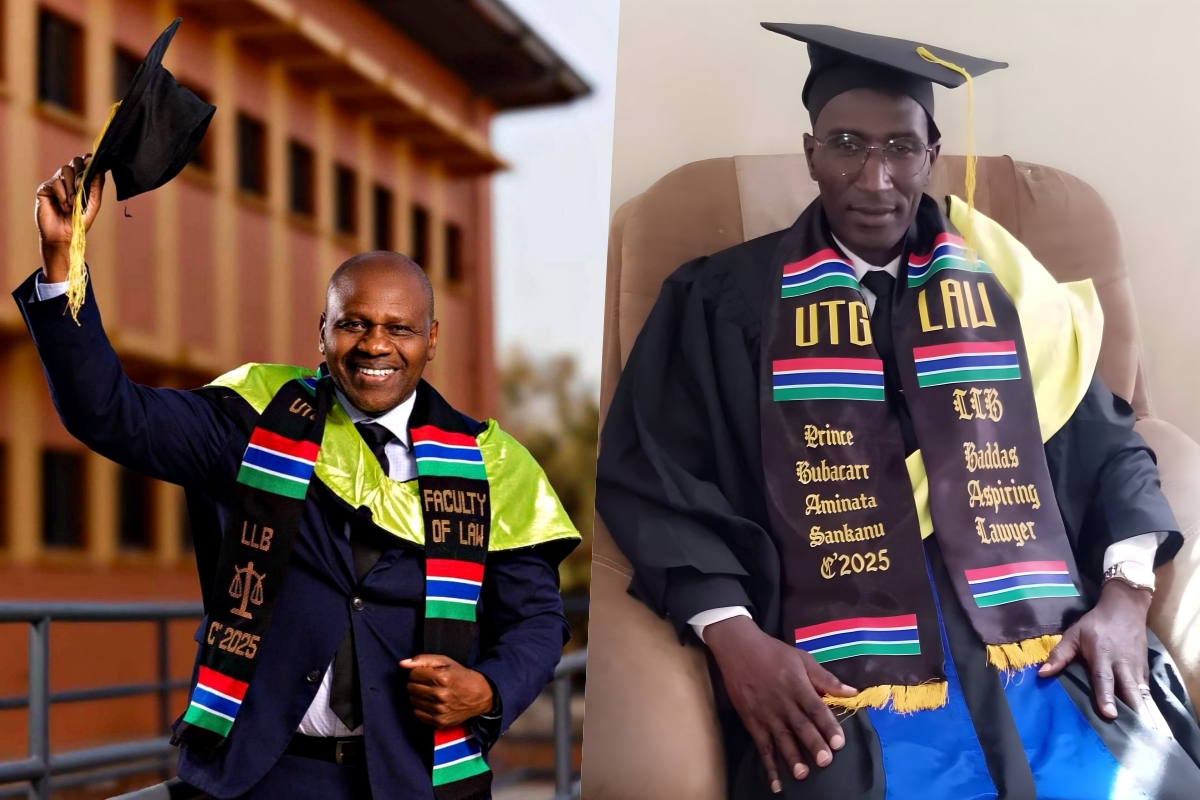
Banka Manneh and Prince Bubacarr Aminata Sankanu, two symbols of determination and family support
The Human Stories Behind the Numbers
Behind the record-breaking figures are individual stories of perseverance. Among the graduates is Banka Manneh, one among several civil rights Gambian activists who completed a Bachelor of Laws (LLB), attributing his achievement to sustained support from family and academic mentors.
Similarly, Prince Bubacarr Aminata Sankanu, a veteran journalist and film maker who emerged as another example of determination, overcoming personal and academic challenges to complete his studies.
He is expected to proceed to the Bar examinations, highlighting what stakeholders describe as a growing pipeline of locally trained professionals.
These accounts, echoed across the graduating cohort, illustrate what education officials characterize as a shift toward a more supportive and enabling academic environment.
A Transformed University to Position Young Gambians in the Future
The ceremony also reflected UTG’s institutional growth, with structured academic processions, expanded enrollment, and a wider range of disciplines on display.
Observers pointed to the increasing organization and scale of the convocation as indicators of a maturing institution striving to position itself as a competitive center of higher learning within the region.
Education stakeholders say the growing output of graduates in fields such as law, public administration, science, and technology is expected to strengthen The Gambia’s human capital base.
They argue that this trajectory could reduce reliance on external expertise while supporting national development priorities through a more skilled workforce.
The 2026 UTG Convocation is being widely viewed as a measurable milestone in the country’s education reform efforts.
With record graduation numbers, expanding access, and a steadily evolving university system, the ceremony represents what officials describe as concrete progress in aligning education outcomes with national development goals.
For many families, the moment signified more than an academic achievement—it marked the realization of long-held aspirations and the promise of greater opportunity ahead.

















Leave a Reply