


Gambiaj.com – (BANJUL, The Gambia) – The decision by the The Gambia Police Force to facilitate discussions between Alport Banjul Limited and workers under the Ports Staff Association has triggered broader questions about the growing role of security institutions in industrial disputes that many argue should be handled by labor and civil oversight bodies.
Ordinarily, labor disputes involving worker welfare, employment contracts, overtime payments and workplace conditions fall within the remit of institutions such as the Labor Department under the Ministry of Trade, Industry, Regional Integration and Employment, the Ministry of Transport, Works and Infrastructure, national labor unions, or quasi-independent oversight institutions like the Office of the Ombudsman.
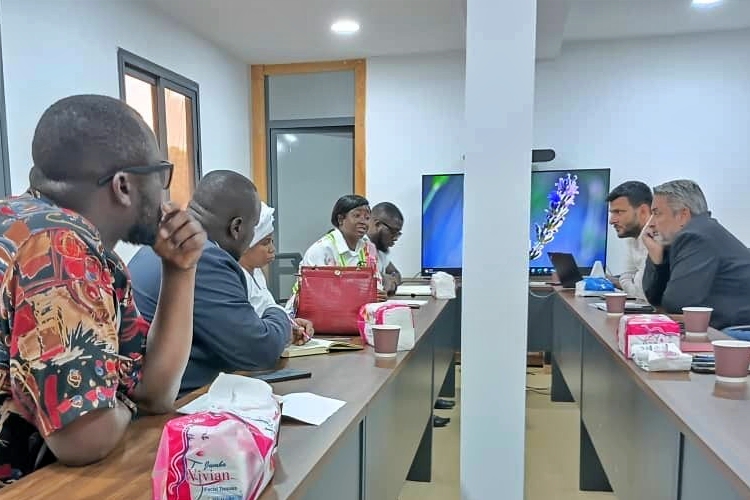
But in a statement issued Monday, police said the Station Officer of Seaport Police Station, Assistant Superintendent of Police Ebou Gaye, chaired a consultative meeting between Alport management and staff representatives over proposed Sunday day-shift operations and the maintenance of a peaceful working environment at the ports.
Police described the intervention as an effort to promote dialogue, consultation and industrial harmony. But the move has also raised concerns among labor observers and workers about why a law enforcement institution has emerged as the visible mediator in what is fundamentally a corporate and labor relations dispute.
The controversy comes against the backdrop of mounting frustrations among workers following the transition of port operations to Alport Banjul Limited.
Employees under the Ports Staff Association had publicly aired grievances over what they described as worsening labor conditions and unfulfilled commitments under the company’s administration.
Workers cited persistent salary delays, unpaid overtime, uncertainty over staff benefits, and what they called a broader erosion of workers’ rights.
They also questioned the company’s failure to implement promised reforms, including assurances that key positions such as Head of Human Resources and Deputy Chief Executive Officer would be occupied by Gambians with substantive decision-making authority.
Additional complaints centered on inconsistencies in salary administration, lack of clear human resource policies, stalled career progression, and uncertainty surrounding the continuation of tertiary education opportunities for staff members.
Against that backdrop, the intervention of police rather than labor institutions risks blurring the line between industrial relations and state security management.
The visible presence of police in negotiations may reinforce perceptions that worker grievances are increasingly being approached through a security lens rather than a labor rights framework.
The symbolism is particularly sensitive in a country where organized labor historically operated under political and institutional constraints during the previous administration.
Although the current democratic transition has seen greater space for civic engagement, the involvement of police in workplace negotiations can still carry psychological implications for workers seeking to assert their rights.
One could contend that the ports represent strategic national infrastructure and that authorities may have sought police involvement primarily to prevent tensions from escalating into disruptions capable of affecting trade and economic activity.
However, Police facilitation, even if presented as neutral and consultative, may unintentionally create an atmosphere where workers feel pressured to moderate demands or avoid confrontation for fear that labor activism could be interpreted as a public order issue.
The Gambia Police Force, in its statement, emphasized that the discussions ended cordially and that both parties agreed to continue dialogue to resolve their differences. Police also reaffirmed their commitment to promoting cooperation and mutual understanding among stakeholders.
Still, this happening brings back the debate over whether The Gambia’s labor institutions are sufficiently empowered and visible in handling major industrial disputes, especially in sectors tied to strategic national assets and foreign private operators.
For many workers, the central issue may no longer be only the Sunday shifts themselves, but what the state’s response signals about who workers can rely on when disputes arise over wages, benefits, representation and workplace rights.
















Leave a Reply