


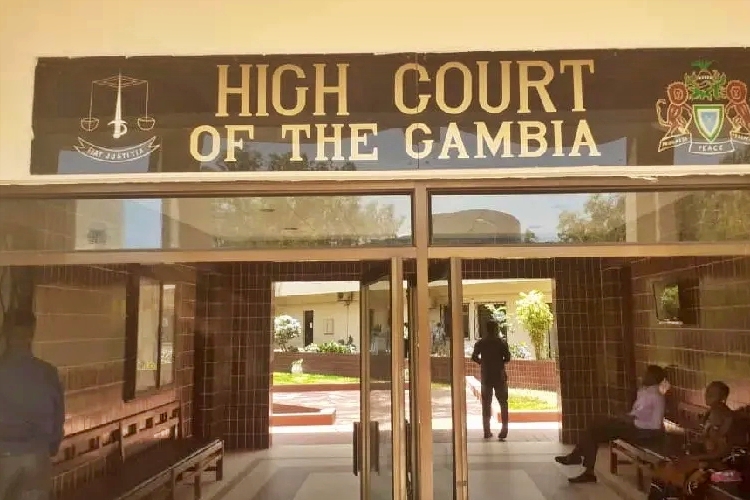
Gambiaj.com – (BANJUL, The Gambia) – Justice Ebrima Jaiteh of the Banjul High Court has admitted an autopsy report into evidence in the murder trial of Mariama Jallow, rejecting a defense objection that sought to exclude the document on grounds of an alleged date discrepancy.
Mariama Jallow stands trial for the murder of Cherno Touray, said to have occurred at Brufut Village. State Counsel M. Sarr is prosecuting the case, while Counsel F.C. Anyanwu represents the accused.
The road to admitting the autopsy report had not been without difficulty. In a previous session, the prosecution informed the court that it had been unable to obtain the post-mortem report from the management of the Edward Francis Small Teaching Hospital (EFSTH).
The development prompted Justice Jaiteh to summon the hospital’s Chief Medical Director to explain the delay.
When the Chief Medical Director, Dr. Bittaye, appeared in court on the last adjourned date, he told the court that the post-mortem examination had been conducted a long time ago and that the original report had been handed to the police, who had formally requested it.
At Tuesday’s proceedings, Dr. Ousman Leigh appeared before the court bearing the autopsy report and walked the court through its contents. Following his testimony, the prosecution applied to tender the report as a prosecution exhibit.
Defense Counsel Anyanwu promptly objected. He argued that during examination-in-chief, Dr. Leigh had stated the report was prepared in February 2026, yet no such date appeared on the face of the document.
The defense contended that this inconsistency rendered the document false and therefore inadmissible.
Prosecuting Counsel Sarr opposed the objection, submitting that the defence had mischaracterized the witness’s testimony. He drew a distinction between the date on which the autopsy examination was physically conducted and the date on which the formal report was subsequently finalized. He urged the court to admit the document, arguing that relevance remains the primary legal test for admissibility.
Justice Jaiteh agreed. In his ruling, the judge affirmed that the law on the admissibility of documentary evidence is well settled: relevance to a fact in issue is the principal test, and once a document meets that threshold and is not otherwise barred by law, it is admissible.
He clarified that questions touching on a document’s authenticity, accuracy, or reliability go to the weight to be attached to the evidence, not to whether it may be admitted in the first place.
The judge further held that the alleged discrepancy between Dr. Leigh’s oral testimony and the document itself did not render the autopsy report inadmissible. Such matters, he ruled, are properly tested through cross-examination and weighed by the court at the conclusion of trial.
“The Court’s immediate concern is whether the document is relevant and legally admissible,” the ruling stated. “The autopsy report relates directly to the post-mortem examination of the deceased and is therefore plainly relevant to the issues before the Court.”
Justice Jaiteh accordingly overruled the defense objection and admitted the autopsy report as Exhibit P4, while making clear that the defense retains the full right to challenge the document’s authenticity, accuracy, credibility, and weight during cross-examination and in final addresses.
The matter was adjourned to allow the defense to cross-examine Dr. Leigh on the contents of the autopsy report.






Leave a Reply