


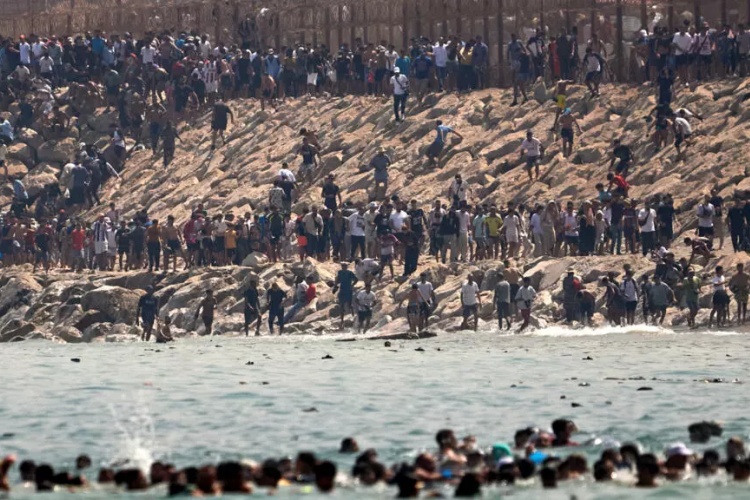
Gambiaj.com – (CEUTA, Spain) – Nine migrants have died while attempting to swim from Morocco to the Spanish enclave of Ceuta, as hundreds more reached the territory in a major influx that has overwhelmed local reception facilities and prompted Madrid to deploy soldiers to reinforce security.
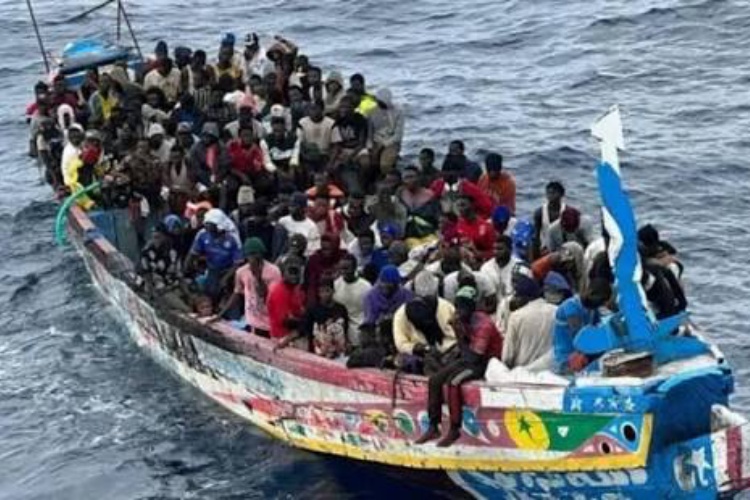
The Spanish government said the migrants died while trying to cross the waters separating Morocco from Ceuta, a small Spanish territory on Africa’s northern coast. The deaths came as more than 1,500 migrants reportedly arrived by sea this week, placing unprecedented pressure on local authorities.
The Spanish Interior Ministry said the armed forces would reinforce the Civil Guard in Ceuta and provide whatever additional support was needed to maintain security in the city.
Ceuta’s reception system is overwhelmed.
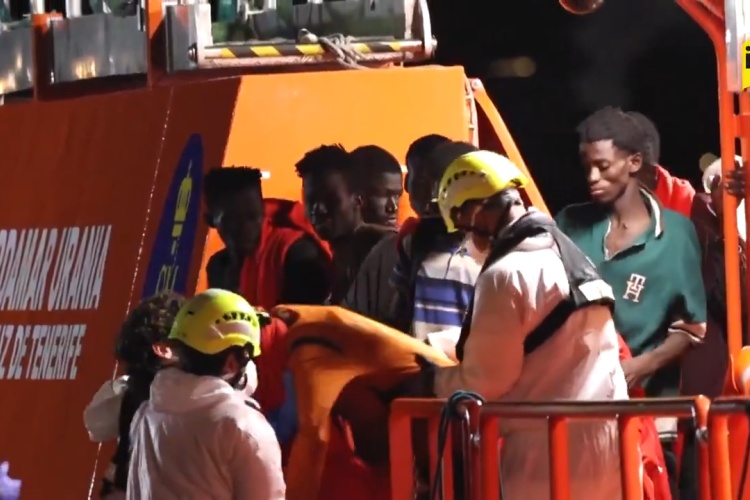
The scale of the arrivals has left Ceuta’s authorities struggling to cope. Local officials say more than 600 people have been rescued at sea in recent days, with the Civil Guard, maritime rescue services, and the Red Cross using boats to respond to repeated attempts to reach the enclave.
Ceuta’s temporary migrant reception centre, designed to accommodate about 500 people, is now completely full.
Local government leader Juan Jesús Vivas described the situation as “extremely serious,” saying reception facilities across the territory were overwhelmed.
Images from Ceuta showed migrants sleeping along roads and long queues and makeshift camps appearing in different parts of the city.
The enclave’s land borders with Morocco have been heavily fortified with walls and razor wire since a major migration crisis in 2021, when around 10,000 migrants entered Ceuta. Increasing numbers are now attempting to bypass those barriers by sea.
The local government has called for immediate intervention from Madrid, saying it no longer has the capacity to manage the arrivals on its own.
Spanish Interior Minister Fernando Grande-Marlaska, however, said authorities were responding with the resources already permanently deployed in the enclave.
More migrants head towards Ceuta.
The situation has also triggered a new movement of people towards Fnideq, the Moroccan city bordering Ceuta.
Hundreds of people were reportedly heading towards the area on Thursday after rumours circulated that the border with Ceuta had been opened. An AFP correspondent saw vehicles packed with young people, including minors, traveling towards Fnideq, while others walked along roads and took secondary routes to avoid Moroccan security checkpoints.
Several people told AFP they intended to attempt the crossing into Ceuta.
The developments coincided with Morocco’s Throne Day celebrations, with King Mohammed VI presiding over the traditional official reception in M’diq, about 20 kilometers from Fnideq.
Italy threatens Schengen confrontation.
The migration crisis has also triggered a diplomatic dispute within the European Union.
Italian Prime Minister Giorgia Meloni said Rome was considering exceptional measures, including suspending the Schengen agreement with Spain, after what she described as “shocking images” from Ceuta.
“We will not stand idly by,” Meloni said, accusing Spain of failing to control irregular migration.
Italian Foreign Minister Antonio Tajani also called for the closure of the Schengen area with Spain, arguing that uncontrolled irregular migration was fuelling human trafficking.
Tajani additionally criticized Madrid’s decision to grant Spanish citizenship to more than 500,000 irregular migrants, arguing that this could encourage human trafficking.
Madrid reacted angrily to the Italian statements.
Spanish Foreign Minister José Manuel Albares accused Rome of “demagoguery” and said Tajani’s comments were inappropriate from a European partner and friend. Albares said he had summoned Italy’s ambassador in Madrid to protest.
Calls for stronger Spain-Morocco coordination
The latest crisis has renewed questions about coordination between Spain and Morocco in managing migration emergencies around Ceuta.
Moroccan authorities maintain surveillance on their side of the border, while Spain is primarily responsible for receiving migrants who make it into the enclave. But officials and observers say there is no sufficiently effective joint mechanism capable of responding to sudden migration crises in real time.
For Ceuta, the immediate challenge is both humanitarian and security-related: rescuing people attempting dangerous sea crossings while finding shelter for those who arrive.
The deaths of nine migrants underline the risks involved, even as the pressure on the enclave continues to mount.















Leave a Reply