


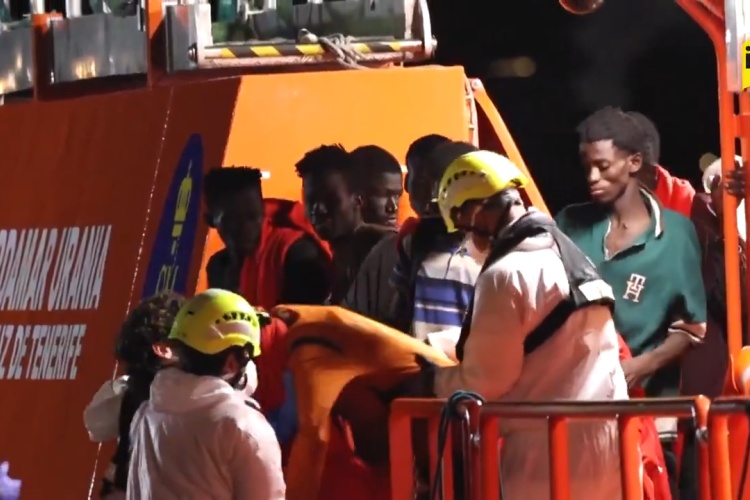
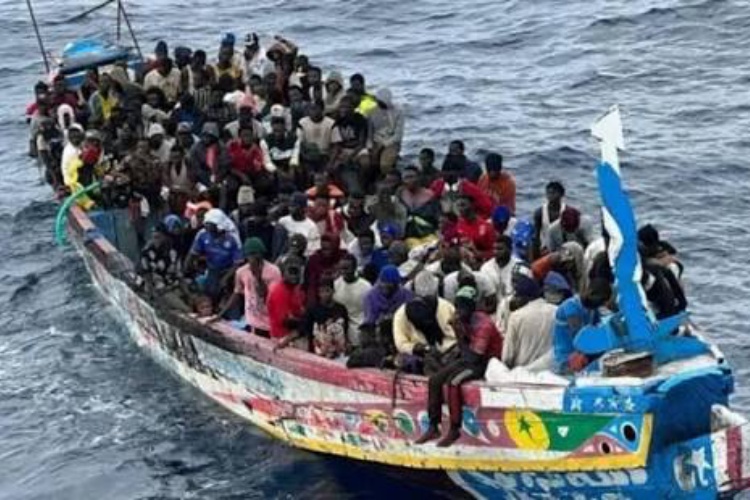
Gambiaj.com – (GRAN CANARIA, Spain) – More than 80 people are feared to have died after a wooden migrant boat carrying 128 people from The Gambia spent almost four weeks drifting across the Atlantic Ocean before being rescued south of Spain’s Canary Islands.
The cayuco, which is believed to have departed The Gambia, with four women, a baby, and dozens of men, was carrying mainly Gambians and Malians. When Spanish maritime rescuers located the vessel about 120 kilometers south of Gran Canaria, only 44 or 45 survivors were still alive, according to differing accounts of the rescue.
Five bodies were found aboard the boat but could not be recovered because of rough seas and dangerous conditions. The number of people who died during the 26-day ordeal is therefore estimated at at least 83.
A 26-day ordeal at sea
The survivors were found in extremely poor physical condition after weeks without adequate food or drinking water.
Spanish rescue officials reportedly described some of them as barely responsive, with severe dehydration, disorientation, and hallucinations. Some had consumed seawater and were suffering the effects of prolonged exposure to the elements.
Three survivors were airlifted to hospital in serious condition, while several others were taken for medical treatment after the boat reached the port of Arguineguín.
The rescue was carried out by Spain’s maritime rescue service after the cayuco was detected by surveillance aircraft. Strong winds and heavy swells, with winds exceeding 20 knots, complicated the operation and prevented rescuers from immediately recovering the five bodies remaining on the vessel.
Another deadly route out of The Gambia
For The Gambia, the tragedy is particularly painful because the journey began on its own shores.
The country has experienced years of irregular migration to Europe, with young Gambians undertaking dangerous journeys through the Sahara and across the Atlantic in the hope of finding employment and a better future.
The Atlantic route from West Africa to the Canary Islands is among the world’s deadliest migration routes. Boats leaving countries including The Gambia, Senegal, and Mauritania can spend weeks at sea, often in vessels poorly equipped for such a journey.
A boat that loses its course, runs out of fuel, or suffers engine failure can drift hundreds of kilometers from land, leaving passengers dependent on rescue services finding them before supplies run out.
In this latest case, the 26-day delay appears to have turned the journey into a fight for survival.
A warning for families in The Gambia
The deaths are also likely to renew concerns among Gambian families about the continued departure of young people on the so-called backway.
For many families, the decision to leave is driven by a combination of unemployment, limited economic opportunities and the belief that life in Europe offers a better future. But the risks involved in the Atlantic crossing are often difficult to appreciate until it is too late.
The loss of a baby among those on the Cayucos adds another devastating dimension to the tragedy.
Migration organizations have called for greater efforts to detect boats earlier and strengthen search-and-rescue capacity along the Atlantic migration routes. They also argue that preventing further deaths requires addressing the conditions that push people to attempt the journey in the first place.
The tragedy is more than another statistic in Europe’s migration crisis for The Gambia. It represents dozens of people who left the country hoping to reach Europe but instead spent nearly a month at sea, with most of them never making it to their destination.
The identities of the Gambian victims have not been publicly established in the information available so far.














Leave a Reply