


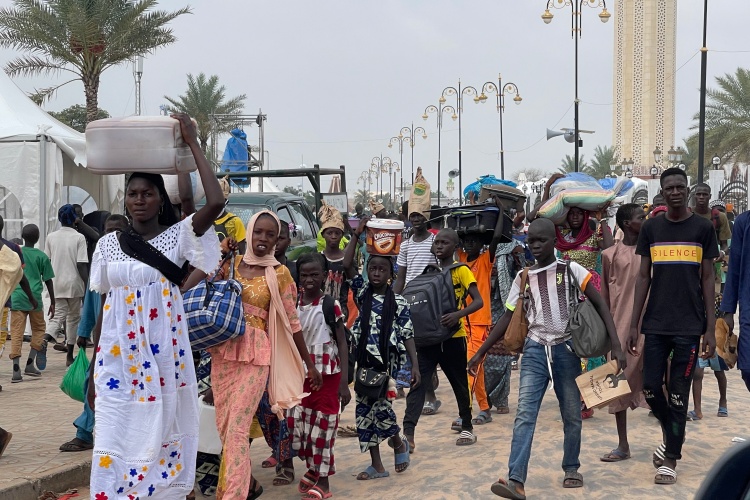
Gambiaj.com – (TOUBA, Senegal) – Long after the last pilgrims have folded their prayer mats and boarded buses back to Dakar, Kaolack, or Ziguinchor, the money the Grand Magal de Touba set in motion keeps moving through Senegal’s economy. A new joint study by the Université Alioune Diop (UAD) of Bambey and the Université Cheikh Ahmadoul Khadim (UCAK) of Touba has put a precise figure on that motion for the first time: 630 billion CFA francs, roughly two and a half times what the same research team measured just eight years ago.
For a country of about 18 million people, that is not a footnote to the national accounts. It is, as the researchers describe it, a genuine economic season, one built entirely on faith, hospitality, and family obligation, yet powerful enough to move indices of industrial production and stretch the limits of an entire city’s infrastructure.
A gathering that has outgrown its old estimates
The Magal commemorates the exile of Cheikh Ahmadou Bamba Mbacké, founder of the Mouride brotherhood, who was deported by French colonial authorities on 18 Safar 1313 of the Islamic calendar, 10 August 1895. What began as a private day of gratitude has become one of the largest religious gatherings on the African continent.
This year’s 132nd edition, held on 2nd August 2026, drew more than 7 million pilgrims to Touba, a city whose own resident population, according to the latest national census, has just overtaken Dakar’s to make greater Touba the most populated administrative area in Senegal.
The last full study of the Magal’s economic footprint, conducted in 2016–2017, put the figure at around 250 billion CFA francs.
The new research concluded in 2025, built on 5,425 household, pilgrim, trader, artisan, transporter, and mobile-money surveys and cross-checked against customs, health, electricity, waste-management, and highway-authority data, shows that number has since grown by more than 150 percent.
Where the money actually comes from
Economists studying large events typically separate spending into three layers, and the Touba study does the same. Understanding each layer explains why the Magal behaves less like a one-day festival and more like a rolling, weeks-long stimulus.
The largest slice, about 375 billion CFA francs, is what the study calls the direct impact: money spent by the roughly 93,000 host households of Touba and the estimated 1,250 dahiras (Mouride religious associations) that organize the reception of pilgrims.
A typical Touba household lays out close to 3.9 million CFA francs preparing for the Magal, well over half of it on food alone, with the rest split between household goods, transport, energy, and religious items. Dahiras, which mobilize contributions from members across Senegal and the diaspora, spend an average of 7.6 million CFA francs each, again dominated by catering and lodging costs.
A second layer, roughly 103 billion CFA francs, comes directly from pilgrims themselves, who spend an average of about 132,000 CFA francs each on transport, religious articles, communication, and gifts, a figure the study treats as an indirect but very real injection into the local economy.
The third and least visible layer, some 151 billion CFA francs, is the induced impact: the way an initial round of spending ripples outward as households, dahiras, and merchants pay other businesses in turn, calculated using an economic multiplier model built on Senegal’s national supply-and-use tables.
Add the three together and the researchers arrive at their headline figure of roughly 630 billion CFA francs generated in a single edition of the event.
The sectors that carry the load
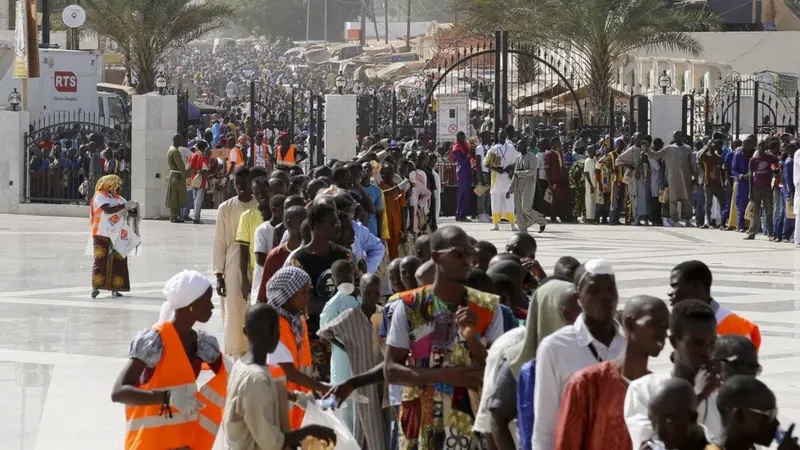
Thousands of pilgrims on the esplanade of the Central mosque of Touba
Livestock alone accounted for close to 33 billion CFA francs, with an estimated 150,000 ruminants sold into Touba for the occasion, a season that can define the annual income of herders and livestock traders across the country.
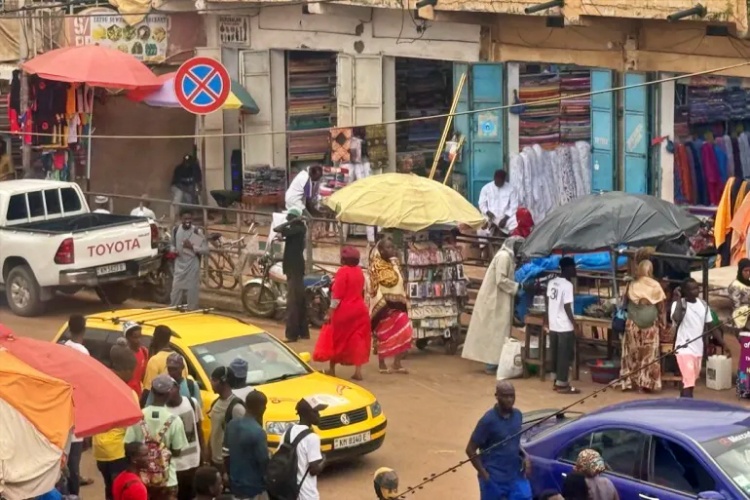
Traders in Touba’s markets, anchored by the sprawling Ocass market, report generating close to 70 percent of their entire annual turnover during the Magal period alone, with nine in ten recording a rise in sales during the event.
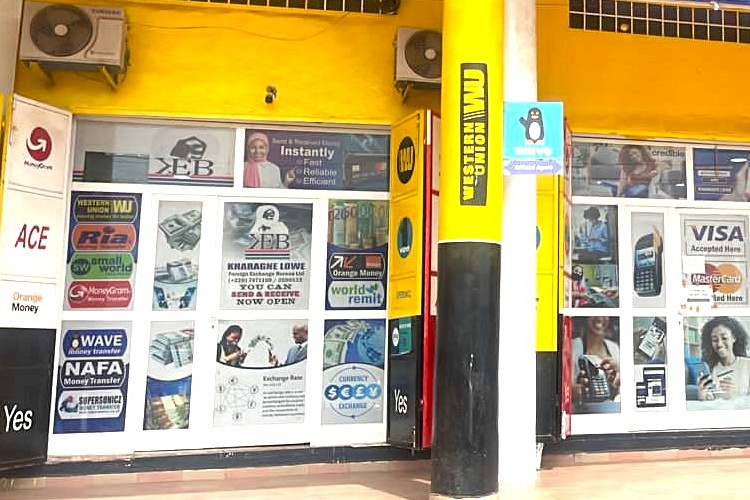
Mobile money and digital finance have become just as central to the story as cattle and cloth. Nearly 90 percent of mobile-money agents surveyed reported a jump in turnover during the Magal, with eight in ten describing their activity as “intense“, evidence of how deeply digital transfers, remittances from the Mouride diaspora, and everyday payments have woven themselves into the pilgrimage economy.
Artisans, particularly tailors, also see a marked seasonal surge, though the study notes that most operate informally, with limited access to credit or business registration.
Transport, too, is transformed. Public transport carries the majority of pilgrims to Touba, and average journeys of more than five hours are common; many transporters report fuel and logistics spending running into hundreds of thousands of CFA francs for the period.
Beyond one weekend: jobs and investment
The study does not stop at describing what already happens; it also models what could be built on top of it. Applying a bottom-up sector analysis across agriculture, livestock, leather processing, digital services, and religious tourism, the researchers project that roughly 21,000 direct jobs, and, once multiplier effects are included, closer to 34,000 jobs in total, could be created over three years with an estimated 57 billion CFA francs in investment, mostly in food-producing value chains, since 62 percent of Magal-related spending goes toward food.
Under a more ambitious scenario, the researchers say the Magal’s economic footprint could support more than 100,000 jobs over the same period with close to 90 billion CFA francs in investment across agriculture, livestock, leather, digital services, and tourism.
The state’s own footprint has grown alongside the crowds. In 2017, roughly 7,000 security, health, sanitation, water, and electricity personnel were deployed for the Magal; for the 2025 edition, that figure more than doubled to over 15,000 agents, reflecting both the scale of the gathering and the growing recognition in Dakar that Touba’s five days of devotion have become a logistical undertaking of national importance.
The other side of the ledger
The researchers are careful not to present an uncomplicated success story. Access to clean water and sanitation remains a persistent strain, more than a quarter of pilgrims surveyed reported no access to toilets during the event, and demand for electricity in Touba surges by 30 to 50 percent during the Magal period.
Health authorities recorded a spike in cases linked to physical exertion, overcrowding and heat, and the study calls for stronger epidemiological surveillance and public sensitisation campaigns as the event continues to grow.
Much of the economic activity itself remains informal, the vast majority of Touba’s artisans and traders operate without formal business registration, which the researchers say limits both taxation potential and access to financing that could turn a seasonal boom into a more permanent economic base.
A religious duty that doubles as an economic strategy
What emerges from the study is a picture of an event that Senegal has, almost without formal planning, turned into one of its largest annual economic activations, arguably rivalling entire sectors of the national economy for a concentrated few weeks each year.
Whether that potential becomes a lasting foundation for Touba’s development, as the study’s authors urge, will depend on decisions well beyond the Magal itself: investment in water, power, health infrastructure, and the formalization of the informal trade that keeps the city’s markets, transporters and mobile-money kiosks running long after the pilgrims have gone home.








Leave a Reply