


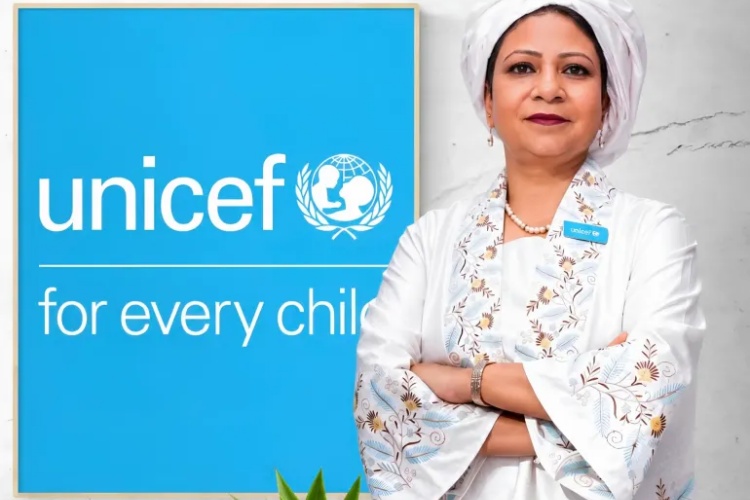
Gambiaj.com – (BANJUL, The Gambia) – UNICEF has called for stronger investment in girls’ education, social protection, and legal enforcement as The Gambia joins the global observance of the International Day of the Girl on October 11.
In a statement issued on Friday, UNICEF Representative in The Gambia, Nafisa Binte Shafique, said every Gambian girl should have the freedom to learn, lead, and decide her own future, warning that child marriage deprives girls of that opportunity.
This year’s International Day of the Girl is being marked under the theme “End child marriage and invest in girls’ rights,” a theme UNICEF said was shaped through consultations with girls and girl-led networks around the world.
Shafique said progress against child marriage was possible, pointing to global estimates that about 68 million child marriages have been averted over the past 25 years through investments in girls’ education, legal reform, and social protection.
She said The Gambia had also recorded progress. The proportion of women aged 20 to 24 who were married before the age of 18 fell from 30.4 percent in 2013 to 23.1 percent in the 2019–20 Demographic and Health Survey.
However, UNICEF warned that the gains remain uneven across the country.
While child marriage affected 17 percent of young women in urban areas, the figure rose to 43 percent in rural areas. In Banjul, the rate was below eight percent, compared with more than 54 percent in Kuntaur.
“A girl’s future should never be decided by the village she is born in,” Shafique said.
She identified education as one of the strongest protections against child marriage. According to the UNICEF statement, almost half of women with no schooling were married as children, compared with fewer than one in ten among those who reached secondary education or higher.
The UNICEF representative also welcomed the increasing participation of girls in education, noting that girls constituted the majority of candidates who obtained the grades needed to progress from this year’s senior secondary examinations.
But she said the results also highlighted challenges within the education system, with fewer than one in ten candidates obtaining the five credits, including English and Mathematics, required for university admission.
“Our girls are ready. Our schools must now rise to meet them,” she said.
The Gambia already has legal provisions prohibiting child marriage. The Children’s Act of 2005 prohibits the practice, while amendments introduced in 2016 imposed severe penalties on those who arrange, conduct, or fail to report a child marriage.
UNICEF, however, stressed that legislation alone would not be enough without effective enforcement.
The agency called for sustained investment in keeping girls in school, expanding social protection for vulnerable households, strengthening the social service workforce, providing adolescent-friendly health and mental health services, and enforcing existing laws against child marriage.
Shafique also appealed to parents, religious and traditional leaders, teachers, government, and development partners to play a role in protecting girls and expanding their opportunities.
She urged parents to see education not as a delay to their daughters’ futures but as the foundation of those futures.
“Your daughter’s education is not a delay to her future. It is her future,” she said.
















Leave a Reply