


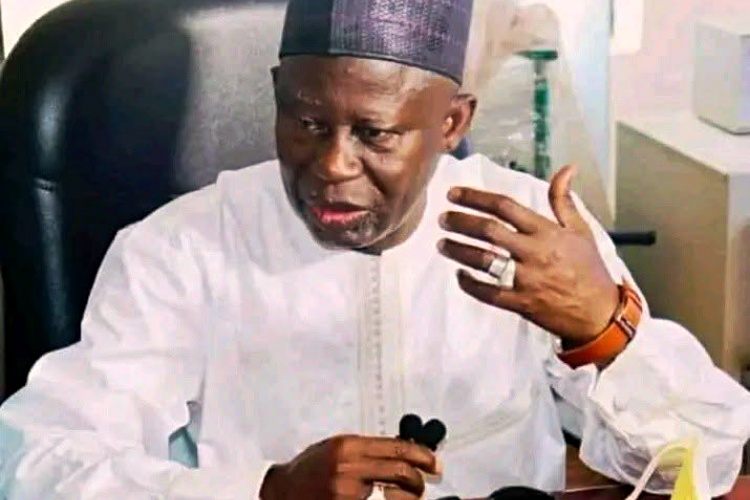
Gambiaj.com – (BANJUL, The Gambia) – United Democratic Party (UDP) leader Ousainou Darboe says opposition unity remains possible ahead of the December 5 presidential election, but his own definition of such unity raises questions about whether the rival coalitions can realistically agree on the terms of a common alliance.
In an interview with Eye Africa, Darboe argued that differences over who should lead a unified opposition should not prevent Gambia First, Coalition 2026 and Team Gambia from coming together to challenge President Adama Barrow.
He described the question of leadership as “not a problem that is unresolvable”, suggesting that negotiations could still produce an agreement before voters go to the polls.
But beneath that optimism lies a more fundamental difficulty: Darboe appears to envisage opposition unity primarily around the UDP rather than as an equal partnership between competing political formations.
The UDP had selected Darboe as its presidential candidate before Gambia First was formed, he explained, and the coalition subsequently aligned itself with the party because it regarded the UDP as a viable political platform.
That distinction is significant.
For other opposition leaders, particularly those who have built their own political movements and presidential ambitions, unity may mean negotiating a genuinely common platform, including leadership, policy priorities and the distribution of political responsibility.
For Darboe, however, the starting point appears to be that the UDP’s existing presidential candidacy should remain the centre of any eventual arrangement.
That could make the search for unity considerably more difficult.
Unity Around Whom?
The opposition landscape has become increasingly fragmented, with several formations seeking to present themselves as credible alternatives to Barrow.
Darboe’s argument assumes that these competing forces can put aside their individual ambitions in favour of a larger objective: defeating the incumbent.
But defeating Barrow is only one part of the equation.
The more difficult question is what happens after the opposition agrees to cooperate.
A coalition involving parties with different leadership structures, constituencies and political expectations would need to establish not only who contests the presidency, but also how power would be shared if the coalition wins.
Darboe’s insistence that the UDP has already chosen him effectively narrows the room for negotiation on the most consequential question.
That may be acceptable to UDP supporters. It is less obvious that it would be acceptable to leaders of rival formations who believe their own political capital entitles them to a meaningful role in determining the coalition’s presidential candidate.
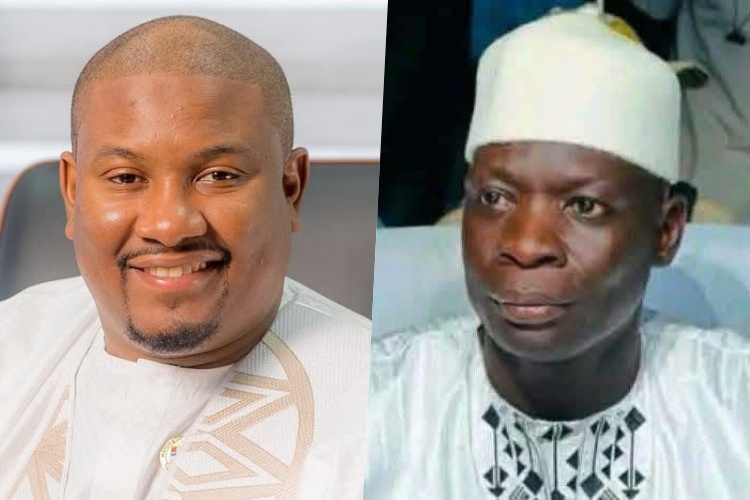
This is particularly relevant given calls for Darboe to make way for a younger candidate such as Talib Bensouda.
Darboe rejected that argument, saying the UDP itself had endorsed his candidacy.
The result is a potential contradiction at the heart of the unity debate: opposition leaders may agree that unity is necessary, while disagreeing fundamentally about what unity should look like.
The Question Of Trust
Darboe’s position on government appointments introduces another layer to that problem.
He has pledged to abolish presidential adviser positions that he considers unnecessary, describing them as “political compensations” and arguing that they impose an avoidable burden on the public purse.
His argument has a clear fiscal logic. A government that eliminates redundant positions and redirects resources towards healthcare and other essential services could claim a stronger commitment to public-sector efficiency.
But coalition politics rarely operates solely on questions of administrative efficiency.
Political alliances are often sustained by negotiated expectations about representation, influence and participation in government.
Darboe says Gambia First partners are motivated by national development rather than the prospect of government appointments. If that principle genuinely holds across the coalition, his proposed cuts should not present a major problem.
Yet the broader opposition alliances would have to decide whether they share that understanding.
A leader asking political partners to surrender or subordinate their own presidential ambitions while simultaneously declaring that some of the traditional mechanisms for accommodating coalition partners would disappear could face a difficult trust deficit.
The issue, therefore, is not simply whether political advisers are necessary. It is whether prospective allies believe Darboe’s conception of government will leave sufficient room for them to participate meaningfully in the administration they help bring to power.
That question could become particularly important in negotiations over a unified opposition.
A Coalition Without Political Compensation?
Darboe’s proposed government model suggests that he wants political cooperation to be separated from access to state positions.
He says coalition partners understand that “wasting on unnecessary spending must stop” and insists they are not joining Gambia First merely to secure positions.
That may be an attractive proposition to voters frustrated by the expansion of government appointments and public expenditure.
But it also places a significant burden on the coalition’s political architecture.
If advisers are eliminated, ministers are expected to remain within their portfolios and the presidential delegation is reduced, how would coalition partners be represented?
Darboe has not suggested that coalition partners would be excluded from government. Rather, his argument is that participation should not automatically translate into the creation of additional positions.
That distinction could work in a disciplined alliance built around a common programme.
It could prove much harder in an alliance assembled shortly before a presidential election, particularly where several political actors have already invested considerable resources and political capital in their own campaigns.
The Real Test For Opposition Unity
Darboe is correct that opposition fragmentation creates an opportunity for Barrow. A divided opposition can allow an incumbent to prevail even when a substantial portion of the electorate wants political change.
But unity cannot simply be defined as several opposition groups agreeing to support one candidate.
It requires agreement on who that candidate should be, how the coalition will make decisions, what happens to the ambitions of defeated candidates, how government positions will be allocated and what guarantees partners receive after victory.
Darboe’s position provides some answers, but it also exposes the central difficulty.
He wants opposition forces to unite behind the UDP’s candidacy while simultaneously promising to dismantle some of the political positions traditionally available for accommodating allies.
That may be entirely consistent with his vision of a leaner and more disciplined government. But politically, it means potential partners must trust that the arrangement will be fair even when some of the conventional instruments of coalition management are removed.
With less than two months before the December 5 election, the question is therefore no longer simply whether Darboe believes opposition unity is possible.
It is whether the other opposition leaders share his definition of unity, and whether they trust the political settlement that would follow a victory under his leadership.




Leave a Reply