


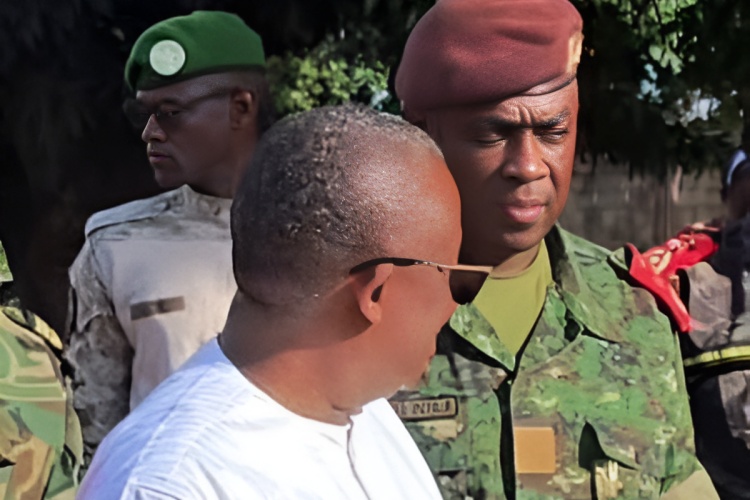
Gambiaj.com – (BISSAU, Guinea-Bissau) – Guinea-Bissau’s military-led transition appears to be moving decisively towards a political order without former President Umaro Sissoco Embaló, with the authorities accelerating the removal of his remaining allies from key positions in government.
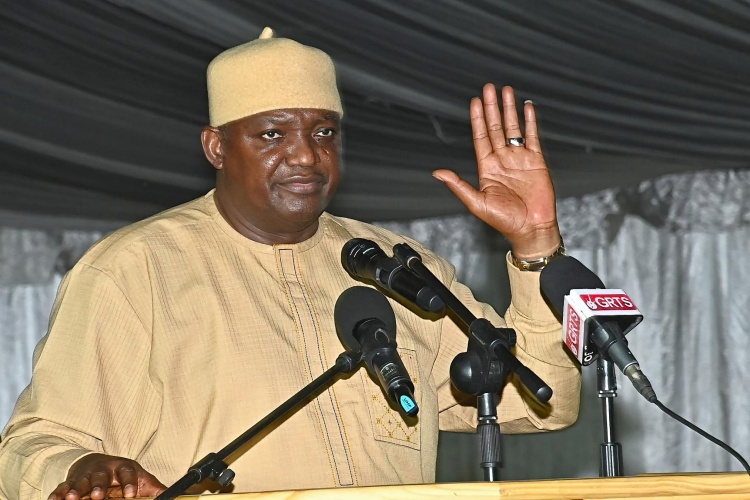
The latest move came on Tuesday, when Transitional President Horta Inta-a dismissed Interior Minister Mama Saliu Embaló and Minister of Fisheries and Maritime Economy Virgínia Maria Correia.
António Suca Intchama, who previously served as interior minister between 2012 and 2014, was appointed to replace Mama Saliu Embaló, while former minister Fidelis Forbs was named to head the fisheries ministry.
The dismissals follow the removal last Friday of Malam Sissé, an acknowledged supporter of Embaló, as Director-General of Contributions and Taxes. Sissé, who leads the African Party for Peace and Social Stability (PAPES), had been appointed to the post in March.
The successive removals reinforce indications that the transition authorities are carrying out a broader restructuring of the state apparatus aimed at eliminating figures associated with the former president from strategically important government positions.
From removing allies to reshaping the political order
The developments came days after the military High Command under Generals Horta Inta and Tomas Djassi made clear that Embaló would not be allowed to return to Guinea-Bissau for now, despite his announcement that he intended to return on October 4.
The military authorities said the security conditions necessary for his return were not in place.
The decision effectively transformed Embaló’s political future from an issue of when he would return to Bissau into a question of whether the transition authorities intend to accommodate him at all.
The latest government dismissals suggest the answer may increasingly be no.
The pattern also places Transitional Prime Minister and Finance Minister Ilídio Vieira Té at the center of the emerging political architecture. Té has already been playing a prominent role in the administration and recently established a new political party, adding a political dimension to his growing influence within the transition.
His involvement in the dismissal of Sissé is particularly significant because it shows that the removal of Embaló-linked figures is not confined to decisions by the military leadership. The process is also being implemented through the civilian structures of the transitional government.
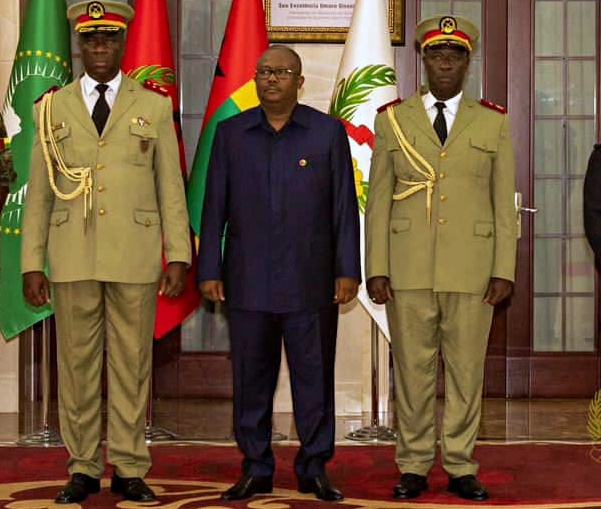
In September 2023, Umaro Sissoco Embalo, fearing a coup, appointed Generals Tomas Djassi and Horta Inta as his Presidential Guard Commander and Chief of Staff, respectively, to protect him. They now don’t want him in Bissau.
Embaló’s network increasingly dismantled
The apparent “De-embalization” of the state is also extending beyond government offices.
Several prominent figures associated with Embaló have either left the country or found themselves increasingly distant from the center of power.
Bodjan Candé, described as a close associate of Embaló and leader of the so-called “Caveira” militia group, has reportedly fled to Luxembourg. The group was accused during Embaló’s presidency of involvement in kidnappings and attacks against opponents and critics of his government.
Former Armed Forces Chief of Staff General Biagué Nan Tam, another figure closely associated with Embaló, has also relocated to Morocco, where Embaló himself has been based since the 2025 military takeover.
The departures, combined with the systematic removal of Embaló allies from government, point to a transition increasingly determined to separate the post-coup state from the political network built around the former president.
A new political landscape
The developments may therefore represent more than a routine reshuffling of ministers.
They suggest that the military authorities are attempting to consolidate a new political environment in which Embaló and his political network have little institutional leverage.
The creation of a new political party by Ilídio Vieira Té could become particularly important if the transition eventually moves towards elections. It provides the emerging administration with a potential political vehicle separate from Embaló’s former political structures and could help shape the contest that follows the military takeover.
For Embaló, who has continued to insist on his intention to return and participate in Guinea-Bissau’s political future, the message from Bissau is becoming increasingly difficult to misread.
The military authorities have blocked his return, his former allies are being removed from key state positions, and senior figures associated with his former power structure are increasingly outside the country.
Taken together, the developments point to a transition that is not simply managing the aftermath of the coup but actively restructuring Guinea-Bissau’s political landscape, with every indication that it intends to do so without Embaló.






Leave a Reply