


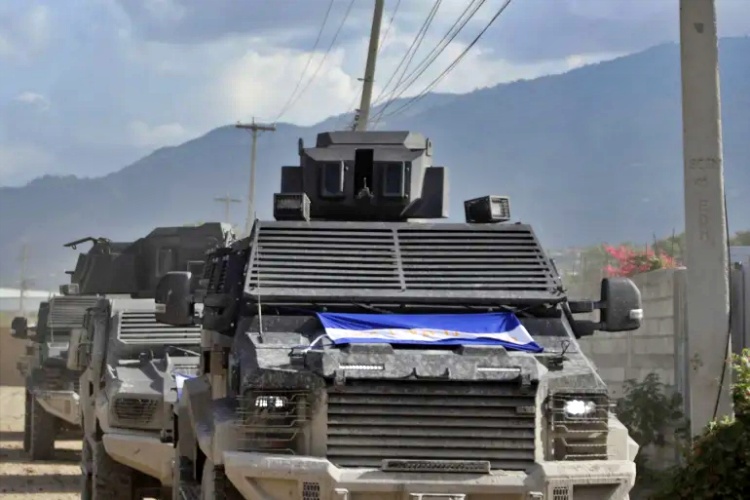
Gambiaj.com – (PORT-AU-PRINCE, HAITI) – Salvadoran troops deployed to Haiti have carried out their first major military operation, striking a property allegedly used as the headquarters of Wilson Joseph, leader of the powerful 400 Mawozo gang, in the outskirts of Port-au-Prince.
Salvadoran President Nayib Bukele announced the operation on social media, saying his forces had destroyed the gang leader’s base. However, the attack has raised questions about the military strategy being pursued by El Salvador in a country struggling to contain widespread gang violence.
Bukele posted a video on X showing at least three helicopters bearing Salvadoran flags flying over a residential area and repeatedly firing at a house. Several people could be seen fleeing the surrounding area as the aircraft launched their attacks.
The video, accompanied by a message in Haitian Creole, identified the property as the headquarters of Wilson Joseph, also known as Lanmò San Jou. According to Haitian newspaper Le Nouvelliste, citing government sources, the building was heavily damaged, although the gang leader was not present during the attack.
The strikes reportedly began on Sunday and continued until Tuesday, with operations conducted exclusively from the air and no ground intervention reported.
Bukele’s Expanding Mission In Haiti
The Salvadoran military deployment initially focused on locating and bringing home four Salvadoran soldiers who went missing following an ambush on October 18.
However, Bukele has increasingly suggested that his country’s involvement could extend beyond the search for the missing personnel to a broader campaign against Haiti’s powerful armed gangs.
The latest operation is the first major offensive by Salvadoran troops since their deployment in Haiti in late October.
Bukele celebrated the attack, writing on X: “We kept our promise.”
His statement referred to an earlier exchange on the platform in which a user shared a photograph of the gang leader’s property and challenged the Salvadoran president to destroy it. Bukele responded: “Give us the address of the house and we will destroy it.”
The public presentation of the operation has drawn comparisons with Bukele’s domestic security campaign in El Salvador, where his government has relied heavily on highly publicized arrests and mass detention to weaken criminal gangs.
While the approach has earned him considerable popularity, it has also attracted allegations of human rights abuses, particularly over the treatment of detainees in the country’s high-security prisons.
Questions Over Military Coordination
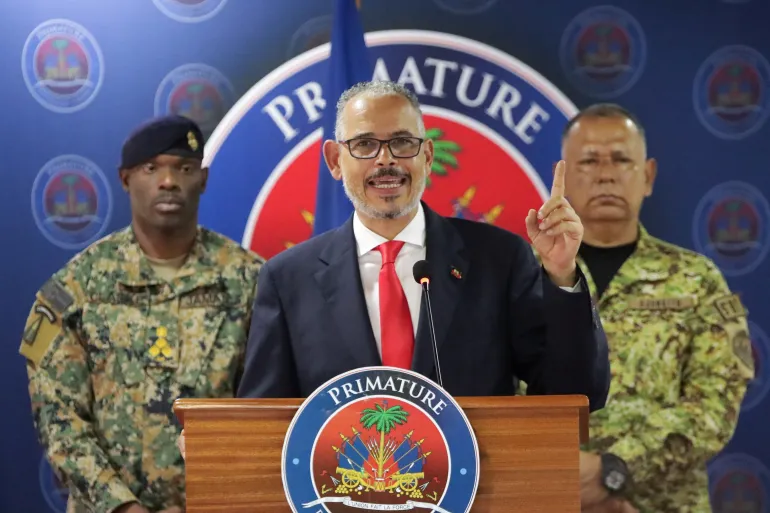
Haiti Prime Minister Alix Didier Fils-Aime is set to visit El Salvador next week [File: Patrice Noel/Reuters]
Most of the Salvadoran personnel are reportedly operating outside the framework of the Gang Suppression Force (GSF), the United Nations-backed international security operation.
Axios reported earlier this week that US State Department officials had expressed reservations about El Salvador’s military operations against gangs in Haiti. The Miami Herald has also reported concerns in Washington over Bukele’s approach.
Dominican Republic President Luis Abinader has backed El Salvador’s involvement but urged its troops to coordinate their activities closely with the GSF.
The operation has nevertheless received support from many Haitians on social media, as well as from interim Prime Minister Alix Didier Fils-Aimé.
Speaking to the Miami Herald, Fils-Aimé argued that the Salvadoran contingent was not competing with the international force.
International Force Under Pressure
The operation comes as Haiti prepares for elections scheduled for July and October next year, which would be the country’s first polls in more than a decade.
Restoring security remains a major obstacle to the electoral process, with armed gangs continuing to exert influence over large parts of the country.
For Washington, the immediate challenge is ensuring that the international security operation delivers results.
US Secretary of State Marco Rubio has warned that the failure of the GSF could leave international partners without a viable alternative.
“If the GSF fails, then we’re out of ideas,” Rubio said, adding: “It has to work, because we don’t have a Plan B.”
The Salvadoran strikes may signal a more aggressive approach to confronting Haiti’s gangs, but questions remain over whether operations conducted outside the main international security framework can deliver lasting improvements in security without undermining coordination on the ground.





Leave a Reply