


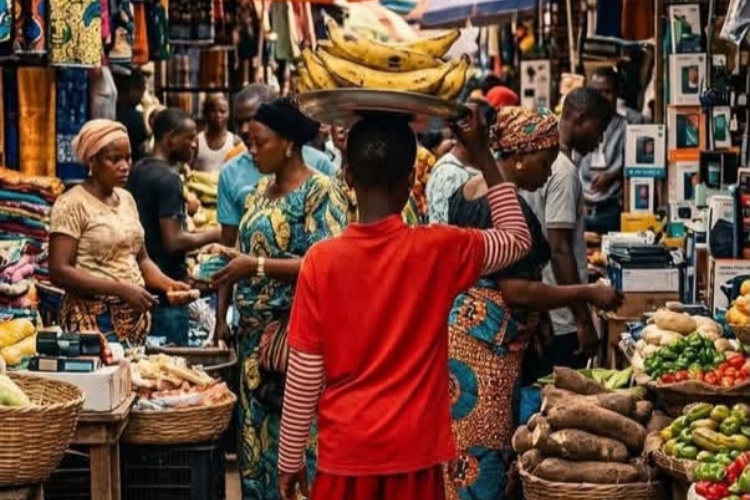
Gambiaj.com – (BANJUL, THE GAMBIA) – Fifteen-year-old Lamin (name withheld) wants to go to school, but his family’s financial circumstances have made it difficult for him to continue his education.
His mother sells goods at the market, where he helps her to earn a living. He said she cannot afford the expenses associated with schooling and depends on his assistance to manage the household’s responsibilities.
“I want to go to school, but my parents cannot afford school expenses. My mum is selling, and I am assisting her. She said if I don’t, there will be a lot of burden on her. It’s just me and her,” he said.
Lamin’s experience was among those documented during interviews with children and adults at Serekunda Market, where poverty, child labor, and barriers to education emerged as recurring concerns.
Seventeen-year-old Kaddy (not her real name) said she attended school until Primary Three before deciding that continuing was becoming a burden on her family, given their financial circumstances.
She lives with her mother, who also sells goods at the market, and helps with household responsibilities. Kaddy said she would like to return to school if their situation improves. She hopes to attend classes without worrying about whether there will be food for lunch or whether she will have to stay home to help her mother at the market.
Fourteen-year-old Kabiro Jabang (not his real name) also expressed a desire to attend school. He spoke of his admiration for children his age who go to school in uniform, highlighting the gap between his educational aspirations and his present circumstances.
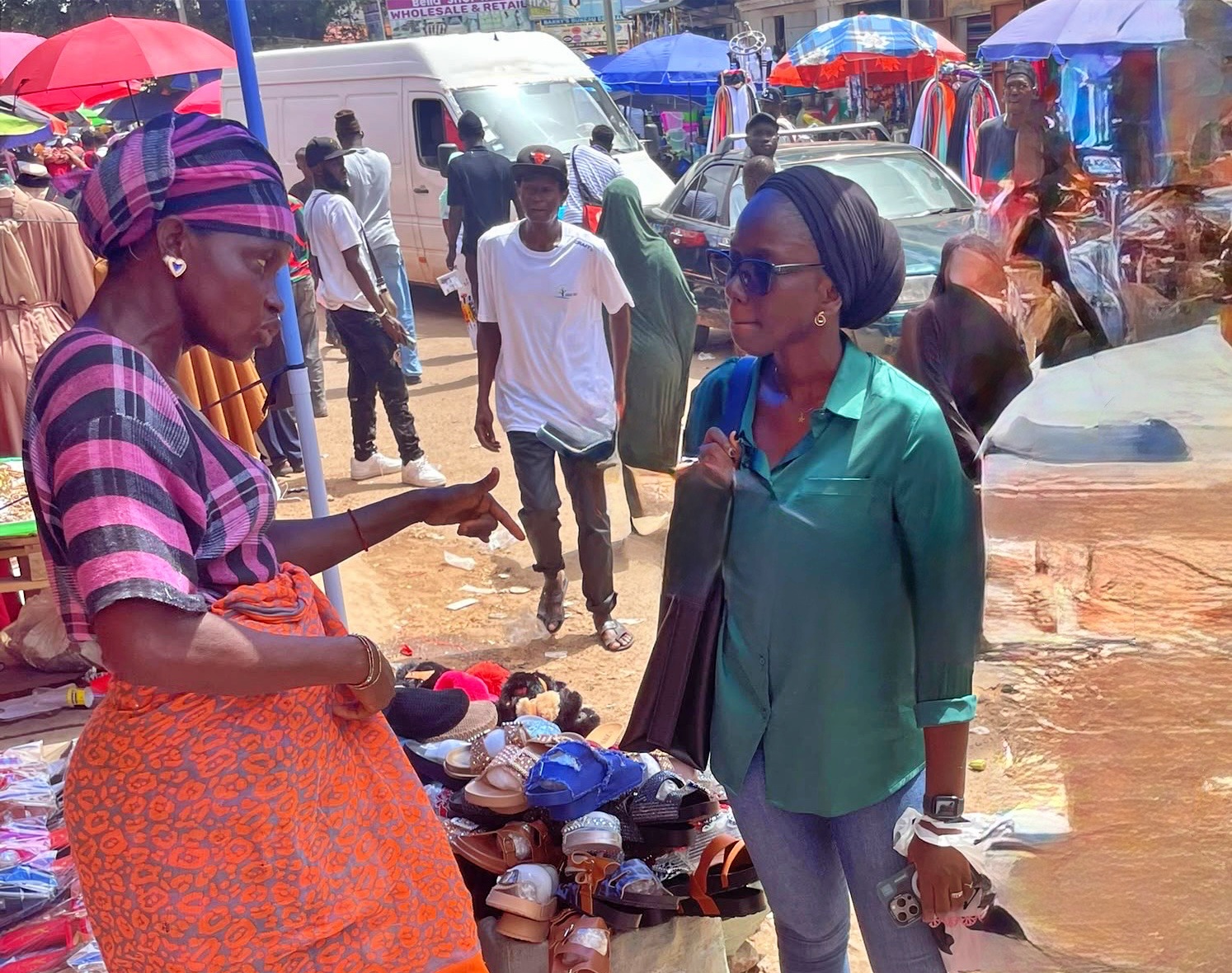
The Gambia Journal’s reporter Alima S. Darboe discussing child labor with Sally Manneh, a vegetable vendor
Poverty And The Pressure On Families
The children’s accounts were echoed by adults interviewed at the market, who described the economic pressures facing families and the difficulties of balancing work, childcare, and education.
Sally Manneh, a vegetable vendor, said some parents struggle to meet their children’s educational needs while earning enough to support their households. She identified the cost of food, books, uniforms, and other school necessities as major challenges and called for greater government support.
Hadim Gaye attributed child labor partly to unemployment and poverty. He said some families struggle to provide three meals a day, forcing children to help their parents in markets, shops, and fields.
He called for more employment opportunities for adults and financial assistance to help families meet education-related expenses, including school fees, books, shoes, and uniforms.
Mariama Ceesay, however, highlighted parental supervision as another important concern. She said some children leave home wearing school uniforms but spend time begging or working instead of attending classes. She urged parents to monitor their children’s whereabouts and ensure they attend school regularly.
A Wider National Concern
During a field visit to Serekunda Market on 12 October 2026, children were observed selling goods and begging. The observation did not establish whether those seen were enrolled in school or absent from classes. However, interviews with children and adults provided insights into how household poverty and family responsibilities can affect children’s access to education.
The Gambia Bureau of Statistics’ 2022–2023 Labor Force Survey reported that 22.9 percent of children aged five to 17 were involved in child labor, placing the experiences gathered at the market within a wider national concern.
The Children’s Act 2005 prohibits exploitative child labor, defining it in terms of work that deprives children of their health, education, or development.
Addressing the problem requires more than discouraging children from working. It also means confronting the economic difficulties that push some families to depend on their children’s contributions.
The adults interviewed called for greater employment opportunities, government assistance, and support with education-related expenses.
Stronger cooperation between schools, parents, and child welfare authorities could also help identify children at risk of dropping out or engaging in harmful work and connect their families with appropriate support.
For Lamin, Kaddy, and Kabiro, the desire to attend school remains, even as the demands of survival compete with their educational aspirations. Their experiences illustrate how poverty can shape children’s choices, limit their opportunities, and place their education at risk.











Leave a Reply