


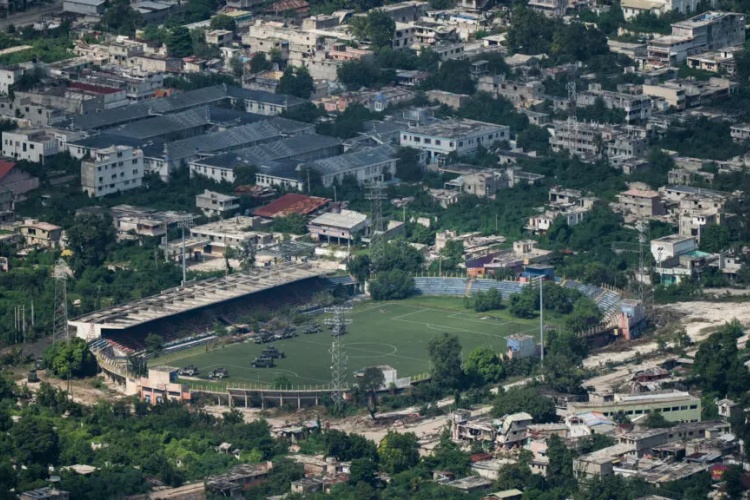
Gambiaj.com – (PORT-AU-PRINCE, HAITI) – Haiti’s security forces have reclaimed control of the country’s main football stadium in Port-au-Prince after it was occupied by armed gangs for nearly two years, marking a significant development in the campaign to restore state authority over gang-controlled areas, with the support of approximately 2,000 Salvadoran troops deployed in the country.
The Haitian National Police announced on Thursday that they had regained “full control” of the Sylvio-Cator Stadium, which had been under the control of criminal groups since 2024. Foreign security personnel participated in the operation, before Salvadoran soldiers took up positions to secure the facility.
The recovery of the stadium represents a symbolic and strategic gain for the authorities, as the facility is expected to become an operational base for Salvadoran forces as they expand their operations into gang-controlled neighborhoods of the capital.
Salvadoran President Nayib Bukele confirmed the development in a post on X, saying his troops would establish a base inside the stadium to support their advance into areas controlled by armed groups.
“We will now establish an operational base in the stadium to continue our advance into the heart of gang-controlled territories,” Bukele wrote in Haitian Creole, warning gang members to leave the area or face the consequences of confronting his forces.
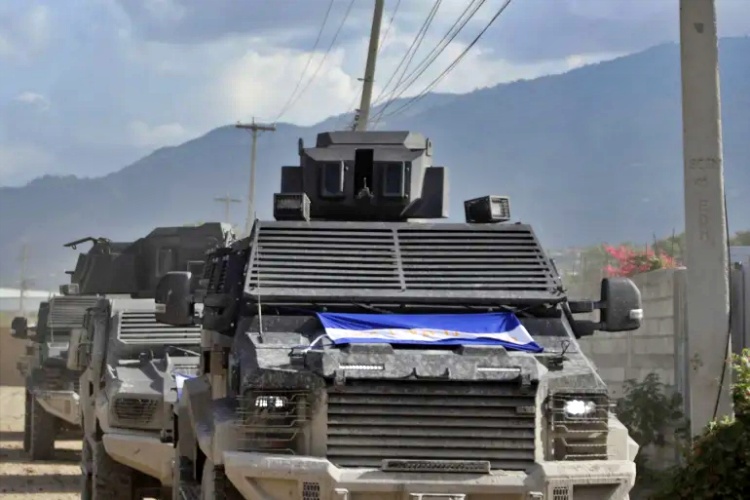
The announcement was accompanied by footage showing soldiers and armoured vehicles entering the stadium, with some sequences showing gunfire outside the facility.
Salvadoran Troops Increase Pressure On Gang Strongholds
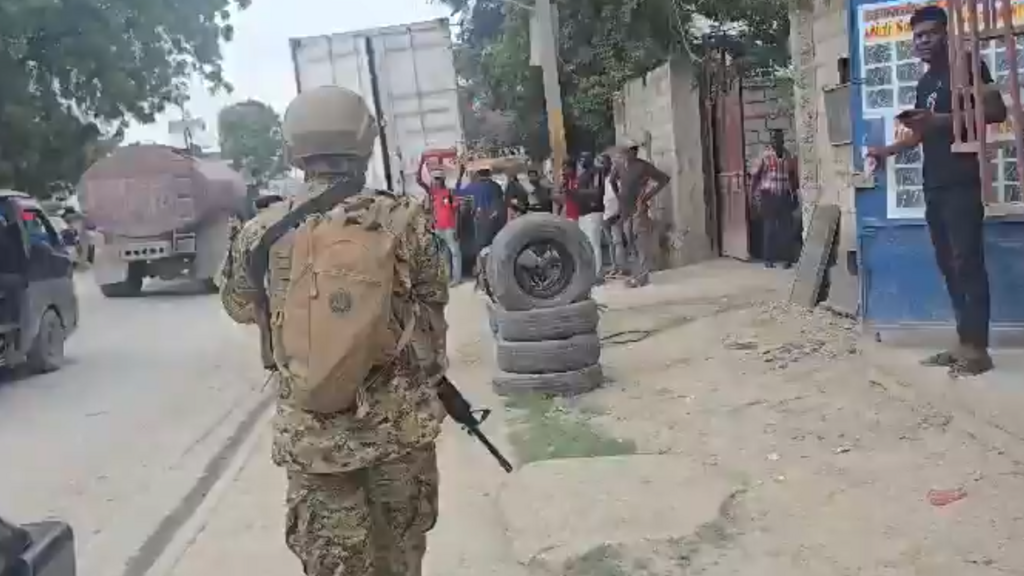
Troops from El Salvador reclaim gang held area in Port-Au-Prince
The operation is part of a broader offensive by the Salvadoran contingent, which arrived in Haiti in late October at Bukele’s initiative. The deployment is intended to strengthen efforts by Haitian security forces to dismantle powerful criminal networks that have taken control of large parts of the country.
Earlier this week, Bukele announced that Salvadoran troops had destroyed what he described as the headquarters of 400 Mawozo, one of Haiti’s most powerful gangs, operating in the Croix-des-Bouquets area.
The presence of the foreign troops is also reportedly putting pressure on gang leaders, with some prominent figures, including Wilson Joseph, known as Lanmò San Jou, said to have fled their strongholds.
The latest developments suggest that the Salvadoran deployment is beginning to give Haitian forces additional operational capacity to challenge gangs in areas where they have maintained control for extended periods.
However, reclaiming strategic locations does not necessarily mean that the gangs have been dismantled or that the authorities have regained lasting control over the surrounding neighbourhoods. The ability to secure recovered areas and prevent armed groups from returning will remain a major test.
Bukele Exports His Controversial Security Strategy
The Salvadoran contingent operates outside the framework of the UN-backed Gang Suppression Force, raising questions about coordination and accountability within the broader international security response.
Bukele is effectively extending abroad the hardline security approach he has pursued in El Salvador, where a sweeping crackdown significantly weakened criminal gangs but also attracted accusations of arbitrary arrests, abuses and human rights violations.
His determination to maintain pressure on Haitian gangs has continued despite reservations expressed in Washington and by some international institutions.
For Haiti, where armed groups have paralyzed economic activity, displaced thousands of people and severely weakened state institutions, the arrival of the Salvadoran troops has raised hopes of a more forceful response to the security crisis.
Nevertheless, the long-term impact of the deployment will depend not only on military operations but also on whether Haitian authorities can consolidate their territorial gains, restore public services and rebuild confidence in state institutions.
The Sylvio-Cator Stadium, inaugurated in 1953 with a capacity of approximately 10,000 spectators, was once the home ground of Haiti’s national football team. Its occupation by gangs forced the national side to play its home matches in Curaçao during the 2026 World Cup qualifiers.
Despite the security challenges, Haiti qualified for its second World Cup, although the team was eliminated in the group stage after losing all three matches against Scotland, Brazil and Morocco.
The recovery of the stadium therefore carries significance beyond the security campaign: it represents an attempt to reclaim a national symbol from criminal groups that have increasingly dictated life in the Haitian capital.


Leave a Reply