


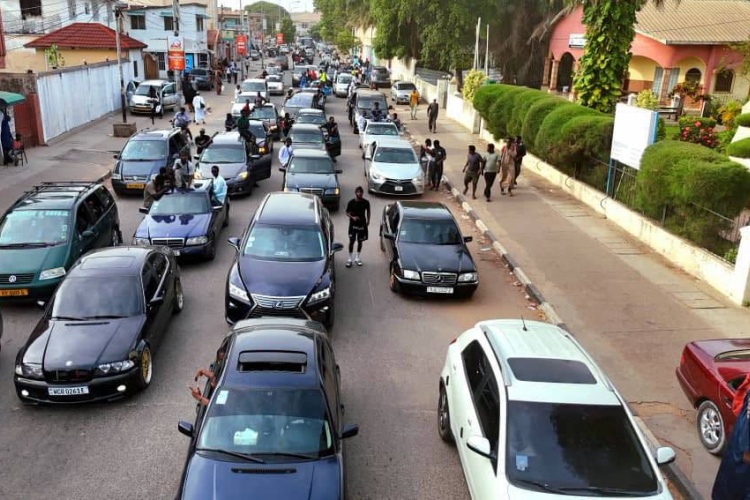
Gambiaj.com – (BANJUL, THE GAMBIA) – President Adama Barrow’s recent State House engagement with the Gambia Motorsports Association has sparked public debate, with citizens questioning whether financial and political backing for car drifters overlooks the devastating toll of dangerous street stunts.
During the meeting, President Barrow presented the association with D500,000 for fuel, invited members to join his upcoming nomination procession, and signaled a willingness to consider presidential pardons for members currently serving prison sentences.
While the administration framed the outreach as youth empowerment, critics argue the gesture sidelines victims of drifting-related crashes—many of whom have suffered permanent disabilities or lost their lives.
Lamin Bah, a commercial taxi driver, urged the government to prioritize the safety of everyday commuters.
“These are activities that have caused accidents and cost people their lives,” Bah said. “What happens to the innocent people who get injured? Supporting young people is good, but it should not come at the expense of other people’s lives.”
Roadside vendor Ebrima Barry echoed those concerns, noting that the long-term trauma borne by affected families is being overshadowed by official fanfare.
“People have died, and some have been left disabled for the rest of their lives. Their families are the ones carrying that pain,” Barry said. “When we talk about giving D500,000 to the drifters, we should also remember those who suffered because of these activities.”
For some young Gambians, the prospect of executive clemency sends the wrong message regarding road safety and legal accountability.
“I am not against young people pursuing their interests, but there must be limits,” said student Alimatou Ceesay. “You cannot put people’s lives in danger and expect everything to be forgotten because you have now received support from the President. There must be accountability.”
Fatou Barry, a student at the University of The Gambia, suggested that official support should be strictly tied to regulation and designated venues rather than street racing.
“I believe drifting can be developed into a proper sporting activity, but it should be done in designated places with safety measures,” she said. “The victims also deserve attention and justice.”
Public apprehension over stunt driving is rooted in recent high-profile tragedies. In one notable case, Abdourahman Bah was left permanently disabled following a drifting incident involving Malick Badjie. Badjie was subsequently sentenced to three years in prison with hard labor and ordered to pay D1 million in compensation.
More recently, in March 2025, 19-year-old Ousainou Kebbeh was killed and three others were injured after a vehicle reportedly engaged in stunt driving plowed into pedestrians in Manjai.
These incidents have intensified calls for strict enforcement against uncontrolled street stunts. While establishing a regulated motorsport sector could eventually channel youth enthusiasm into safe, controlled environments, critics maintain that current policy lacks clear safeguards for public protection.
For many Gambians, the issue is not about denying young people recreational outlets, but ensuring that political outreach and entertainment do not undermine the rule of law.
As the presidency extends an olive branch to the drifting community, citizens are demanding that the victims whose lives were irrevocably altered by reckless driving remain central to the national conversation.











Leave a Reply