


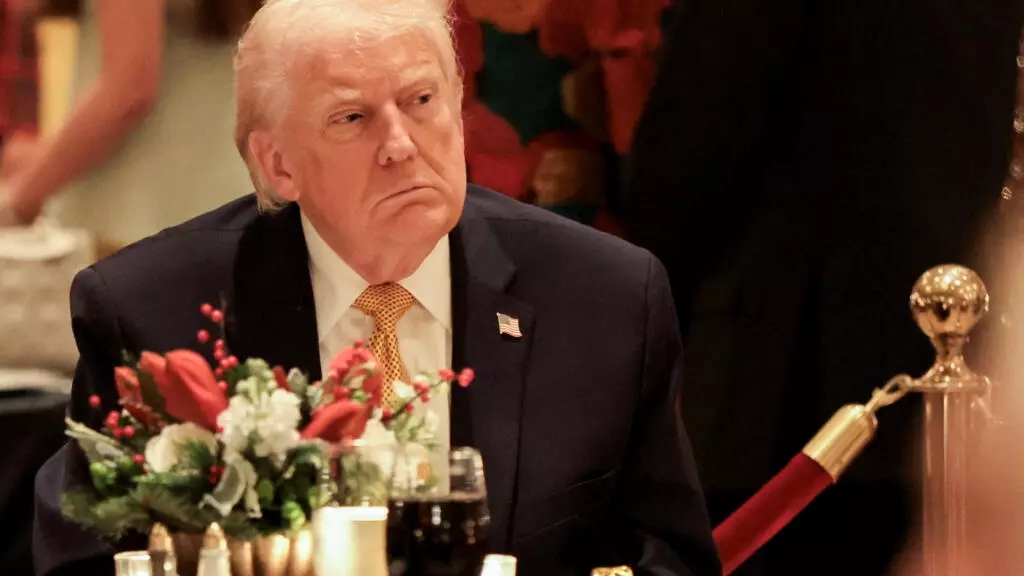
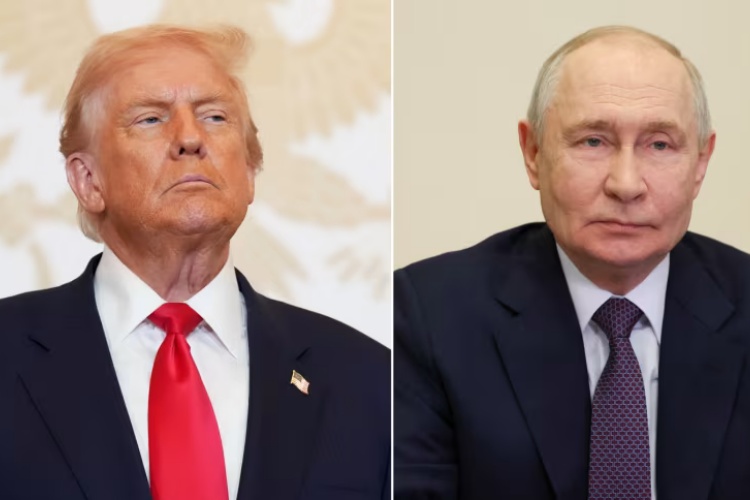
Gambiaj.com – (BANJUL, The Gambia) – One year after returning to the White House, President Donald Trump has pursued an assertive second term defined by high-stakes dealmaking, a sharp intertwining of public power and private wealth, and an increasingly explicit effort to secure a lasting place in history.
Approaching 80, the 47th president has projected renewed energy, framing his agenda in patriotic terms while governing with the instincts of a businessman. Analysts and critics argue that the first year of his renewed presidency has placed personal interests and legacy-building at the center of statecraft.
Transactional Diplomacy and Resource-Driven Foreign Policy
Since January 2025, President Donald Trump has aggressively leveraged U.S. foreign policy to secure commercial advantages, particularly access to strategic minerals and energy resources.
His administration has pressed allies and rivals alike through tariff threats and transactional diplomacy. In April 2025, U.S. support for Ukraine was reportedly conditioned on mineral exploitation contracts, while in the Democratic Republic of Congo, Washington pledged backing for Kinshasa in exchange for a proposed U.S.-controlled “strategic mineral reserve.”
The same approach has shaped relations with traditional partners. A tariff war launched early in the year strained ties with allies, especially resource-rich states. Economists have warned that the strategy has created a deficit of trust, even as the White House insists it strengthens American leverage.
In Latin America, policy took a dramatic turn following U.S. military action in Venezuela and the capture of President Nicolás Maduro. While framed as a security operation, the president later announced an agreement granting the United States access to 50 million barrels of Venezuelan oil.
Major U.S. energy firms have remained cautious, but Trump has repeatedly reassured investors that his policies “will never change,” urging them to seize what he described as an unprecedented opportunity.
Personal Wealth, Crypto Ventures, and Conflicts of Interest
The commercial diplomacy has coincided with a sharp rise in the Trump family’s personal wealth. According to Forbes, President Donald Trump’s fortune has grown from an estimated $4.3 billion to more than $7 billion in less than a year, prompting the magazine to conclude that no U.S. president has enriched himself through office to a comparable degree.
A significant driver of that growth has been the president’s embrace of cryptocurrency. Once a vocal critic, Trump pivoted during the 2024 campaign, co-founding World Liberty Financial alongside close associates and his sons.
The firm’s digital tokens attracted major investors after his election, generating substantial revenues. A related company, partly owned by the president and his family, is entitled to receive 75 percent of proceeds from token sales, a structure critics say blurs the line between public authority and private gain.
The crypto push expanded further with the launch of $TRUMP and $MELANIA memecoins shortly before the inauguration. By October 2025, the two tokens had reportedly generated hundreds of millions of dollars in transaction fees. At one point, top holders were offered private tours of the White House, fueling further concerns over access and influence.
Beyond digital assets, Trump-linked real estate projects have proliferated abroad, particularly in the Gulf. Joint developments with Dar Global in Qatar, Saudi Arabia, and the United Arab Emirates have multiplied, raising persistent questions about conflicts of interest. Those concerns were amplified when President Donald Trump accepted a luxury Boeing aircraft from Qatar, reportedly valued at $400 million.





Leave a Reply