


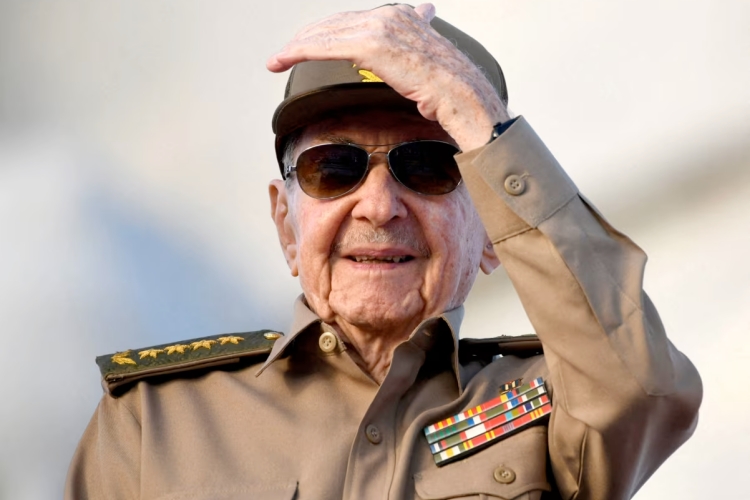
Gambiaj.com – (HAVANA, Cuba) – The indictment of former Cuban leader Raul Castro over the 1996 downing of two civilian aircraft has sharply escalated tensions between the United States and Cuba, reviving fears that decades of hostility between the Cold War adversaries could slide toward direct confrontation.
Announced in Miami on Wednesday, the charges have energized the Cuban exile community, many of whom see the legal move as long-overdue justice for the killing of four Cuban-Americans aboard planes operated by the anti-Castro volunteer group Brothers to the Rescue.
But analysts and former diplomats warn the indictment could also destroy whatever remains of diplomatic engagement between Washington and Havana at a moment when Cuba is facing one of the worst economic and humanitarian crises in its modern history.
Miami Exiles See a Turning Point
For Cuban exiles in Florida, the 1996 shootdown remains one of the most painful episodes in the long-running conflict between Havana and the Cuban diaspora.
The Brothers to the Rescue aircraft had been involved in humanitarian and anti-government activities, including dropping leaflets over Havana, before Cuban fighter jets shot down the planes.
Many anti-Castro activists argue successive US administrations failed to hold Cuba’s leadership accountable. The indictment against Castro, who led the Cuban military at the time, is therefore being interpreted in exile circles as a historic breakthrough.
Maria Elvira Salazar, a Cuban-American Republican congresswoman, declared that “the time of the Castros is over,” reflecting growing confidence among hardline exiles that the Cuban revolutionary system is nearing collapse.
The announcement also comes amid mounting pressure from conservatives in Washington who oppose any rapprochement with Havana that leaves the Communist leadership intact.
Diplomatic Risks and the Collapse of Communication
Former US diplomat Ricardo Zúñiga, who participated in the secret negotiations that restored diplomatic ties during the Obama administration, warned that criminal charges against Castro could eliminate the remaining channels for dialogue.
According to Zúñiga, isolating Havana further may increase the possibility of conflict rather than compel compromise.
He argued that if Washington closes off communication through legal and political pressure, Cuban authorities may conclude that military action is the next stage of US policy.
The concern reflects a broader reality in US-Cuba relations: decades of sanctions and hostility have often hardened political positions in Havana rather than weakened them.
For many Cubans who still support the revolution founded by Fidel Castro and Raul Castro, the indictment is unlikely to trigger internal dissent against the former leader. Instead, it may reinforce nationalist sentiment and strengthen the government’s longstanding narrative that Cuba remains under siege from Washington.
Trump Signals Pressure — But Leaves Door Open
President Donald Trump has repeatedly highlighted the suffering inside Cuba while also suggesting that a negotiated arrangement with Havana remains possible.
Speaking to reporters, Trump said Cuba “really needs help,” referencing widespread shortages of food, electricity blackouts, and economic collapse across the island.
At the same time, he has described the Cuban government as “desperate” for a deal, language similar to remarks he previously used regarding Venezuela and Iran before negotiations with those countries deteriorated into military confrontations.
The administration’s posture has been reinforced by Secretary of State Marco Rubio, a prominent Cuban-American politician who has consistently advocated tougher measures against Havana and argued that Cuba’s current leadership must leave power.
The combination of diplomatic threats, sanctions, and criminal charges now places Cuba’s leadership in a precarious position: negotiate under pressure or prepare for confrontation.
Economic Crisis Deepens Pressure on Havana
The indictment comes as Cuba struggles under intensifying economic hardship aggravated by US
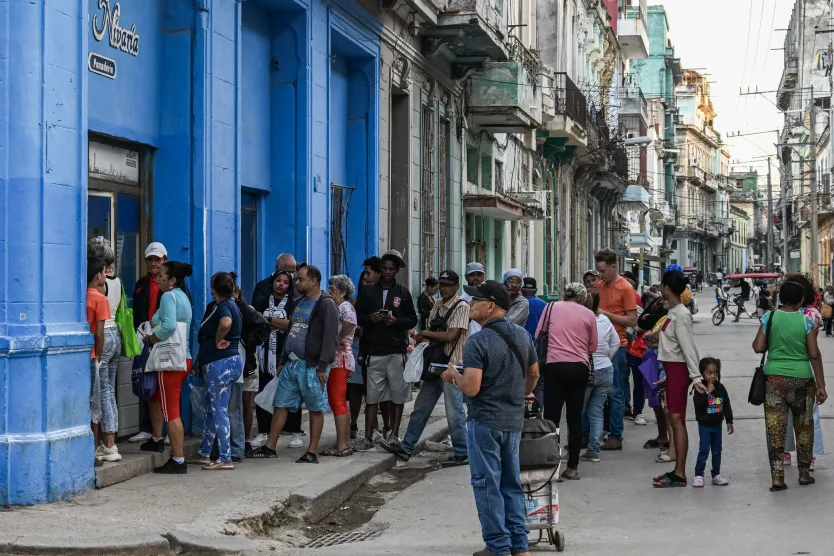
People queue to buy bread on a street in Havana on May 18, 2026. Yamil Lage/AFP/Getty Images
sanctions and restrictions targeting foreign companies that conduct business with the island.
The Trump administration’s tightening oil blockade has worsened fuel shortages and blackouts, while some international shipping companies supplying food to Cuba have reportedly halted operations due to fears of sanctions exposure.
The consequences have been severe for ordinary Cubans.
Food scarcity, prolonged electricity outages, inflation, and collapsing public services have fueled sporadic anti-government protests, rare displays of public anger in a country where demonstrations are usually swiftly suppressed.
An unusual visit by CIA Director John Ratcliffe last week reportedly served as a warning to Cuban officials that time for concessions was running out.
Meanwhile, Cuban President Miguel Díaz-Canel dismissed the latest US sanctions, insisting Cuban officials held no assets under American jurisdiction.
Yet the indictment of Raul Castro represents something far more consequential than another round of economic restrictions. Analysts say it creates a legal and political framework that could theoretically justify an attempt to extradite the former Cuban leader.
Fears of Military Escalation
Unlike sanctions or diplomatic isolation, targeting Raul Castro personally risks provoking a direct military response from Havana.
Cuban authorities have already intensified military exercises across the island, while Díaz-Canel has warned that any invasion would result in “a bloodbath.”
The rhetoric reflects the revolutionary government’s historic doctrine of resistance against foreign intervention. Official speeches in Cuba frequently end with the slogan “Fatherland or death,” underscoring the leadership’s readiness to frame confrontation with the United States as a battle for national survival.
Although officially retired, Castro, now 94, remains a towering figure within Cuba’s political and military establishment. He is still widely referred to as the leader of the revolution and retains significant influence over state affairs.
Most senior military and political figures currently in office were either appointed or politically shaped by Castro and Fidel Castro during decades of one-party rule.
Analysts say this makes Cuba fundamentally different from Venezuela, where Washington successfully pressured segments of the military leadership during earlier confrontations with President Nicolás Maduro.
In Cuba, the revolutionary hierarchy remains more ideologically cohesive, raising the possibility that any US move against Castro could trigger unified resistance rather than internal fragmentation.
A Dangerous Moment in US-Cuba Relations
The indictment marks one of the most serious escalations in US-Cuba tensions in decades and signals a dramatic shift from the diplomatic engagement pursued during the Obama era.
For exile groups, it represents justice delayed.
For Havana, it may be interpreted as evidence that Washington’s ultimate objective remains regime change.
The danger, observers warn, is that both sides could miscalculate at a moment of extreme economic desperation and political mistrust.
As former diplomat Ricardo Zúñiga cautioned, shutting down communication may leave Cuban leaders believing that military assault is inevitable, even though much of the island’s infrastructure is already in severe decline.
The result is a rapidly deteriorating standoff in which legal action, economic pressure, and military signaling are converging, raising fresh uncertainty over the future of one of the world’s longest-running geopolitical conflicts.






Leave a Reply