


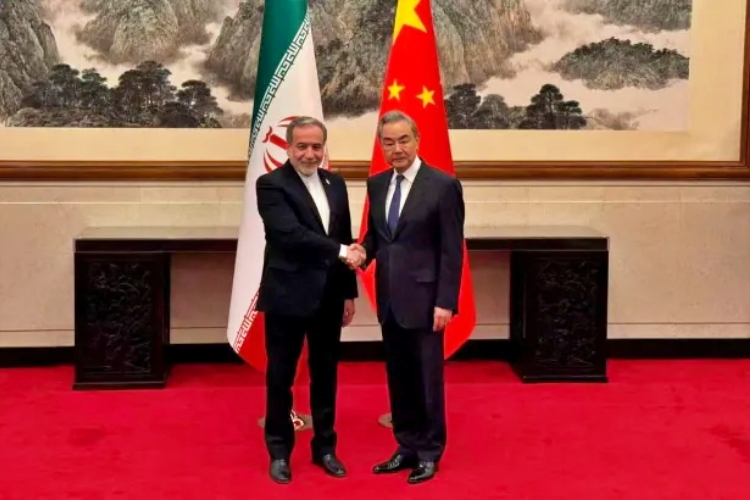
Gambiaj.com – (BEIJING, China) – Abbas Araghchi’s visit to Beijing this week, just days before President Donald Trump is due to arrive in the Chinese capital, has underscored China’s strategic effort to consolidate its diplomatic leverage in a deepening geopolitical standoff involving Iran and the United States.
The meeting between Araghchi and his Chinese counterpart marks the first in-person engagement between the two allies’ top diplomats since the outbreak of the Iran-US conflict, and comes at a carefully calibrated moment.
With Trump scheduled to visit Beijing on May 14–15 for talks with Xi Jinping, Beijing appears to be positioning itself as an indispensable interlocutor, one capable of influencing Tehran while managing escalating tensions with Washington.
Araghchi’s stop in China is part of a broader diplomatic push by Tehran aimed at shoring up international backing and easing pressure amid the conflict.
However, the timing suggests a dual purpose: reinforcing Iran-China ties while enabling Beijing to enter upcoming negotiations with Trump holding fresh insight, and possibly leverage, over Iran’s strategic posture.
China’s role in the crisis has been significant but largely indirect. As Iran’s largest oil importer, it has provided a crucial economic lifeline to Tehran, even as it quietly engages in mediation efforts.
Trump himself has previously hinted that Beijing played a role in nudging Iran toward negotiations, a claim that reinforces China’s growing influence in the dispute.
In the lead-up to Trump’s visit, US officials have intensified calls for China to use that influence more assertively, particularly regarding the Strait of Hormuz, a critical global oil shipping lane.
Washington has accused Tehran of threatening maritime security, with Marco Rubio warning that Iran risks further global isolation, and Scott Bessent urging Beijing to pressure Iran into reopening the strait.
At the same time, tensions between Washington and Beijing have been exacerbated by US sanctions targeting Chinese “teapot” refineries accused of purchasing Iranian oil. China has pushed back, instructing its refiners not to comply with American restrictions, highlighting the broader economic dimension of the standoff.
Against this backdrop, Araghchi’s visit allows China to recalibrate its position just before hosting Trump. By reaffirming its partnership with Iran, Araghchi described Beijing as a “sincere friend,” China signals it retains influence over a key player in the crisis.
That, in turn, strengthens its hand in discussions with the US, where issues of energy security, sanctions, and regional stability are expected to feature prominently.
Ultimately, the sequencing of these diplomatic engagements suggests Beijing is not merely reacting to events but actively shaping them, seeking to present itself as both a stabilizing force and a power broker at a moment of heightened global uncertainty.







Leave a Reply