


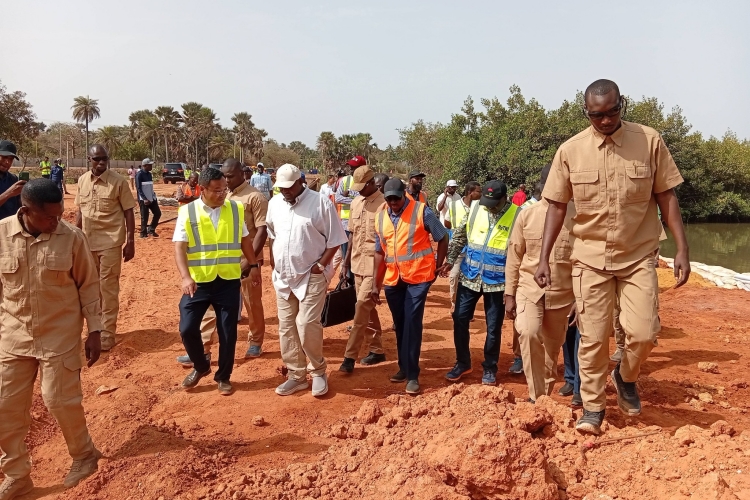
Gambiaj.com – (BANJUL, The Gambia) – Members of the National Assembly on Wednesday sharply criticized delays, poor execution, and weak oversight in several government infrastructure projects during a debate on a report by the Select Committee on Monitoring of Government Projects.
The report, tabled by the Member for Latrikunda Sabiji, Yaya Menteng Sanyang, followed an oversight tour conducted between April and May 2025 to inspect various government project sites across the country.
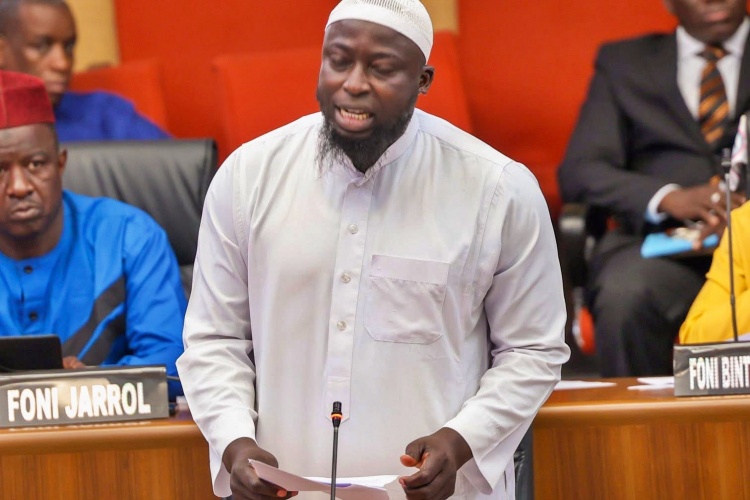
While moving the motion for the Assembly to consider the report, Sanyang defended the committee’s work. However, the debate quickly turned critical as lawmakers questioned the quality of construction, the competence of contractors, and the slow pace of parliamentary oversight.
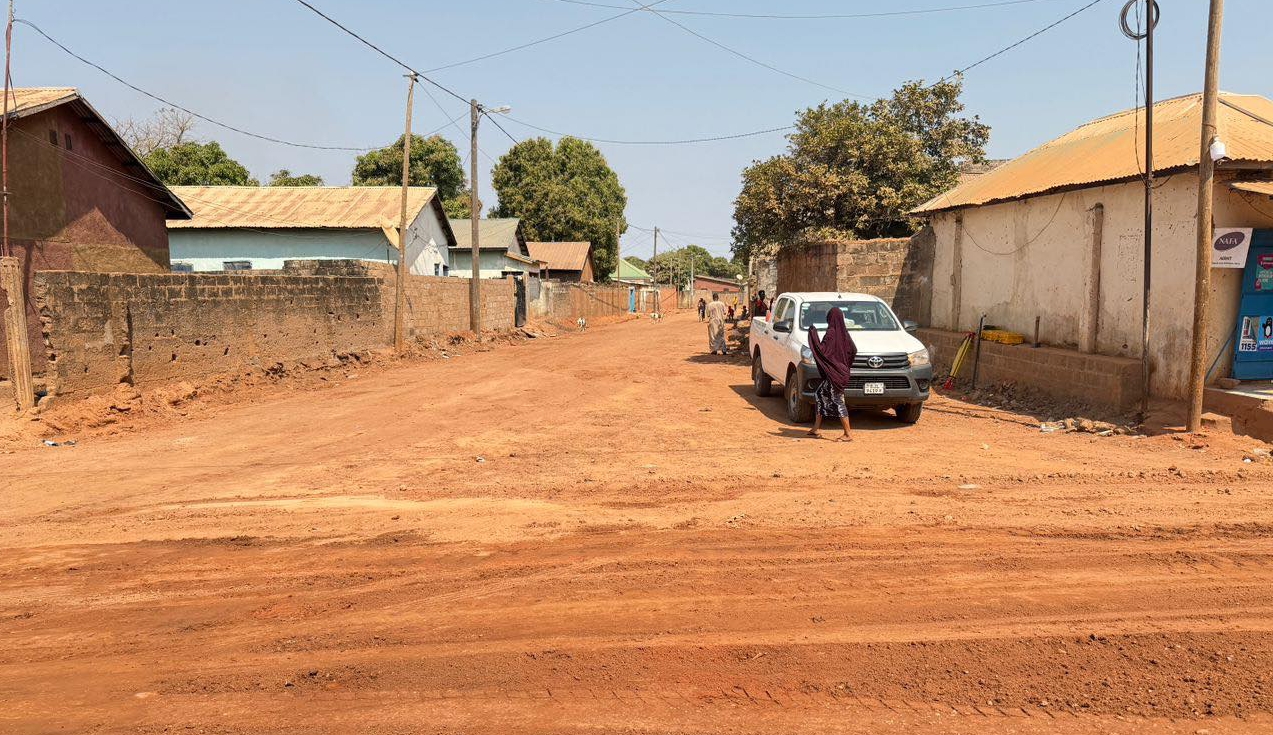
The Member for Wuli East, Suwaibou Touray, accused monitoring authorities of failing to detect problems early during project implementation. He cited a road construction project in his constituency where residents’ concerns were allegedly ignored.
Touray said villagers had requested that the contractor install a pipe beneath the road to allow them to access a water source on the other side, but the request was dismissed due to the absence of monitoring officials.
“As a result, people are still crossing the road with bottles to fetch water,” he told the Assembly.
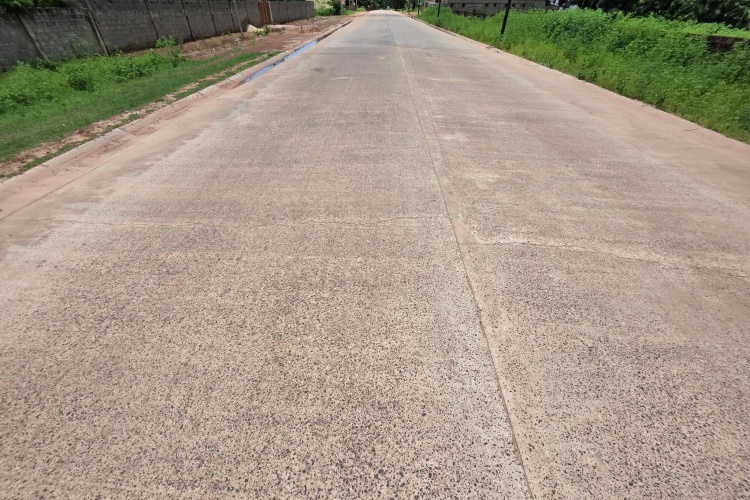
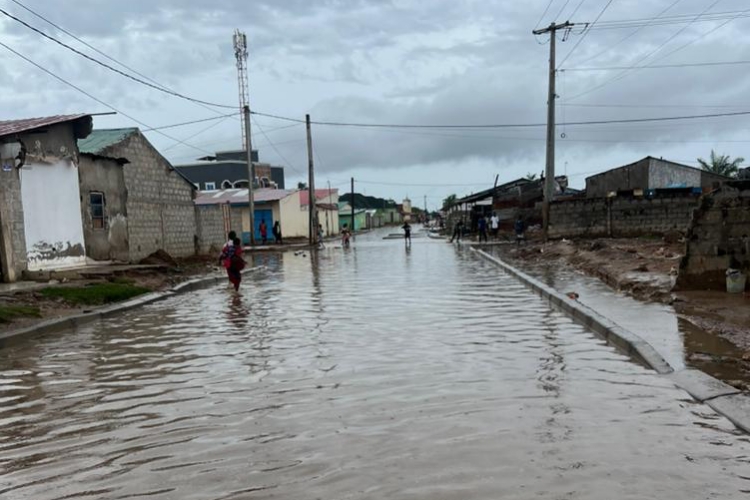
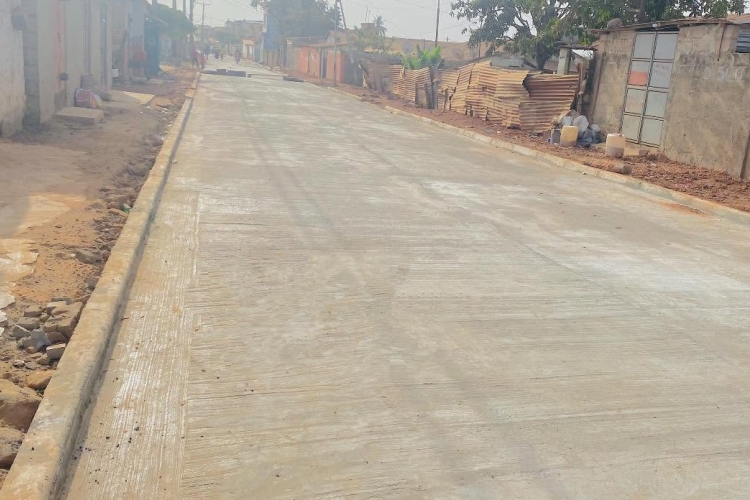
He further criticized the design of certain roads, arguing that inadequate feasibility studies had resulted in poorly aligned road structures that are now causing severe erosion and posing risks to nearby homes.
Lawmakers Question Project Oversight and Community Impact
The Member for Nianija, Amadou Camara, also criticized the report, describing it as incomplete because it failed to adequately capture the views of communities meant to benefit from the projects.
“You cannot go to monitor projects and ignore the beneficiaries,” Camara said. “The whole essence of these projects is to improve the lives of the people.”
He argued that the report placed heavy emphasis on financial figures and construction progress but failed to reflect the real impact of the projects on ordinary Gambians.
Camara also raised concerns about the limited participation of Gambian workers on construction sites, claiming that many contractors rely heavily on foreign labor while local youths remain unemployed.
He urged the government to introduce mandatory quotas for Gambian workers and ensure contractors transfer skills to local engineers and technicians.
Several lawmakers also questioned the timing of the report, noting that it was tabled nearly ten months after the committee’s oversight visits.
The Member for Tallinding Kunjang, Musa Badjie, warned that such delays weaken parliamentary accountability, particularly at a time when the government is investing billions of dalasis in infrastructure development.
Meanwhile, the Member for Foni Kansala, Almameh Gibba, questioned why major road projects in his constituency were not included in the committee’s inspection tour.
He also criticised what he described as a pattern where contractors rush to repair roads only when high-level officials are expected to visit.
“When the President is coming, everything suddenly becomes perfect. Once he leaves, the work stops again,” Gibba said.
Lawmakers also raised concerns about the technical capacity of some contractors undertaking major projects, warning that firms lacking the necessary qualifications are sometimes awarded contracts despite clear requirements in tender documents.
Responding to the criticism, Sanyang acknowledged that delays in payments, limited access to project sites, and challenges in procuring construction materials had contributed to setbacks in some projects.
However, he also blamed contracting authorities for failing to adhere to their own procurement standards during the award of contracts.
“You specify what you want in the bidding documents, but after the evaluation you still go and select the wrong contractor,” he said.
Sanyang further warned that weak feasibility studies and poor procurement decisions often result in contract variations, cost escalations, and prolonged delays in government projects.
He also defended the committee against criticism over the delayed report, explaining that internal parliamentary constraints limit how frequently the committee can travel to conduct project monitoring.
Despite the sharp exchanges, lawmakers across party lines agreed on the need for stronger oversight and stricter contractor selection processes to prevent waste and ensure that public infrastructure projects deliver value for money.





Leave a Reply