


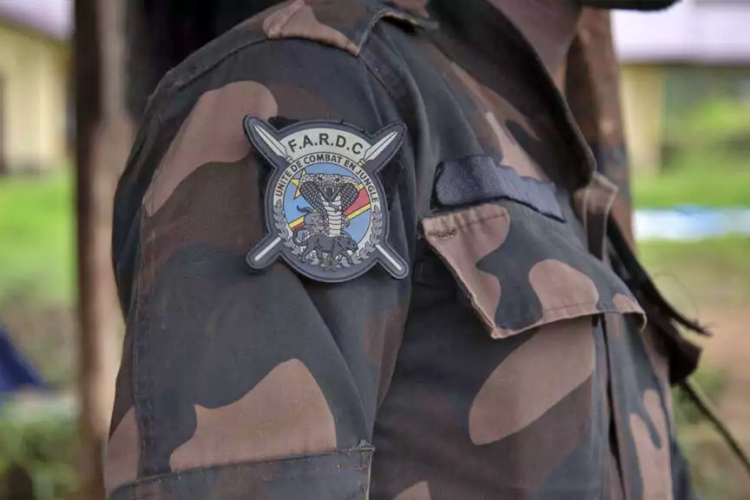
Gambiaj.com – (KINSHASA, DR. Congo) – Two separate reports by lawmakers in the Democratic Republic of the Congo have laid bare significant structural, operational, and financial weaknesses within the national army, raising fresh concerns about the country’s ability to sustain its war effort in the volatile eastern region.
The reports, compiled in 2025 by the National Assembly and the Senate following hearings with key government ministers, offer an unusually candid assessment of the challenges facing the Armed Forces of the Democratic Republic of the Congo (FARDC) as they battle multiple armed groups.
Intercepted Communications and Operational Failures
Among the most alarming findings is the vulnerability of military communications. Defense Minister Guy Kabombo Muadiamvita told lawmakers that frontline communications are frequently intercepted by enemy forces, undermining coordination and exposing operational plans.
He acknowledged that outdated communication systems have left the army unable to match adversaries equipped with modern technology capable of decrypting military exchanges.
Efforts are underway to secure partnerships with allied countries to upgrade systems, though the minister stressed the need for national satellite capabilities, currently non-existent.
Parliament’s Defense Commission concluded that the army’s logistics remain poorly adapted to modern information and communication technologies.
Discrepancies in Troop Numbers
The reports also highlight inconsistencies in troop figures, pointing to the existence of so-called “ghost soldiers.” While official data presented to the Senate put the army’s strength at over 268,000 personnel, the Defense Minister later admitted to lawmakers that actual numbers on the ground differ significantly from figures reported by field commanders.
A verification commission has been tasked with reconciling these discrepancies, which lawmakers say undermine both operational planning and resource allocation.
Troops Stretched Without Rotation
Lawmakers further documented the prolonged deployment of soldiers without rotation, with some units reportedly stationed on the same frontlines for years. The lack of relief cycles has raised concerns over troop fatigue and declining morale.
Although the government announced an increase in combat bonuses, from $20 to $325 per soldier, implementation delays persisted months after the policy was introduced.
Compounding these issues is the lack of adequate support services within military institutions. Training centers, academies, and even the general military hospital reportedly lack essential psychological, sociological, and rehabilitation services.
Weak Implementation of Military Reforms
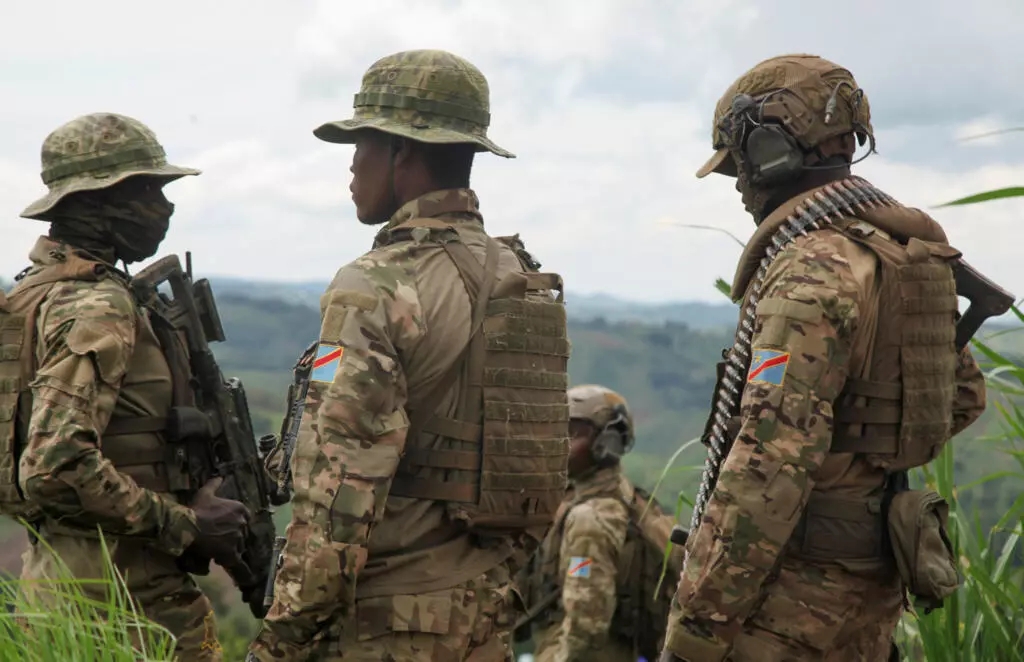
Soldiers of the Congolese army (FARDC), October 27, 2024 in the Lubero territory in North Kivu, located in the east of the country. © Djaffar Al Katanty / REUTERS
Despite the existence of a 2022–2025 military programming law, its implementation remains limited. The Senate urged the government to either enforce the law or integrate it into revised budget frameworks to ensure proper execution.
Budgetary constraints also emerged as a major concern. Of the approximately $2.9 billion allocated to defense in 2025, only about $2 billion was effectively disbursed, with officials citing cash flow pressures and competing priorities linked to operations in the east.
Absence of Doctrine and Strategic Direction
The parliamentary findings underscore a broader strategic gap: the absence of a coherent military doctrine. Lawmakers noted that the army lacks a defined framework to address the dual nature of the conflict, conventional warfare in North and South Kivu, and asymmetric insurgencies involving groups such as the Allied Democratic Forces.
The Senate warned that current military strategies appear ill-suited to the evolving battlefield dynamics, further weakening the army’s effectiveness.
Intelligence Failures, Internal Infiltration and Allied Militias Between Support and Betrayal
Both chambers also raised concerns over intelligence failures, citing poor use of available information and the possible presence of infiltrators within the security apparatus.
These vulnerabilities, lawmakers warned, significantly expose troops to enemy attacks and diminish battlefield performance.
The reports paint a complex picture of auxiliary militias known as Wazalendo, who have fought alongside government forces. While some are described as genuine allies, others have allegedly collaborated with enemy forces.
The Defense Minister cited incidents in Uvira and Butembo where clashes erupted between FARDC troops and these allied groups. In one instance, the fall of Walikale-Centre was attributed to betrayal by a militia faction that had previously aligned with government forces.
The Senate further warned that in parts of South Kivu still under government control, these militias exert significant influence over state institutions, raising governance concerns.
Mounting Losses, Limited Accountability, Unanswered Questions, and Lingering Conflict
The minister disclosed figures illustrating the scale of recent setbacks, including hundreds of troops redeployed, dozens killed, and others captured or deported. Judicial proceedings have been initiated against some senior officers accused of abandoning their positions, though others remain at large for strategic reasons.
During parliamentary debates, lawmakers raised concerns about alleged political complicity in the eastern conflict, an issue that remains unanswered by the government.
Meanwhile, the Interior Minister acknowledged that the state of siege imposed in eastern provinces since 2021 has failed to achieve its primary objectives, including restoring state authority and neutralizing armed groups.
With military operations ongoing and no clear timeline for stabilization, the parliamentary reports offer a sobering assessment of a conflict marked by deep institutional weaknesses and persistent insecurity.




Leave a Reply