


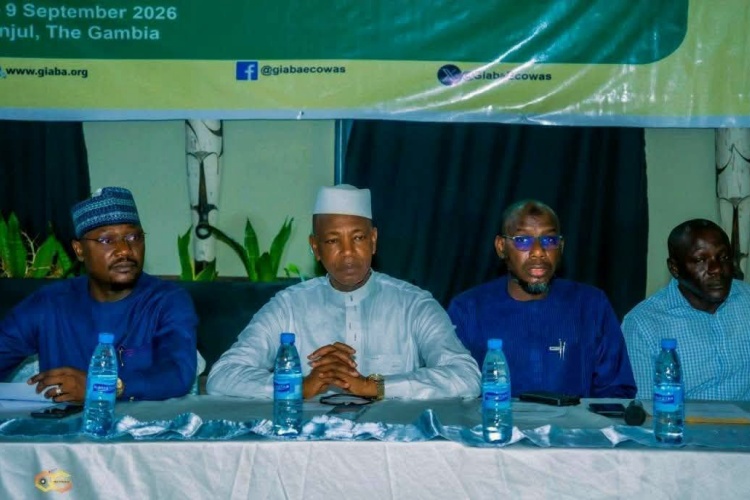
BANJUL, The Gambia — The regional anti-money laundering body GIABA has urged religious leaders and institutions in The Gambia to tighten financial controls, warning that criminals and terrorist financiers could exploit trusted religious and charitable structures to move or conceal illicit funds.
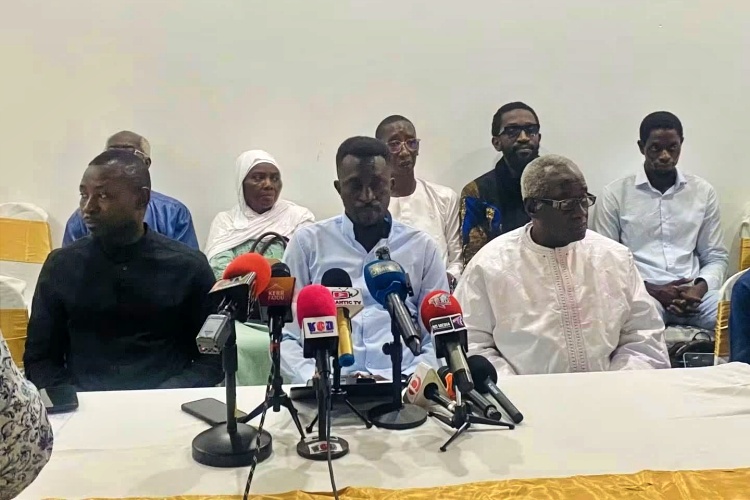
The warning was issued during a two-day national sensitisation seminar for religious leaders and institutions on anti-money laundering and combating the financing of terrorism. The seminar was held under the theme “Promoting Anti-Money Laundering and Combating Terrorist Financing on the Altar.”
Why Religious Institutions Matter
GIABA and The Gambia’s Financial Intelligence Unit (FIU) stressed that religious organizations occupy a position of significant trust and influence in communities, making them important partners in preventing financial crimes.
Alhagie Darboe, Director of the FIU and GIABA National Correspondent, said money laundering and terrorist financing should not be seen only as financial or law enforcement problems.
“Money laundering and terrorist financing are not merely financial or law enforcement issues. They are societal issues as well that can affect stability, security, integrity, and development of our communities,” Darboe said.
He warned that criminals could seek to exploit legitimate businesses, financial institutions, charities, nonprofit organizations, and other community structures to facilitate illicit financial activity.
Darboe was careful to stress that the focus on religious organizations was not an accusation that they are inherently vulnerable to financial crime.
He said the overwhelming majority of religious leaders and institutions are committed to serving their communities, adding that the objective was to ensure they are informed and equipped to protect themselves from potential abuse.
Transparency Seen as First Line of Protection
The FIU urged religious institutions to adopt basic safeguards, including identifying the sources of significant donations, maintaining proper financial records, and ensuring transparency in the management of funds.
“Transparency protects trust, accountability protects institutions, and responsible financial management protects communities,” Darboe said.
The concern is particularly important because religious institutions often receive donations, charitable contributions, and other funds from a wide range of sources. Without adequate records and basic checks, authorities say such structures could potentially be misused without the knowledge of religious leaders.
Darboe described religious leaders as critical partners in the national campaign against financial crime, urging them to take the message back to mosques, churches, religious schools, charities, and their wider communities.
Representing GIABA Director-General Mam Cherno Jallow, Acting Principal Officer of Communication and Advocacy Timothy Melaye said GIABA and ECOWAS considered the engagement an important platform for strengthening cooperation with religious institutions.
GIABA, a specialized institution of ECOWAS established in 1997, is responsible for addressing money laundering and related financial crimes in West Africa.
The seminar brought together Islamic and Christian leaders, government institutions, the FIU, GIABA, and other stakeholders. Discussions covered terrorist financing, financial management, risks facing nonprofit organizations, and the potential abuse of religious institutions.
The FIU said the objective was not to impose unnecessary burdens on religious organizations but to promote a practical, risk-based approach that protects their integrity while allowing them to continue their legitimate religious and charitable activities.
The engagement also seeks to deepen cooperation between religious leaders, government agencies, financial institutions, and other stakeholders, reinforcing the message that preventing money laundering and terrorist financing is a shared national responsibility.








Leave a Reply