


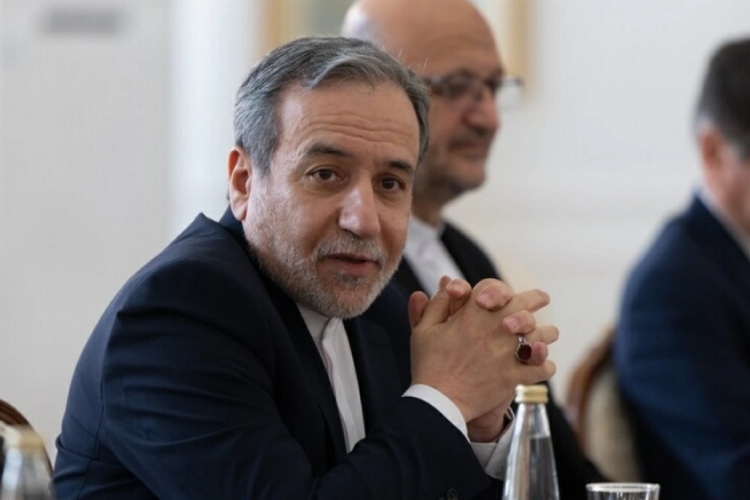
Gambiaj.com – (TEHRAN, Iran) – A fragile geopolitical balancing act is unfolding in the Gulf as Iran announced the reopening of the Strait of Hormuz following a ceasefire with the United States, while President Donald Trump insisted that Washington’s naval blockade on Iranian ports will remain in force until a comprehensive agreement is finalized.
Iran’s Foreign Minister, Abbas Araghchi, declared that the critical shipping route would remain “completely open” for commercial traffic during the truce.
The announcement was met with global approval, triggering a sharp drop in oil prices and boosting stock futures as markets responded to the easing of a major supply bottleneck.
However, the move has exposed divisions within Iran’s political and media establishment. State-affiliated outlets, including Tasnim and Mizan News Agency, publicly criticized Araghchi’s announcement, describing it as vague and poorly communicated.
They warned that the lack of clarity around conditions governing passage risked creating confusion at a sensitive moment.
According to these outlets, any reopening would be tightly controlled, with access restricted to non-military vessels operating along designated routes under the supervision of Iranian naval forces. Additional conditions, including potential transit fees and coordination with the military, were also suggested.
Complicating the picture further, reports from semi-official media indicated that Iran’s Supreme Leader, Mojtaba Khamenei, had taken a more hardline stance, emphasizing that the strategic waterway “should remain closed.” The apparent contradiction underscores growing uncertainty over decision-making authority in Tehran.
That uncertainty has deepened following last month’s escalation, when US and Israeli strikes targeted Tehran and killed former Supreme Leader Ayatollah Ali Khamenei.
Since then, Iran’s power structure has appeared increasingly opaque, with Mojtaba Khamenei largely absent from public view, raising questions about who is directing policy during the crisis.
On the ground, Iranian officials have outlined strict operational parameters for any reopening. A senior military official told state broadcaster Islamic Republic of Iran Broadcasting that only civilian vessels would be permitted and only through routes approved by Iranian forces.
Tehran has also issued a warning: if the US maintains its naval blockade, it could be interpreted as a violation of the ceasefire, prompting Iran to shut the Strait once again.
For his part, Trump claimed Iran had pledged to “never close the Strait of Hormuz again,” while signaling that negotiations remain ongoing.
He suggested the United States could take control of Iran’s enriched uranium stockpile and indicated that no direct financial exchange would occur, even as reports emerged that Washington is considering unfreezing up to $20 billion in Iranian assets.
With the ceasefire set to expire within days unless extended, the stakes are high. Thousands of vessels and vast quantities of النفط remain effectively stranded in the Persian Gulf, leaving global shipping and energy markets racing against time to capitalize on the narrow window of stability.
The coming days are likely to determine whether the strait’s reopening marks a genuine de-escalation, or merely a brief pause in a volatile standoff.




Leave a Reply