


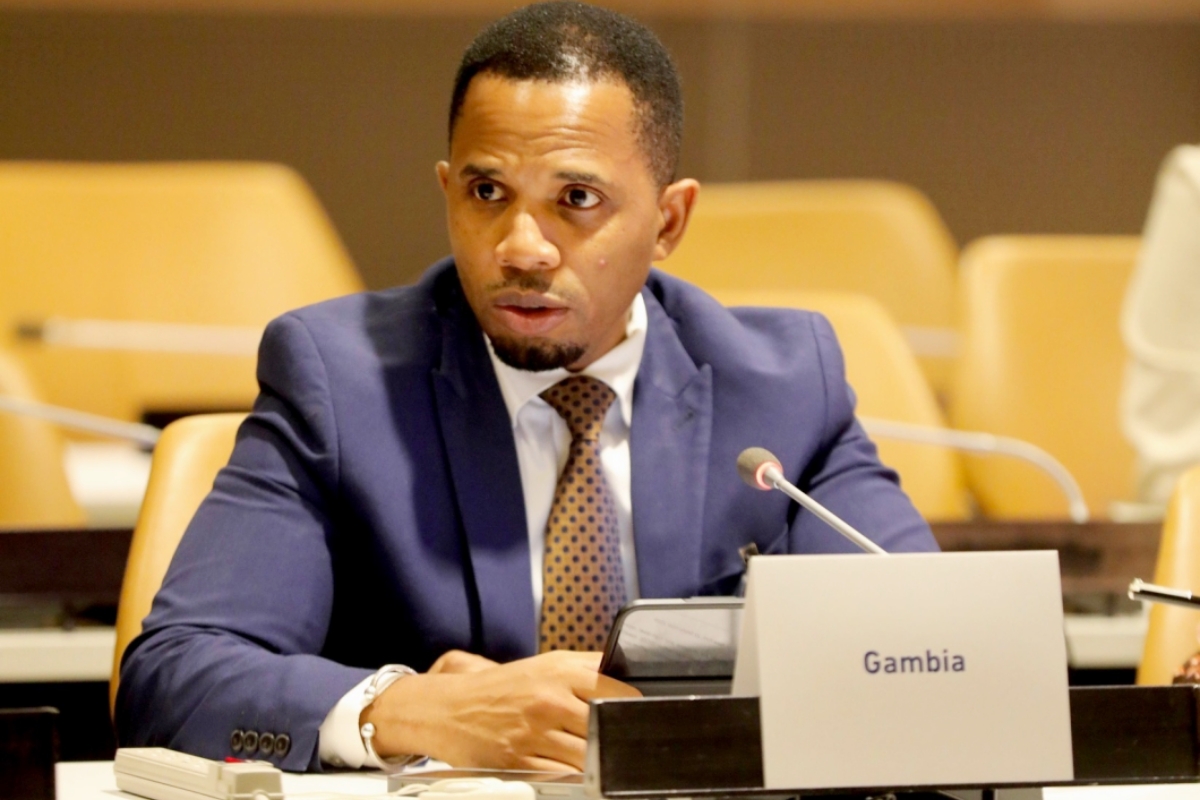
Gambiaj.com – (BANJUL, The Gambia) – Minister Ismaila Ceesay’s detailed defense of the proposed Broadcasting and Online Content Regulations, 2026 is, on its face, an attempt to calm public anxiety. Yet beneath the structured rebuttals and assurances lies a deeper concern: the gap between stated intent and the practical implications of state-led media regulation in a fragile democratic environment like The Gambia.
The Minister insists the law “explicitly guarantees editorial independence” and avoids “prior censorship.” But such assurances, while rhetorically comforting, are not sufficient safeguards when the same regulatory framework vests significant discretionary authority in bodies ultimately linked to the executive.
At the core of the problem is not what the regulation says—it is what it enables.
First, the claim that there will be no interference in editorial decisions is undermined by the very architecture of regulatory oversight. A state-backed regulator empowered to enforce “fairness,” “accuracy,” and “balance” inevitably enters the terrain of editorial judgment.
These are not neutral, technical standards; they are interpretive constructs. Who defines “balance” in a polarized political climate? Who determines whether coverage is sufficiently “fair” to the government of the day?
History, both in The Gambia and elsewhere, demonstrates that such standards are often selectively applied.
Critical media houses, those that scrutinize government policy, expose corruption, or amplify dissent, are far more likely to be accused of “imbalance” or “inaccuracy” than pro-government outlets. The risk, therefore, is not hypothetical. It is structural.
Second, the Minister’s emphasis on “post-publication accountability” as opposed to prior censorship is a distinction without much practical difference if punitive powers are expansive.
If media houses operate under the constant threat of sanctions, fines, suspensions, or license revocations, they may engage in anticipatory self-censorship. This phenomenon, well-documented in media studies, is often more insidious than direct censorship because it internalizes restraint within the newsroom itself.
Journalists do not need to be told what not to publish; they begin to calculate risk, avoid sensitive topics, and dilute critical reporting. Over time, this erodes the very essence of editorial independence the Minister claims to protect.
Third, the introduction of the “Social Media Users with Significant Public Reach (SPURs)” category raises additional red flags.
While framed as a narrow, commercially focused classification, the criteria – “large audiences,” “monetization,” and “public influence” – are inherently elastic. In a small media market like The Gambia, even independent journalists, activists, and commentators could fall within this definition.
This opens the door to regulatory creep, where individuals critical of government actions may find themselves subjected to compliance obligations, monitoring, or penalties under the guise of “accountability.” The line between regulating commercial influence and policing dissent becomes dangerously thin.
Fourth, the Minister’s assertion that registration requirements do not amount to licensing also warrants scrutiny. Any system that conditions professional participation within “licensed broadcasters or designated platforms” on registration introduces a layer of gatekeeping.
Even if indirect, it creates a mechanism through which access to mainstream media ecosystems can be controlled.
In practice, this could marginalize independent voices and consolidate influence among compliant institutions – particularly if licensing decisions themselves are not insulated from political considerations.
Fifth, the promise of “due process safeguards” does little to allay concerns if the enforcement ecosystem lacks genuine independence. Written notices, appeals, and complaints committees are procedural protections, but their effectiveness depends entirely on the autonomy and impartiality of the bodies administering them.
Without robust institutional independence, due process risks becoming a formalistic exercise rather than a substantive check on power.
Finally, the broader philosophical framing of the regulation reveals a troubling premise: that the primary threat to freedom is “misinformation,” rather than the overreach of state authority.
This framing subtly justifies an expanded regulatory role for government in determining the boundaries of acceptable speech.
But in democratic theory and practice, the greater danger has always been the concentration of power over information flows in the hands of the state.
Misinformation is a real challenge, but it is best addressed through pluralism, media literacy, and independent fact-checking, not through regulatory regimes that can be repurposed against critics.
The Minister invokes the need to “modernize” media regulation. That objective is legitimate. The digital landscape has indeed outpaced existing legal frameworks. However, modernization must not come at the expense of foundational freedoms.
In a country with a recent history of state repression of the media, any new regulatory instrument must meet a higher threshold of trust, transparency, and independence. It is not enough to declare that rights are protected; the system must be designed in such a way that even a less benevolent government could not easily abuse it.
That is the test this regulation, as currently defended, does not yet pass.
The concern, therefore, is not rooted in “misconceptions” or “fear.” It is grounded in a sober reading of how power operates, and how easily well-intentioned laws can become tools of control.
If the government is sincere in its commitment to media freedom, it should welcome deeper scrutiny, broaden stakeholder consultation, and, most importantly, build ironclad institutional safeguards that place regulation at arm’s length from political influence.
Anything less risks turning a promise of accountability into a pathway for control, and a framework for progress into an instrument of restraint.












Leave a Reply