


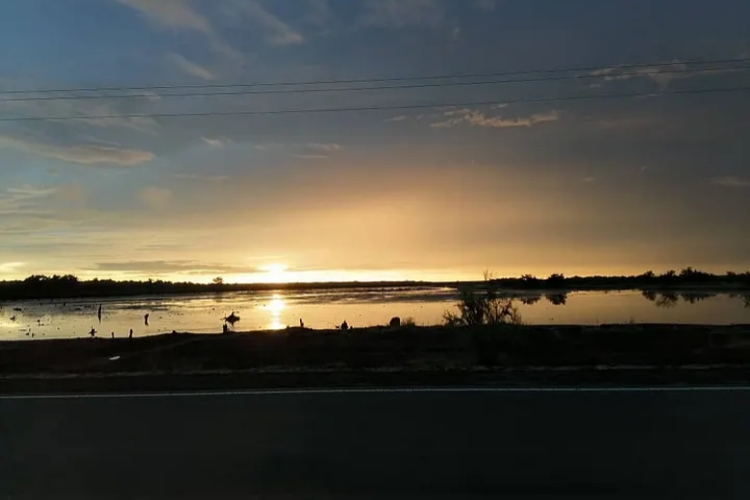
A one-day journey around the world shows there’s a lot more to the ‘life’ of water than meets the eye.
Gambiaj.com – (BANJUL, The Gambia) – Water, the late, great Nigerian Afrobeat mega star, Fela Anikulapo Kuti for many good reasons said, “no get enemy.” Water is essential to all known life, being used to transport nutrients, regulate body temperature, and enable chemical reactions. It is the basis of all biological fluids, from blood in animals to sap in plants.
Human beings are especially dependent on water, which accounts for an average of 60% and 55% (by weight) of the adult male and female, respectively, and impacts every aspect of life. It is thus fitting that, Goal 6 of the UN’s 17 Sustainable Development Goals (SDGs) is to ensure the availability of clean water and sanitation for all by 2030.
The Earth holds about 1.4 billion Km3 of water, although only 2.5% of this is fresh water, mostly locked in glaciers and polar ice caps. Water exists in three states — solid, liquid, and gas — and driven by solar energy and gravity, constantly moves through these in a continuous loop called the hydrological or water cycle.
Against this background, I thought it would be fun to embark on a journey around the world, to explore one day in the ‘life’ of water. We would stop at a capital or major city in each of the 24 time zones and ponder the states and uses of water, its impact on human life and the water cycle processes.
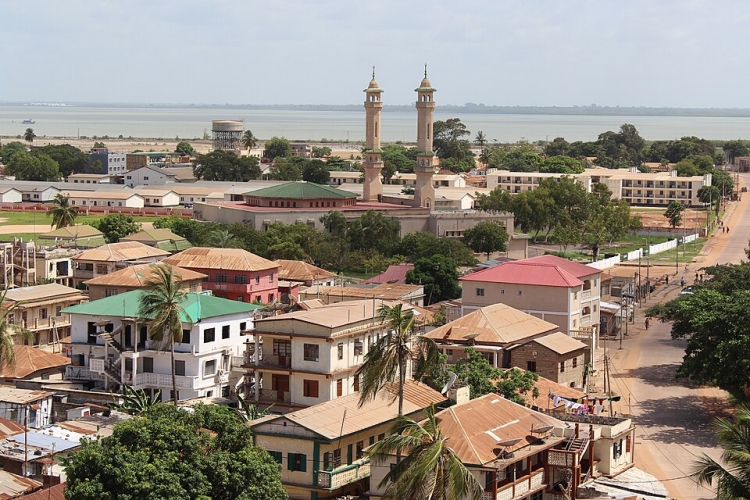
We start our journey on a Monday from Banjul, The Gambia, at 07:00 UTC (which is also local time). Banjul sits at the mouth of the River Gambia where it enters the Atlantic Ocean (the second largest ocean in the world), which regulates global temperatures by transporting cold and warm water between the tropics and the poles.
Oceans absorb about 90% of the excess heat trapped by greenhouse gases, increasing sea levels and threatening low-lying coastal cities like Banjul. The five ocean basins hold 1.3 billion Km³ of salt water, and account for 97% of all water on Earth, and 86% of global evaporation and 78% of global precipitation falls on them.
We then arrive in Lagos, Nigeria, where it is 09:00 (08:00 in Banjul). Lagos, the commercial capital of Africa’s most populous country, sits on the Gulf of Guinea, a marginal sea of the Atlantic. Seas cover 71% of the Earth’s surface, host distinct marine ecosystems, support coastal livelihoods, are important biodiversity hotspots and move rougly 80% of world trade by volume. Despite this, seas face mounting challenges from pollution, overfishing, and rising water temperatures.
From Lagos, we head to Cairo, Egypt, arriving at 11:00 local time (09:00 in Banjul). Cairo sits on the banks of the Nile, the longest river in the world. Egypt relies on the Nile for over 90% of its water resources, and hence its dispute with Ethiopia over the Grand Ethiopian Renaissance Dam (GERD) on the Blue Nile.
This dispute is one of over 2,700 water-related conflicts recorded since 2500 BC, and such water wars are expected to intensify because of climate change.
An hour later, we arrive in Nairobi, Kenya at 13:00 (10:00 in Banjul), which sits above the Nairobi Aquifer System (NAS), an important groundwater resource. Groundwater accounts for approximately 40% of irrigation water, a third of industrial water use, and almost half of all drinking water.
The largest aquifer in the world is the Nubian Sandstone Aquifer System (NSAS), which spans over two million Km² across Sudan, Chad, Libya, and Egypt. Groundwater also contributes to base flow (seepage) into lakes, seas, and rivers, including the Gambia River which, without it, would practically dry up during the long dry season.
Furthermore, molecule of water can take decades to millions of years to pass through an acquifer, and hence, groundwater can take a long time to recover from contamination.
At 11:00 in Banjul, we arrive in Dubai, United Arab Emirates (UAE), where it is 15:00. The UAE has the highest per capita consumption of water in the world, at 550 litres per person per day (PPPD). Although freshwater represents only 3% of all water on Earth, about 69% of it is locked in glaciers and polar ice caps, and 30% is groundwater.
The amount of freshwater readily available for human use is only about 1%; 87% of which is in freshwater lakes. Furthermore, 53.9% of the 42.8 trillion m³ of freshwater on Earth is held in only seven countries, while 1.1 billion people around the world lack access to water, with women and girls being the hardest hit.
By noon in Banjul, we arrive in Karachi, Pakistan, at the edge of the Indus River Delta. Rivers are the lifeblood of our planet with 90% of the world’s population living within 10 Km of a river, and about 2 billion people relying on rivers for drinking water. Rivers supported great civilizations along the Nile and the Indus, and river cities remain central to global commerce.
Many rivers feed oceans, thereby completing the water cycle by being fed by runoff from precipitation which originates from ocean evaporation.
At 13:00 in Banjul, we arrive in Dhaka, Bangladesh (where it is 19:00), which sits at the confluence of the Meghna, Brahmaputra, and Ganges rivers — a vast lake and wetlands network. Lakes hold about 87% of all surface liquid freshwater in the world and act as regulators in the water cycle by slowing and storing water. I
n addition, inland fisheries provided 11.3 million tonnes of aquatic products in 2022, and lakes support the livelihoods of an estimated 60 million people worldwide.
Lakes also provide 14% of global electricity through hydropower, and the 21 largest lakes support 195 million tonnes of cargo transport annually. However, surface water bodies in 364 basins around the world are shrinking because of climate change and other pressures.
At 14:00 in Banjul, it is 21:00 in Bangkok, Thailand, where the sky is a vast reservoir of water vapor. The Earth’s atmosphere holds about 12.9 trillion m3 of water vapor (more than all the world’s rivers combined), cycling every 9 days on average.
When billions of droplets condense simultaneously, they release enough heat to power thunderstorms with winds exceeding 100 Km/hr. Water vapor also forms atmospheric rivers which are narrow corridors of concentrated moisture such the West African monsoon which brings rains to Banjul each year.
We arrive at 23:00 (15:00 in Banjul) in Beijing, China, where evaporation is an important driver of the water cycle. Evaporation — the transformation of water from liquid to gas — is the primary mechanism for water’s transfer to the atmosphere. About 496 trillion m³ evaporate from the Earth’s surface every year, mostly from oceans which account for 86% of all evaporation on Earth.
Egypt’s Lake Nasser, for example, loses 10–16 billion m³ per year — more than the entire annual renewable water resource of The Gambia (8 billion m³).
We then arrive in Tokyo, Japan, at 01:00 Tuesday (16:00 in Banjul, still in Monday) — the largest metropolis on Earth, with a population of 37 million. Despite this hyper urbanization 67% of Japan’s land area is covered by forests, which contribute massively to global transpiration, the release of water vapor through plant leaves.
Transpiration accounts for 10% of all atmospheric moisture, and can reduce air temperature by 1–8°C. The 390 billion individual trees in the Amazon rainforest transpire 20 billion tonnes of water per day, creating “flying rivers” that supply rainfall to southeastern Brazil. Evapotranspiration (the combination of evaporation and transpiration) transfers over 60% of all precipitation back to the atmosphere, and as such, destroying forests has adverse consequences, including droughts and increased temperatures.
At 17:00 in Banjul, we arrive in Sydney, Australia, at 03:00, as the city sleeps. But condensation is not, making parts of Sydney prone to fogs. Condensation happens when water vapor cools and is transformed into liquid droplets, forming clouds, frost, dew, and fog, and brings rainfall to Sydney as Pacific Ocean moisture condenses over the Blue Mountains.
Remarkably, fog is harvested for freshwater in arid regions such as the Atlas Mountains in Morocco, and Chile’s Atacama. Condensation also powers thunderstorms and tropical cyclones, and there would be no storms in the atmosphere if there was no condenstation!
It’s early morning (05:00 local time, 18:00 in Banjul) when we arrive in Honiara, capital of Solomon Islands, which receives about 3,000 mm of rainfall annually, among the highest in the world. Precipitation closes the water cycle because 502 thousand Km³ of water evaporated annually is returned as precipitation — 391 thousand Km³ over oceans and 111 thousand Km³ over land.
As in The Gambia, precipitation in the Solomon Islands is driven by the Intertropical Convergence Zone (ITCZ), a belt of rising air where trade winds meet, often producing heavy thunderstorms.
As night falls in Banjul (19:00), we arrive in Suva, Fiji, at 07:00. Fiji is one of the top tourism destinations in the world, built on water-based attractions such as surfing, snorkeling, and cruises. Water-based tourism is a huge industry globally, and is expected to increase from $298 billion in 2024 to $1,085 billion in 2034. Furthermore, 183 countries have coastlines and marine environments which attract tourists, and about 50% of international travellers in 2017 visited coastal areas.
We arrive next at 09:00 local time (20:00 in Banjul) in Nuku’alofa, Tonga, a small city of 27,000 people where flooding, caused by high rate of runoff of rainwater, is a major challenge. Runoff is an important component of the water cycle, occurring when rainfall exceeds the soil’s capacity to absorb it, and flows into creeks, streams, and ultimately oceans.
Runoff washes away vital fertile topsoil, reduces crop yields, and carries pollutants that can ultimately end up in fish consumed by humans, thus posing a serious threat to human health.
Our next stop is Apia, Samoa, at 10:00 AM Tuesday (21:00 Monday in Banjul). Although 89% of Samoa’s population has piped water, many rely on rainwater harvesting, springs, and small reservoirs, making Apia a great example of the importance of water storage in the water cycle. Although ice caps, glaciers and snow store only about 1.7% of the 1.4 billion Km³ of water on Earth, they store 68.7% of all freshwater in the world.
After crossing the International Dateline (the boundary between one calendar day and the next), we arrive in Pago Pago, American Samoa, at 11:00 local time (22:00 in Banjul) and return to Monday morning! Pago Pago is located on volcanic Tutuila island, where much rainfall runs off instead of infiltrating into the soil.
Infiltration, the transfer of water through soil pores into groundwater, is critical to the water cycle because it helps recharge groundwater which can later emerge as springs and baseflow into rivers, and provide much needed water supply for various purposes.
We arrive in Honolulu, Hawaii, at 10:00 local time (23:00 in Banjul). Home to Pearl Harbor and some of the world’s most diverse marine environments, Honolulu highlights the global importance of fisheries. Fisheries provide over 600 million people with their livelihoods and supply about 17% of global animal protein intake.
Despite this, fisheries resources are being threathened by poor management and as a result, the proportion of fish stocks that are biologically unustainable increased from 10% in 1974 to 34.8% in 2017.
Continuing east, we arrive in Anchorage, Alaska, at 15:00 local time — midnight in Banjul. Alaska has more coastline than all other US states combined, and sits at the doorstep of new Arctic shipping routes opening up as sea ice melts. As has been demonstrated by the closure of the Strait of Hormuz, water-borne transport is vital to the global ecomony, because maritime shipping moves over 80% of global trade. Besides the oceans and seas, inland waterways such as rivers, lakes, and shipping canals also are vital arteries of global commerce.
Our next stop is Vancouver, British Columbia (BC), Canada, at 17:00 local time on Monday (01:00 on Tuesday in Banjul). BC is a leading hydroelectric region with 33 hydro plants providing 91% of its energy needs. Globally, hydropower is the largest source of renewable energy, producing 14.3% of electricity generated in 2022. However, hydropower is increasingly threatened by climate change because droughts reduce generation capacity, and floods threaten dam safety.
We arrive in Denver, Colorado, at 19:00 local time (02:00 in Banjul). Denver, the “Mile High City,” sits near the Rocky Mountains, whose snow and ice form part of the cryosphere — the Earth’s frozen water. The cryosphere stores around 69% of all fresh water on Earth, and melting glaciers in the moutains provide meltwater to about 2 billion people around the world. On the other hand, sea ice is decreasing by about 13% per decade since 1979, affecting weather in the Northern Hemisphere, including the West African monsoon that brings rains to The Gambia.
Our next stop is Mexico City, Mexico (where we arrive at 21:00; 03:00 in Banjul), one of the sixth largest megacities in the world, and whose metropolitan area produced an estimated 6.5 million m³ of wastewater per day in 2016.
Globally, an estimated 2,212 Km³ (56%) of freshwater withdrawn annually is returned as wastewater, and an estimated 80% of that wastewater is released to the environment without adequate treatment. It is thus welcome that wastewater is increasingly being seen as a resource which can be treated and reused.
We depart Mexico City for Bogota, Colombia, arriving at 23:00 (04:00 in Banjul). Bogota, the economic and industrial capital of Colombia, illustrates the significance of industry’s use of water. Industry accounted for 7% of global freshwater withdrawals in 2014, while energy consumed 370 billion m³ (about 10%) of global freshwater withdrawals in 2021. Fortunately, many companies are working to increase their efficiency of water use, and thereby reduce their water footprints.
We arrive in Caracas, Venezuela, at 01:00 local time (05:00 in Banjul). Located in the oil-rich Orinoco Basin, Caracas highlights agriculture as the dominant water user; using around 70% of global freshwater withdrawals. Water-intensive foods such as beef which requires about 15,400 litres of water per Kg to produce, and rice (about 2,500 litres/Kg) are particularly important contributors to agricultural uses of water. Agriculture is also the largest human intervention in the water cycle because it alters natural river flows, increases evaporation through irrigation, and contributes to runoff and pollution.
Our next stop is Buenos Aires, Argentina, arriving at 03:00 local time (06:00 in Banjul). Buenos Aires, sitting on the world’s largest river estuary (the Rio de la Plata) draws our attention to domestic water use, which accounts for about 10% of global freshwater withdrawals.
Although the UN recommends at least 50–100 litres PPPD to meet basic needs, water use ranged in 2022 from just 21 litres PPPD in Senegal to, 295 and 380 litres PPPD in the US, and the UAE, respectively. Furthermore, poor water, sanitation and hygiene (WASH) killed over 1 million people in 2019, and water-borne diseases killed 5 times more people in 2020 than were killed by natural disasters and conflicts. It is thus unfortunate that SDG 6 is far from being attained, especially in Sub-Saharan Africa.
We arrive back in Banjul at 07:00 after a full 24-hour 69,570 Km (43,229 miles) journey, on which we explored the amazing ‘life’ of water through its various cycle processes, states, and uses around the world. I hope you enjoyed it!
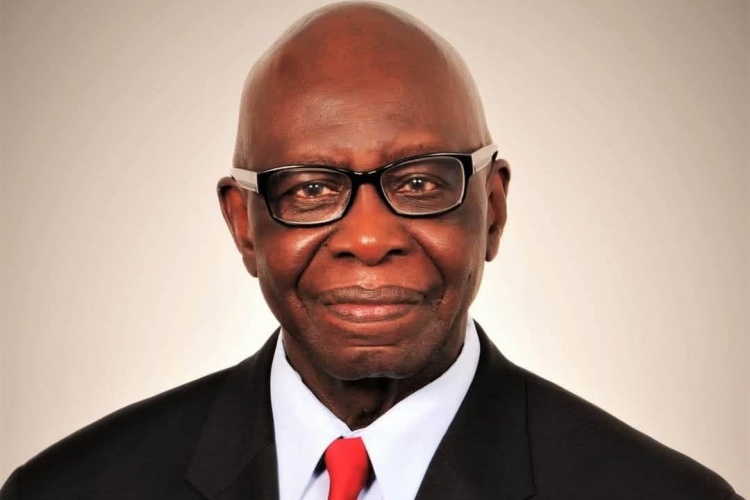
The author, Dr. Katim S. Touray, Ph. D. Is a soil scientist, an international development consultant and a writer on sustainable development and gobal affairs













Leave a Reply