


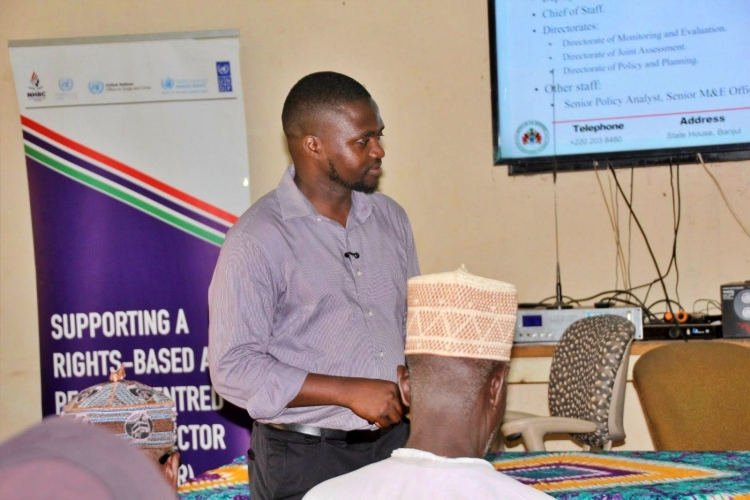
Gambiaj.com – (KEREWAN, The Gambia) – A nationwide Community Awareness Campaign on Security Sector Reform (SSR) has officially been launched in Kerewan, North Bank Region, in a move aimed at deepening public understanding of security reforms and strengthening collaboration between citizens and security institutions across The Gambia.
The initiative, spearheaded by the Office of National Security in partnership with the United Nations Development Programme and the Office of the United Nations High Commissioner for Human Rights, alongside civil society groups, is designed to bring the often technical and policy-driven SSR agenda closer to ordinary citizens.
What the Campaign Is About
At its core, the campaign seeks to simplify and explain Security Sector Reform, an ongoing national process aimed at transforming The Gambia’s security architecture into one that is accountable, transparent, and people-centered.
This includes reforms guided by frameworks such as the National Security Policy (2019), National Security Strategy (2020), SSR Strategy (2020), and the National Security Council Act (2025).
Officials say that while significant institutional reforms have been undertaken since 2017 under President Adama Barrow, public understanding of these changes has lagged behind. The campaign is therefore intended to bridge that gap by translating complex policies into accessible information for communities nationwide.
Why the Campaign Is Necessary
Speakers at the launch emphasized that the success of SSR depends not only on government action but also on active citizen engagement.
Persistent challenges, including limited awareness, weak community participation, and lingering mistrust between civilians and security forces, have been identified as key obstacles to achieving sustainable security.
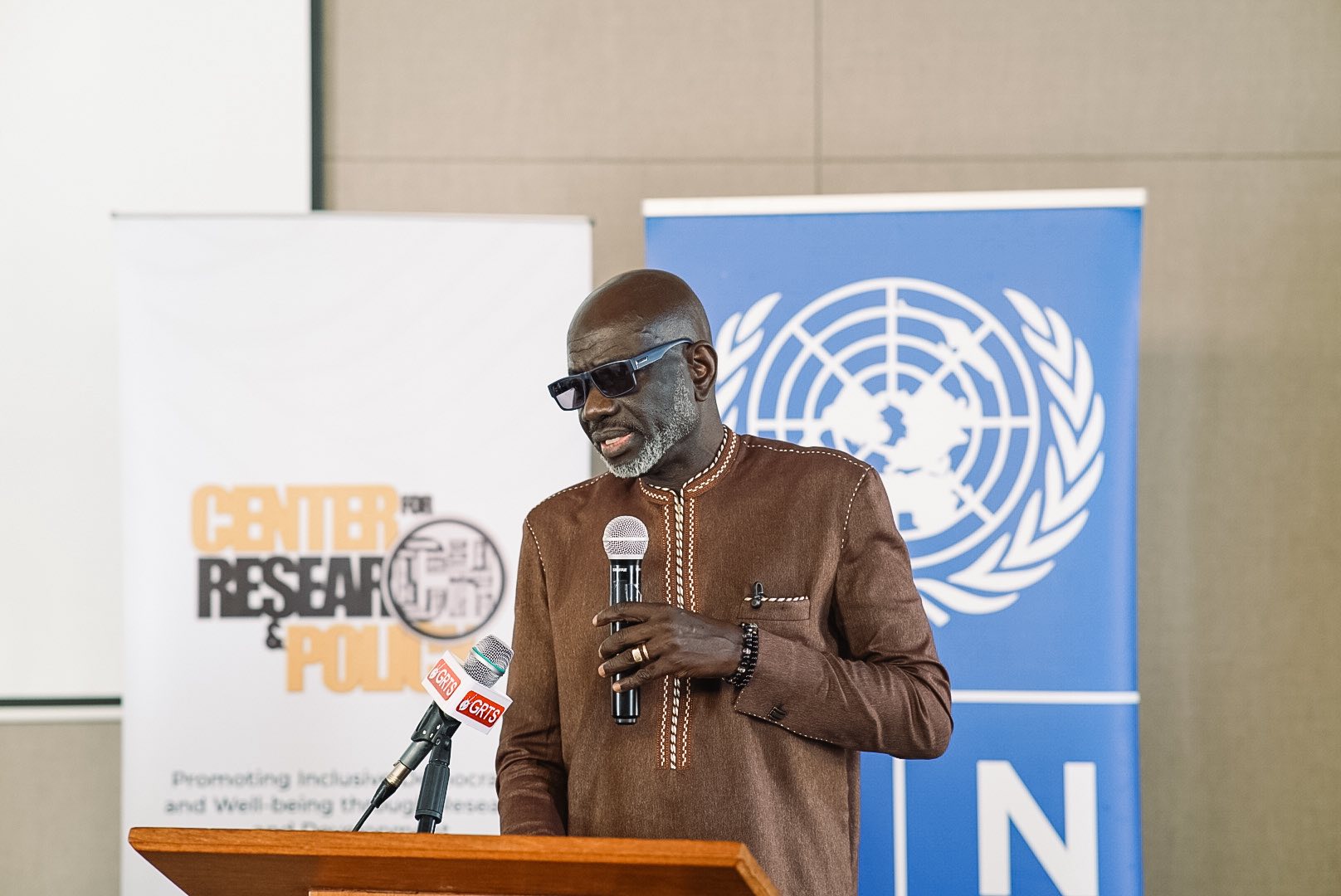
Representing the UNDP, Project Manager Thomas Kimaru described the outreach as a critical step toward “inclusive, accountable, and people-centered security governance.” He stressed that citizens must understand both their rights and responsibilities in order to play a meaningful role in shaping a responsive security sector.
Similarly, officials speaking on behalf of the National Security Adviser highlighted that sustainable security cannot be achieved without strong partnerships between the state and its citizens, noting that trust and cooperation remain central to the reform process.
Expected Impact on Security in The Gambia
The campaign is expected to have a multi-layered impact on national security.
First, by increasing public awareness of SSR, authorities anticipate a more informed citizenry that can engage constructively with security institutions. This includes community leaders, such as alkalos, religious figures, and youth representatives, who are expected to cascade information at the grassroots level.
Second, the initiative aims to strengthen community-based structures, enabling them to serve as platforms for dialogue, early warning, and conflict prevention. This could enhance local-level security management and reduce tensions before they escalate.
Third, by fostering open communication and incorporating community feedback into policy processes, the campaign is expected to rebuild trust between citizens and security services, an essential component for intelligence-sharing, cooperation, and overall national stability.
Finally, the emphasis on inclusion, particularly of women, youth, and marginalized groups, signals a shift toward a more participatory security model, where diverse voices contribute to shaping policies that directly affect them.
As the campaign rolls out across all regions, officials say it reinforces a central principle of the reform agenda: that effective and sustainable security in The Gambia is a shared responsibility between the state and its people.








Leave a Reply