


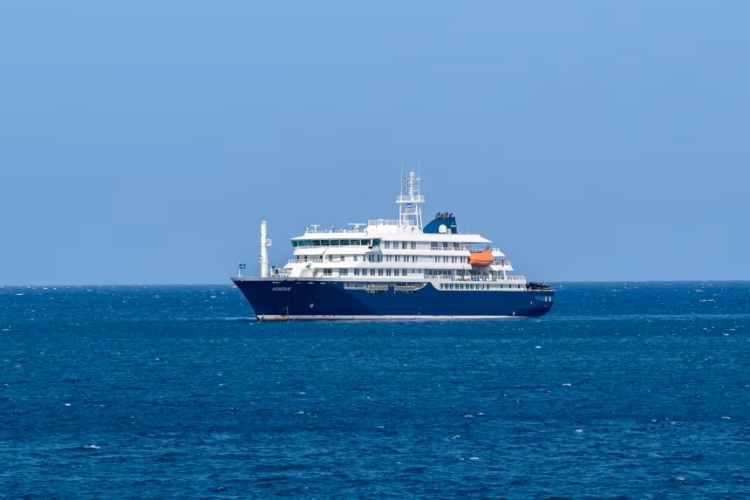
Gambiaj.com – (PRAIA, Cabo Verde) – A deadly outbreak of hantavirus aboard an Antarctic expedition cruise has exposed critical gaps in early detection and onboard response after nearly a month passed between the first suspected case and laboratory confirmation, health authorities say.
The incident, involving the vessel MV Hondius operated by Oceanwide Expeditions, has left three passengers dead, one in intensive care, and several others showing symptoms as the ship remains off the coast of West Africa under strict containment measures.
How the Outbreak Unfolded
According to the World Health Organization (WHO), the outbreak began shortly after the ship departed Argentina on April 1 for a month-long expedition across the Southern Ocean and remote Atlantic islands.
On April 6, a 70-year-old Dutch passenger developed fever, headache, and gastrointestinal symptoms. His condition deteriorated rapidly, culminating in respiratory distress before he died onboard on April 11 while the ship was deep in the South Atlantic.
At the time, the cause of death was unclear, allowing the vessel to continue its journey. It stopped near remote islands, including Tristan da Cunha and St. Helena, during which time additional passengers began falling ill.
The deceased man’s wife, already symptomatic, disembarked at St. Helena and flew to South Africa, where she collapsed and died on April 26. Around the same period, a British passenger developed severe symptoms, including pneumonia-like complications, and was evacuated from Ascension Island to South Africa.
A third fatality, a German passenger, occurred days later onboard as the ship sailed toward Cape Verde.
Despite multiple severe cases, it was not until May, 21 days after the first death, that hantavirus was confirmed through laboratory testing in South Africa.
Subsequent testing confirmed the virus in at least one additional fatal case, prompting the WHO to classify the situation as a suspected outbreak.
Current Situation Onboard
As of now, the ship, carrying nearly 150 passengers and crew from 23 countries, remains under controlled conditions at sea near Cape Verde.
Passengers and crew have been confined to their cabins under strict isolation protocols, with “maximal physical distancing” enforced, measures reminiscent of those seen during the COVID-19 pandemic.
Medical evacuations are underway. Aircraft have been dispatched to transfer critically ill individuals and close contacts of confirmed cases for further treatment and monitoring in Europe.
The vessel is expected to proceed to Spain’s Canary Islands once evacuations are completed, where further public health assessments will determine next steps.
Is There a Pandemic Risk?
Health authorities have moved quickly to reassure the public that the likelihood of a global outbreak remains low.
Hantavirus, unlike COVID-19, is not easily transmissible between humans. It is primarily spread through exposure to infected rodents, via their saliva, urine, or droppings. While rare instances of human-to-human transmission have been documented with specific strains, such as the Andes virus in South America, such cases are uncommon and typically require close contact.
The World Health Organization has assessed the global risk as low, noting that the virus does not have the same transmission dynamics that enabled COVID-19 to escalate into a pandemic.
However, as a precautionary measure, authorities are tracing passengers who may have had contact with infected individuals, including those on a commercial flight between St. Helena and Johannesburg.
What Happens Next
Investigations are now focused on identifying the source of the outbreak. Preliminary findings suggest the index cases, the Dutch couple, may have been exposed in South America prior to boarding, where certain hantavirus strains are endemic.
Public health teams are conducting contact tracing across multiple countries, while laboratory analysis continues to confirm suspected cases among passengers.
The cruise operator is coordinating with international health authorities to manage disembarkation, quarantine, and medical follow-up for all onboard.
The incident underscores the complexities of managing infectious disease outbreaks in isolated, high-density environments like cruise ships, where delayed diagnosis, limited medical infrastructure, and prolonged exposure can allow pathogens to spread undetected.
While the situation appears contained for now, health experts say it serves as a reminder of the importance of rapid diagnostics and surveillance in preventing localized outbreaks from escalating into broader public health threats.
Source: The Associated Press















Leave a Reply