


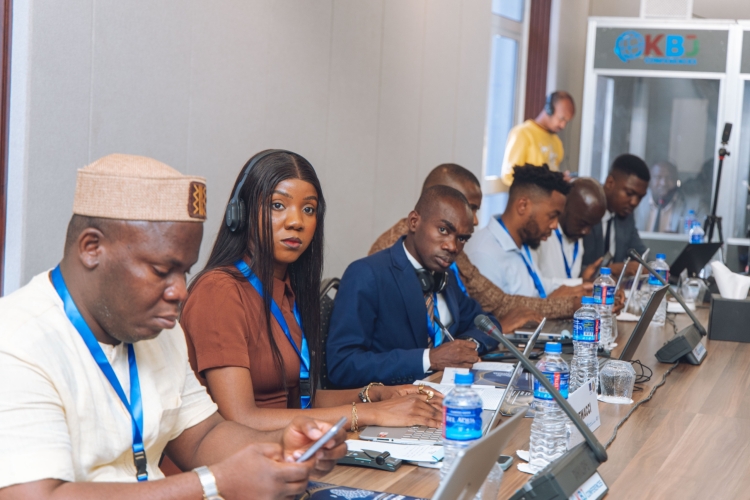
Gambiaj.com – (BANJUL, The Gambia) – A powerful call for African countries to stop undervaluing their own businesses and redirect investment confidence inward opened a landmark two-day summit in Banjul this week, as West Africa’s key development partners convened to map out a strategic path for regional trade growth.
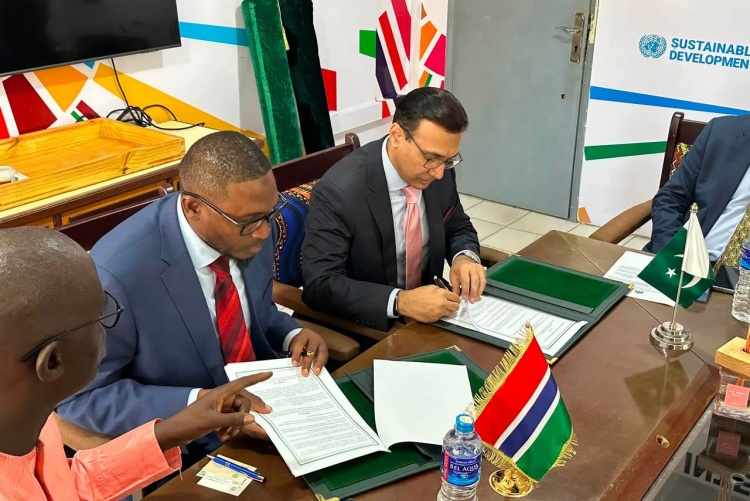
The 1st Africa Trade Competitiveness and Market Access Programme for ECOWAS (ATCMA-ECOWAS) Strategic and Technical Steering Committee Meeting brought together senior representatives from the Economic Community of West African States (ECOWAS), the European Union, the United Nations Industrial Development Organization (UNIDO), the International Trade Centre (ITC), ECOWAS Member States, and a broad range of stakeholders, all united by a common ambition: to make West African businesses stronger, more competitive, and more visible on the global stage.
Setting the tone for the meeting, Mr. Espinon Oliveira-Gomez, Director at the ITC, delivered a candid message about what he described as one of the most stubborn obstacles to Africa’s economic progress, a crisis of self-belief.
“We have to teach people how to fish rather than giving them fish,” he told participants, stressing that genuine sustainable development is built on empowering businesses, not on sustaining dependency.
His words carried a pointed resonance. Oliveira-Gomez argued that across the continent, small and medium-sized enterprises (SMEs), the backbone of most African economies,routinely underestimate their own worth, driving a troubling pattern of capital flight in which Africans favor putting their money in foreign markets over investing at home.
“I think that is one of the main challenges that SMEs in our countries have, they don’t believe in themselves. We prefer to put money in foreign countries rather than in our own countries. That is a situation that we need to change,” he said.
It was a message as much about mindset as it was about policy, and it appeared to strike a chord in a room where the conversation quickly turned to the structural reforms needed to back that confidence with concrete action.
A Program Built for Transformation
The ATCMA-ECOWAS Programme is not a standalone initiative. It forms part of a broader continental effort to improve market access, strengthen quality infrastructure, support priority value chains, and deepen Africa’s participation in both intra-African and global trade.
Its first steering committee meeting in Banjul marks an important milestone, a gathering of the very partners tasked with translating that vision into results on the ground.
Enrica Pellacani, Head of Cooperation for the European Union Delegation to The Gambia, framed the program within the EU’s broader commitment to regional integration through its Global Gateway Strategy.
“This program reflects a shared ambition not only to expand trade but also to drive structural economic transformation across West Africa,” she said.
Pellacani outlined what participants would work through over the two days: reviewing implementation progress, assessing governance arrangements, validating key milestones, discussing value chain priorities, and adopting a six-month work plan to guide the program’s next phase.
The focus on micro, small, and medium-sized enterprises was deliberate, she noted, with the program specifically designed to help them meet international standards and break into wider markets that have historically remained out of reach.
A Moment of Opportunity, and Urgency
UNIDO Programme Manager Bernard Bau struck a note of both opportunity and urgency, reminding delegates that the meeting was taking place against the backdrop of three of the continent’s most ambitious frameworks: the African Continental Free Trade Area (AfCFTA), the African Union’s Agenda 2063, and ECOWAS Vision 2050.
Each of these frameworks promises a transformed Africa, one in which the continent trades more with itself, industrializes at scale, and participates as an equal in global commerce. But Bau was clear-eyed about the gap between promise and reality.
“The African Continental Free Trade Area provides a unique opportunity to create a larger market for African goods and services. These trade opportunities can only be realized if enterprises can produce competitive and value-added products that meet international quality and safety requirements,” he said.
His message was a reminder that free trade agreements, however ambitious, are only as powerful as the businesses behind them. For African enterprises to seize the opportunities that AfCFTA opens, they must first be capable of meeting the quality, safety, and innovation standards that international markets demand. Competitiveness, Bau stressed, is not just about production capacity; it encompasses regulatory compliance, product safety, innovation, and sustainable practices across entire value chains.
Banjul as a Regional Stage
That this first steering committee meeting was held in Banjul is itself a signal of The Gambia’s growing role as a space for serious regional economic dialogue. The small West African nation, long constrained by its size and geography, has increasingly positioned itself as a hub for multilateral engagement, and the presence of such high-level international representation this week only reinforces that standing.
For ordinary Gambians, and for the SME owners across the sub-region who are the ultimate intended beneficiaries of this program, the real test of these gatherings lies not in the elegance of the declarations made, but in the practical changes that follow.
As Oliveira-Gomez’s remarks made plain, the work of building a competitive, self-believing African private sector begins with a change in how Africa sees itself.
The policies, the funding frameworks, and the trade architecture can all be put in place, but without the fundamental conviction that African businesses are worth investing in, the architecture risks remaining empty.
The two-day meeting in Banjul is one step in a long process. But judging by the ambition on display, it appears to be a step taken with purpose.







Leave a Reply