


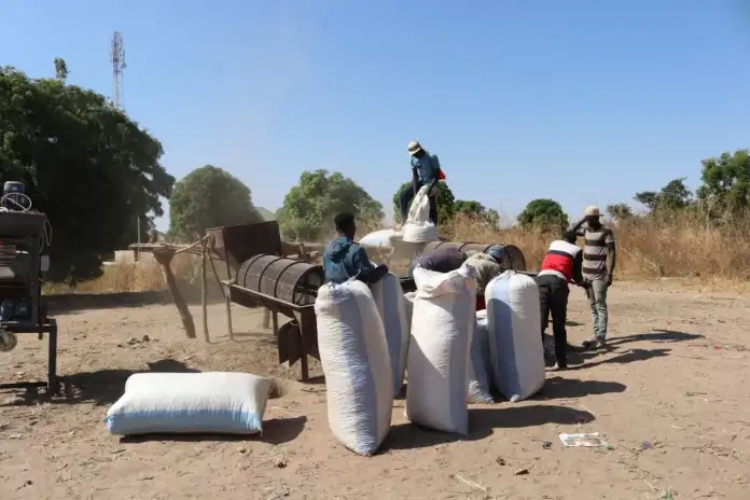
Gambiaj.com – (TORO ALASAN, North Bank Region) – At least twenty-one groundnut farmers from Toro Alasan in the North Bank Region have taken their grievances to the police after their local agricultural cooperative, the Kerr Alagie-Karu Secco, allegedly failed to pay them a combined sum of D1,021,198 owed from groundnut sales, money many of them desperately needed to prepare for the upcoming farming season.
According to The Standard newspaper, The farmers, who say they have been waiting for months with mounting anxiety and dwindling household incomes, reported the matter to police in Kuntaya, whose jurisdiction later transferred the case to Essau and subsequently to police headquarters in Banjul.
Despite the legal intervention, the farmers say little progress has been made, leaving them in financial limbo.
A Promise That Never Came
Amadou Bah, a native of Toro Alasan and one of the affected farmers, told The Gambia Journal that he is personally owed D275,800, the single largest outstanding balance among the group. He said the Secco president, Jim Gaye, had assured farmers that payment would be made once the government disbursed funds, a promise that has remained unfulfilled for several months.
“I personally confronted the Secco president on several occasions and each time he claimed he had not received the money from the government,” Bah said.
For Bah, the financial impact has been deeply personal. The unpaid money has severely disrupted his family’s income and has already threatened his plans to purchase fertiliser ahead of the new farming season, which is fast approaching.
Musa Ceesay, another farmer, says the Secco owes him D13,661. What he finds most troubling, however, is a contradiction that has left the farmers both confused and frustrated, the government publicly announced that no farmer was owed a single butut, yet their Secco president continues to insist that funds have not been received.
“So we confronted the Secco president Jim Gaye who kept saying he has not got money from government to pay us,” Ceesay told the Standard.
“Referring the case to the police did not solve the matter either. The police only arrested him briefly and released him, and over two months now nothing came out of the case. This is very discouraging for us as farmers.”
A third farmer, Egan Bah, who is owed D18,124, echoed the frustration of his colleagues and called on the relevant authorities to intervene decisively and ensure that farmers receive what is rightfully theirs.
The Faces Behind the Figures
The human cost of this dispute is reflected in the individual amounts owed to each farmer — some modest, others substantial, but all representing months of hard labour on the land:
Omar Ceesay — D94,278, Mbaye Chune — D99,028, Adam Sallah — D34,276, Alassan Leigh — D20,529, Alassan Bah — D70,271, Alagie Bah — D38,000, Mambi Dumbuya — D40,926, Danjan Chune — D19,304, Babu Ceesay — D50,500, Ebrima Bah — D8,512, Samba Bah — D81,400, Ebrima Chune — D9,291, Ebrima Bah — D28,614
According to a list seen by The Gambia Journal, the total amount owed to all twenty-one farmers stands at D1,021,198.
Police Confirm Ongoing Investigation
The Gambia Police Force has confirmed that the matter is under active investigation. Deputy Police Spokesperson ASP Mariama Fatty told The Standard that the Secco manager Jim Gaye and a second suspect were arrested and subsequently released on police bail.
“Investigations are still ongoing. We are at verification stages in terms of payments and financial transactions that were made relating to the case,” ASP Fatty said.
Asked about the prolonged delay in the proceedings, ASP Fatty disclosed that the prime suspect, Jim Gaye, had been unwell, though she affirmed that investigative work had not stalled entirely.
“However, we are still verifying the documents and payments that were made through Wave and other means,” she added.
A System That Must Answer
The plight of the Toro Alasan farmers speaks to a broader and recurring challenge facing groundnut farmers across The Gambia, the vulnerability of smallholder producers who depend entirely on Secco cooperatives to receive payment for their harvests, with little recourse when those structures fail them.
As the new farming season approaches and the rains draw near, each passing day without payment is not just a financial loss, it is a threat to next season’s harvest, food security, and the livelihoods of entire families who have placed their trust in a system that, in this case, appears to have let them down.
Source: The Standard










Leave a Reply