


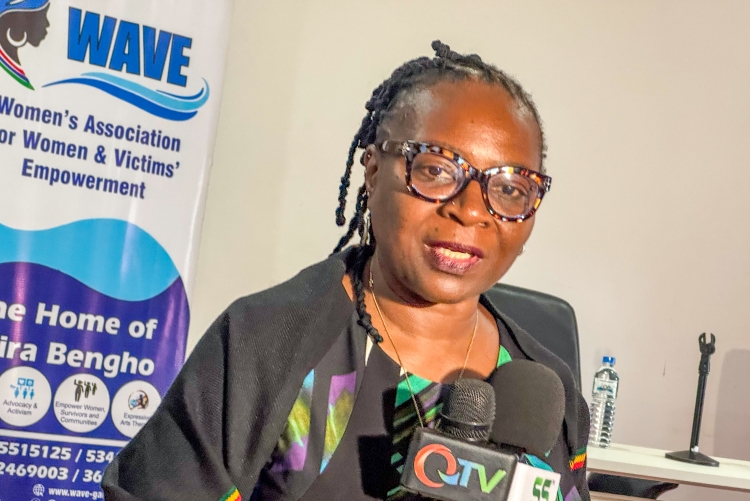
Gambiaj.com – (BANJUL, The Gambia) – The Women’s Association for Women and Victims’ Empowerment (WAVE-Gambia) has called on authorities to accelerate the implementation of recommendations made by the Truth, Reconciliation and Reparations Commission (TRRC), warning that commitments alone are not enough to deliver justice and lasting peace.
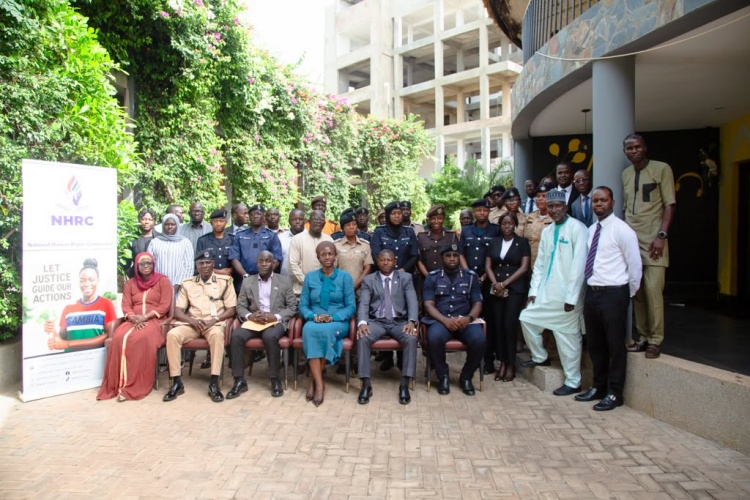
The call was made during a stakeholder consensus meeting on localized, community-led peace initiatives for Kerr Mot Ali and surrounding communities, where representatives of government institutions, security agencies, human rights bodies, civil society organizations, and local communities gathered to discuss an interim peace structure for the area.
Speaking at the meeting, WAVE-Gambia Co-founder and senior technical advisor Priscilla Yagu Ciesay stressed that accountability, justice, and transformation remain at the heart of The Gambia’s transitional justice process.
“Accountability, justice, and transformation are uncomfortable. But inaction is not an option,” she said, emphasizing that delays in addressing past injustices risk prolonging the suffering of victims and affected communities.
Ciesay noted that while The Gambia’s transitional justice efforts have received international recognition, the country must now demonstrate its commitment through meaningful reforms and implementation.
“The world is watching to see if our systems and structures will deliver transformative governance and real change,” she said.
She recalled that the government white paper accepted recommendations concerning Kerr Mot Ali, including the establishment of peacebuilding mechanisms and initiatives aimed at strengthening social cohesion. However, she observed that several years later, some affected families remain in exile, and a number of key issues are yet to be resolved.
According to Ciesay, the success of the transitional justice process depends not only on policy commitments but also on tangible actions that address the concerns of victims and communities.
WAVE-Gambia Head of Operations Mariama Jakaba Ceesay said the proposed community-led peace structure is intended to serve as an interim mechanism to address pressing concerns while supporting the implementation of government commitments.
She described the initiative as one that is “by the community, for the community,” designed to provide a platform for stakeholders to identify priorities, coordinate interventions, and prevent unresolved grievances from escalating into future conflicts.
During the meeting, the National Human Rights Commission (NHRC) provided an update on the implementation of the TRRC recommendations.
The Commission reported that the TRRC submitted 265 recommendations to the government, of which 263 were accepted through the Government White Paper.
According to the NHRC, the accepted recommendations cover a wide range of areas, including reparations, legal and institutional reforms, prosecutions, and justice and accountability measures, as well as guarantees of non-repetition.
The Commission further explained that the government subsequently developed an implementation plan containing 304 activities linked to the accepted recommendations, with 59 institutions assigned responsibility for carrying out the various actions.
As part of its mandate, the NHRC said it continues to monitor progress and assess whether government commitments are being fulfilled. The Commission has already published a number of monitoring reports on the implementation process and indicated that another update will be released soon.
Concluding her remarks, Ciesay urged institutions, development partners, and individuals with influence to remain committed to supporting justice, human rights protection, and reconciliation efforts across the country.
“Never Again must continue to live in our words, but it must also show up in tangible action,” she said.








Leave a Reply