


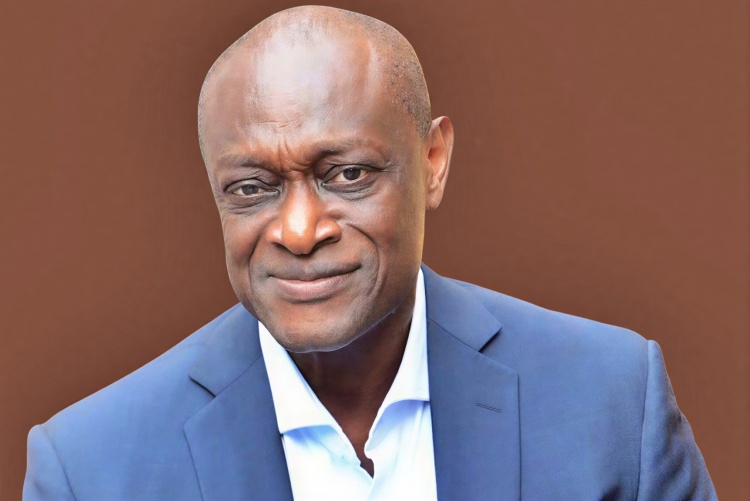
Gambiaj.com – (BANJUL, The Gambia) – The appointment of Lawyer Edi M.O. Faal as Chief Justice has become one of the most important constitutional debates in recent Gambian history.
Eminent lawyers have expressed differing opinions. The Gambia Bar Association has raised concerns. Public opinion is divided. Yet, amid the legal arguments and public commentary, one important truth deserves to be acknowledged: disagreement among lawyers does not necessarily mean that the Constitution has already spoken with finality. Sometimes, it simply means that a constitutional question requires authoritative interpretation by the courts.
I write neither as a constitutional lawyer nor as a judge. I write as a retired public servant who spent more than four decades serving successive governments and working with institutions whose credibility depended not on personalities but on respect for the law. It is from that perspective that I support the appointment of Edi Faal as Chief Justice.
My support is not based on political affiliation, personal friendship, or admiration for any individual. It is based on principle.
I have listened carefully to the arguments advanced by those who oppose Mr. Faal’s appointment. Their concerns deserve to be heard. They have raised constitutional questions that, in their view, render him ineligible to serve as Chief Justice. They are entitled to that interpretation, and they have every right to seek judicial clarification if they believe the Constitution has been violated.
However, I am not persuaded that the Constitution clearly and unequivocally prohibits his appointment.
The Constitution should not be interpreted to exclude a qualified citizen unless its language clearly requires that result. Where respected lawyers sincerely disagree on the meaning of a constitutional provision, I believe the proper place to resolve that disagreement is in the courts established by the Constitution itself, not in the court of public opinion.
This is not a criticism of those who hold a different view. On the contrary, constitutional democracies are strengthened when difficult legal questions are openly debated with civility and respect. Honest disagreement among lawyers is not a weakness of the legal system. It is often a sign that constitutional safeguards are being taken seriously.
The Purpose Behind the Constitutional Requirement
When a Constitution establishes qualifications for an office as important as that of Chief Justice, the purpose is not simply to create a technical barrier. It is to ensure that the person entrusted with leading the judiciary possesses the legal knowledge, professional experience, and judgment necessary to uphold justice and constitutional governance.
The requirement for legal experience within a common law tradition exists because The Gambia’s legal system has developed within that tradition. The objective is to ensure that the Chief Justice understands the principles, procedures, and values that guide our courts.
The question, therefore, should not only be whether a person’s professional journey followed one particular route. It should also be whether that individual possesses the legal competence, experience, and judgment required to discharge the responsibilities of the office.
In my view, Edi Faal’s decades of legal practice, including his experience in complex international legal matters, demonstrate the breadth of professional exposure and legal capability that the office of Chief Justice requires.
It is also noteworthy that Mr. Faal recently served as a member of The Gambia’s legal team in a complex international civil dispute conducted within a common-law jurisdiction. Regardless of differing opinions about the outcome of that case, the government entrusted him with helping to defend the country’s interests in proceedings involving substantial public funds and important questions of law.
Governments do not assign lawyers to matters of such national significance unless they have confidence in their legal ability, professional judgment, and advocacy. While that experience does not, by itself, determine the constitutional question now before the country, it reinforces my view that Mr. Faal possesses the breadth of legal experience expected of a Chief Justice.
Indeed, one may reasonably ask: if Mr. Faal was considered sufficiently qualified to represent The Gambia before an international tribunal operating within a common law jurisdiction in a dispute of enormous national importance, can it seriously be argued that he lacks the legal competence to lead our own judiciary? To me, that fact strengthens, rather than weakens, the case for his appointment.
Of course, the wording of the Constitution remains paramount. The purpose behind a constitutional provision cannot override its actual text. That is why, where a genuine dispute exists, the final interpretation must come from the courts.
Another reason for my support lies in the breadth of experience Mr. Faal brings to the office. Over many years, he has practiced law at both the national and international levels, handling matters of considerable legal complexity.
That record, combined with his reputation for professional competence, reinforces my belief that he has the qualities expected of a Chief Justice. At a time when The Gambia continues to strengthen its democratic institutions, experience, competence, and integrity are attributes that should be valued.
Throughout my years in public service, I worked with professionals from different backgrounds and under different administrations. One lesson remained constant: nations progress when they are willing to utilize the talents of their most capable citizens while remaining faithful to the law. Excellence should never be rejected unless the law clearly demands it.
Some have argued that, because of Mr. Faal’s legal education and professional background, he does not satisfy the constitutional qualifications for appointment as Chief Justice. That argument deserves careful legal consideration. But whether it is correct is ultimately for the courts to determine. Until such a determination is made, I am reluctant to conclude that the appointment is unconstitutional.
Supporting Mr. Faal’s appointment does not mean disregarding the Constitution. Equally, opposing his appointment does not mean opposing Mr. Faal personally. I believe that most people on both sides of this debate are acting in good faith, guided by their understanding of the law.
If this matter reaches the courts, I hope it will be resolved expeditiously and with clarity. Whatever the outcome, the decision should strengthen our constitutional jurisprudence and provide authoritative guidance for future appointments. That is how constitutional democracies mature.
If the Supreme Court ultimately rules that Edi Faal is constitutionally ineligible to serve as Chief Justice, I will accept that judgment without hesitation. Not because I will have changed my opinion of the man, but because my highest loyalty is to the Constitution and the rule of law.
Until that day, however, I choose to give the Constitution the benefit of judicial interpretation rather than the certainty of personal opinion.
In the final analysis, this debate is bigger than Edi Faal. It is about the kind of nation we aspire to be: one that encourages thoughtful legal debate, respects differing opinions, trusts its constitutional institutions, and allows the rule of law – not emotion, politics, or personalities – to determine the outcome.
That, to me, is the true measure of a mature democracy.











Leave a Reply