


Gambiaj.com – (BANJUL, The Gambia) – Corruption is not the primary contradiction facing The Gambia in particular and Africa in general. The practice is an appendage of the social system of capitalism. As long as this social system exists, the blatant criminal mismanagement of local resources, aid from donor countries, and loans and grants from the most notorious accomplices of “corruption in Africa,” the World Bank, the International Monetary Fund, and the United Nations and its subsidiaries, will persist.
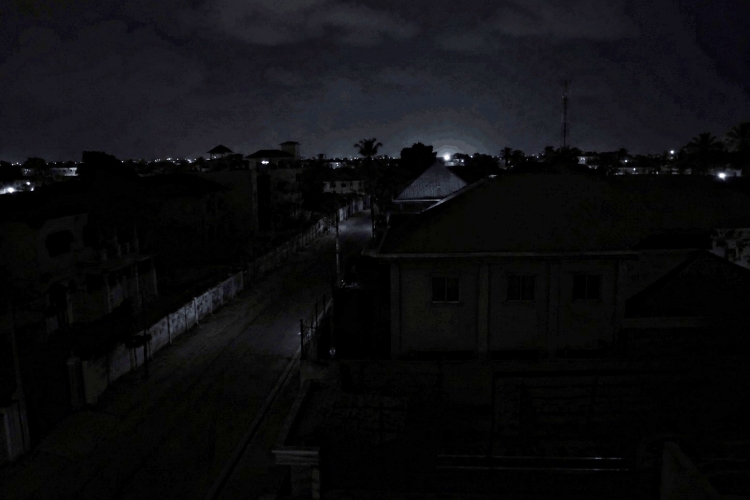
The Tobaski day (Eid al-Adha) of 1977, forty-eight years ago, was the starting point of this shameful inefficiency of the institution tasked with providing our beloved Gambia with water, electricity, and sewage services. These essential services, which support daily living and other vital operations of a functional society, remain elusive to this date.
To do justice to this matter, a brief history of these institutions and the impotence they have manifested will help us understand the problems and the solutions required to overturn the shame and misery they have heaped upon our lives.
The Gambia Utilities Corporation (GUC) was the first utilities company established after “flag independence,” following the merger of the former Water Works Department and Electricity Department.
GUC was established in 1972 by an Act of Parliament to provide water and electricity to the public, including the domestic, industrial and public sectors. GUC’s performance was so poor and undependable that the people rightly named it the “Gambia Useless Corporation.” From its administration to the delivery of services, GUC was entangled in all the characteristics of “corruption” practices, the trademark of all the subsequent utility companies that followed.
Following the dissolution of GUC in 1993 by a Presidential Executive Order, the nightmare of providing electricity continued under Management Services Gambia Ltd (MSG) and the Utilities Holding Corporation (UHC), while MSG, a French-owned company, was responsible for operations.
The mere changing of a company’s name is meaningless while the structures remain grossly infested with predatory corrupt practices, both domestic and foreign. Like its predecessor, GUC, Management Services Gambia provided equally poor and miserable services, leading the public to describe the situation as “Mu ngeh soga graaw,” meaning “it is now at its worst.”
Management Services Gambia was ultimately dissolved on February 23, 1995, and in June 1996, the current nightmare in the name of the National Water and Electricity Company (NAWEC) fell upon the lives of Gambians, with no relief in sight.
Normalizing low standards, “corruption,” and lack of integrity
NAWEC is grossly impregnated with all the ills of the utility companies that preceded it. In its 30 years of existence, it has surpassed all of them in setting low standards, tolerating naked corruption and trampling on integrity.
How can employees, even if they joined NAWEC untouched by its unscrupulous trademark practices of corruption, escape from the rot that hired them? But as the saying goes, “When the fish rots, it starts from the head.”
Once you enter that den of corruptible thieves, either you become a predator like the rest of them or you get chewed up and your bones spat out.
Those who have doubts can count the number of Managing Directors who have been hired to reverse the horrible track record of NAWEC. Many of us had high hopes that change was coming to solve our light and water nightmares. Instead, the vast majority who wanted things to remain at gutter level amplified the hostilities to undermine the enthusiasm of those naive managing directors determined to straighten NAWEC.
As long as there are no consequences for the prevailing practice of squandering public resources, NAWEC, and all governmental institutions, including non-governmental institutions, will continue to wallow in “corruption.” Severe consequences should start from the top and extend to the bottom.
A crack in the administrative structure
“When the fish rots, it starts from the head.”
Every institution under this neocolonial administration insidiously molds behavior susceptible to unscrupulous and corrupt practices. It just so happens that NAWEC is the most notorious institution because of the erratic interruption of water and electricity supplies in our daily lives, but the entire system wallows in the same rot.
We have taken the importance of leadership for granted for too long, to our detriment, since “flag independence.” As a result, our conditions of living as Africans get worse as the years go by, with no relief in sight.
The low expectations of Africa held by the colonialists, our so-called “partners in development”, are blatantly reaffirmed by the impotent neocolonial leadership that produces nothing but consumes everything. The crack that the colonialists created before their departure has widened into a gulf.
The tragic consequences of NAWEC as an “institution” are reflected in the uninspiring attitude of its administration, from management to ordinary workers. In general, the workers in the offices and those who go out to implement services for customers leave no strong or positive impression about NAWEC and the workmanship of its employees.
The delivery of services such as the installation of Cash Power meters, water meters and their accessories is constantly troubled by delays, with expectations of bribery to expedite installations or deliveries.
Even after paying the required charges for the services requested, there is an unwritten rule of bribery, not only at NAWEC but throughout the entire system.
A bribe must be handed over, or the service is delayed.
To work at NAWEC, the unwritten rule of bribery is mastered by almost all workers, both in the offices and out in the field. This expected behaviour is shared by NAWEC employees and society at large.
This despicable behavior, coupled with NAWEC’s horrible services, has been normalized in the consciousness of the Gambian population. Even though complaints abound, NAWEC has developed a chronic resistance to our frustrations, with habitual press releases promising to solve the country’s chronic water and electricity problems.
It is very common to find exposed NAWEC water pipes on unpaved roads in communities across the country.
These Polyvinyl Chloride (PVC) or High-Density Polyethylene (HDPE) pipes are buried so shallow underground that they are easily exposed by erosion, vibrations from automobile tyres and, worst of all, during the rainy season.
The sticking point, and indeed the dangerous question that must be asked, is this: will NAWEC ever change from its past and present history of low standards of service delivery, backward workmanship and the sharp point of the dagger, corruption, deeply plunged into the nation’s back?
In my view, the only realistic change will happen through a wave of revolution that will drown anything without substance, such as NAWEC and similar institutions that grind genuine development to a halt.
The politics of water, light, food, and housing
To effectively sustain the lifeblood of any society, water, light, food, and housing must be at the top of the agenda of the government and its leadership.
Indeed, we cannot criticize NAWEC for the chronic food and housing crises in The Gambia, but the erratic supply of electricity is responsible for the spoilage of food that requires refrigeration to last a little longer.
Equally erratic and a disservice to the vast majority of Gambians is access to and availability of water. What is a house without water and electricity?
There is no need to mention the large volume of water in the River Gambia when NAWEC cannot manage the current volume of underground water in the urban areas.
If you notice, I made no mention of the staggering “statistical data” on funding in the form of loans and grants given to NAWEC over the decades, with nothing to show for it.
Generally, the International Monetary Fund (IMF), World Bank, United Nations, and many of their subsidiaries prescribe solutions deeply grounded in illusions, with the stated intention of solving the “energy,” food, and water crises in Africa, particularly in The Gambia.
For six decades, our technocrats, representing the government, have swallowed these prescriptions with no evidence of a cure for this chronic sickness.
NAWEC is beyond reform.
NAWEC is irreparable and cannot be reformed. The whole institution is broken, rotten, and rusty. Attempts at repair and reform are like transplanting a good heart into a dead body.
The standard practice of the state, with its broken-down and impotent “institutions,” has always been to reform or privatize the entity, as if reforms and privatization have ever worked.
NAWEC is grossly infested with its termite administration and employees. The system is beyond repair, reform, and privatization. NAWEC must be uprooted and discarded into the dustbin of history.
The recent protests against consistent electricity outages, coupled with water shutdowns, reaffirmed that the people defend concrete things such as the availability of electricity, water, housing, food, and healthcare, things that directly impact their livelihoods.
You will never see the people protesting in support of banks and other abstract things that do not impact their immediate livelihoods.
Empty promises, especially with elections fast approaching, do us no good.
Let there be light so we can see the revolutionary path to genuine development and advancement.







Leave a Reply