


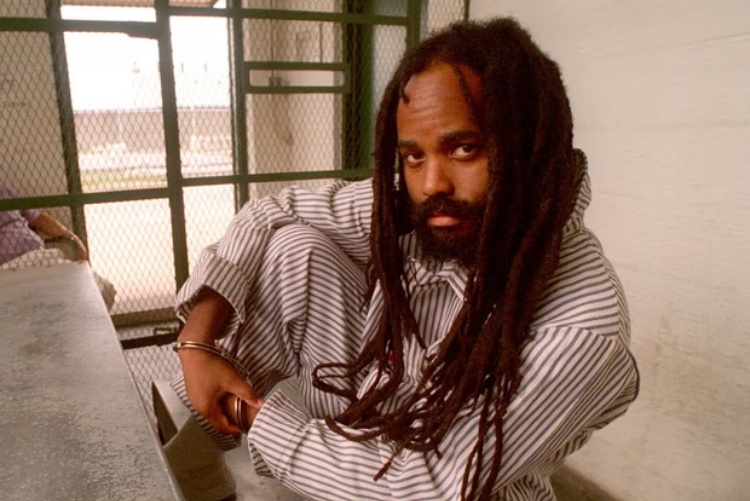
Gambiaj.com – (PENNSYLVANIA, United States) – After nearly 45 years behind bars, Black radical writer and former Black Panther Mumia Abu-Jamal has taken his long-running fight for freedom to the United Nations, arguing that his imprisonment for the 1981 killing of Philadelphia police officer Daniel Faulkner amounts to arbitrary detention.
Abu-Jamal, 72, filed a petition on Tuesday with the UN Working Group on Arbitrary Detention, a body under the UN Human Rights Council. The move comes after his legal team says he has exhausted avenues of appeal through the US state and federal courts.
Speaking by telephone from Mahanoy Correctional Institution in Pennsylvania, where he is serving life without parole, Abu-Jamal said the UN petition was another attempt to keep his legal struggle alive.
“Hope is an element of struggle, is it not?” he said, invoking the familiar liberation movement slogan, “A luta continua.”
A Conviction That Remains Deeply Contested
Abu-Jamal was convicted in 1982 of first-degree murder in the death of Officer Daniel Faulkner, who was shot during a confrontation with Abu-Jamal’s brother, William Cook, during a traffic stop in Philadelphia in December 1981.
Abu-Jamal, who was himself shot in the chest during the incident, has consistently maintained that he was innocent of the killing.
His case has divided public opinion for decades. Supporters, including human rights campaigners and prominent figures, have portrayed him as a political prisoner who was denied a fair trial. Police organisations and other critics have maintained that he was properly convicted of killing a police officer.
His original death sentence was eventually overturned. After spending 28 years on death row, he was resentenced in 2011 to life imprisonment without the possibility of parole.
For Abu-Jamal, however, the change in sentence did not amount to freedom.
He describes life without parole as “slow death row,” a sentence that allows no possibility of release regardless of a prisoner’s age, rehabilitation or deteriorating health.
Petition Raises Questions Over Trial
His legal team, led by Bret Grote of the Abolitionist Law Center and supported by the American Civil Liberties Union and the Center for Constitutional Rights, argues that Abu-Jamal’s prosecution was marred by serious violations of his rights and international law.
The petition raises concerns about the selection of the jury at his 1982 trial. According to the filing, the prosecutor marked potential jurors in his notebook with “B” and “W” to identify Black and white candidates.
The prosecutor ultimately struck 71% of potential Black jurors compared with 20% of non-Black candidates, leaving a 12-member jury with only two Black members in a Philadelphia county that was nearly 40% African American.
The petition also raises concerns about the trial judge, Albert Sabo, who presided over numerous death penalty cases. Abu-Jamal’s lawyers cite an alleged racist remark attributed to Sabo before the trial.
The UN body is also being asked to consider evidence disclosed to Abu-Jamal’s defence team in 2018 that they say casts doubt on the credibility of a key prosecution witness, Robert Chobert.
Seeking International Pressure
The UN Working Group on Arbitrary Detention has no direct power to overturn an American court ruling or order Abu-Jamal’s release.
His lawyers nevertheless believe that a finding against the United States could strengthen efforts for a retrial or a commutation of his sentence.
For Abu-Jamal, the international forum also offers something he believes has been missing from his long legal battle: an opportunity to present his claims before experts who are not directly exposed to the political pressures surrounding his case.
He recalled being shocked in 1995 when he learned that four of the seven Pennsylvania Supreme Court justices had received endorsements from the Fraternal Order of Police, an organization that has campaigned for his punishment.
“Presenting my claims to the UN will be one of the first times that judges will be hearing them without a vested interest,” he said.
Nearly Half a Century Behind Bars
Abu-Jamal’s life in prison has extended far beyond his conviction.
He entered the Black liberation movement as a teenager after a Philadelphia police officer kicked him in the face during a 1968 protest against segregationist presidential candidate George Wallace.
The following year, he helped establish the Philadelphia chapter of the Black Panther Party and later built a career as a journalist, writer, and broadcaster.
His imprisonment has since turned him into an internationally recognized figure. At the height of his time on death row, supporters around the world campaigned against his execution, with prominent figures including Maya Angelou, Spike Lee, and Paul Newman publicly supporting his cause.
He once received dozens of letters from supporters every week. Today, he says that number has fallen considerably.
“Some people seem to believe that because I’m off death row, now I’m home,” he said. “They don’t know. They don’t get it.”
Health and the Cost of Incarceration
Abu-Jamal has also endured serious health problems during his decades in prison.
He spent much of last year with severely impaired vision after years of deteriorating eyesight. He eventually underwent cataract surgery following prolonged efforts to persuade prison authorities to provide treatment.
He has also suffered from diabetes, congestive heart failure, and hepatitis C. His legal battles have at times extended to securing basic medical treatment.
He says the physical consequences of imprisonment have compounded the emotional cost of being separated from his family for generations.
His daughter Samiya was only a child when she visited him on death row. Abu-Jamal recalled her running towards the glass separating them and repeatedly shouting for it to be broken.
“It tore my heart,” he said.
Despite those experiences, he has continued writing. Books have been central to his survival during his incarceration, and he is currently working on a doctoral thesis examining the writings of Martinican revolutionary and anti-colonial thinker Frantz Fanon, particularly The Wretched of the Earth.
His declining eyesight has made the work increasingly difficult, but he remains determined to complete it.
“Yes it is,” he acknowledged when asked about the difficulty of producing such a complex work while dealing with poor eyesight and imprisonment.
“But difficult is not impossible. You do what you must do.”
As Abu-Jamal approaches the 45th anniversary of his incarceration in December, his latest petition represents another chapter in one of America’s most enduring and controversial criminal justice cases, and a renewed attempt to take his fight beyond the US courts and before the international community.









Leave a Reply