


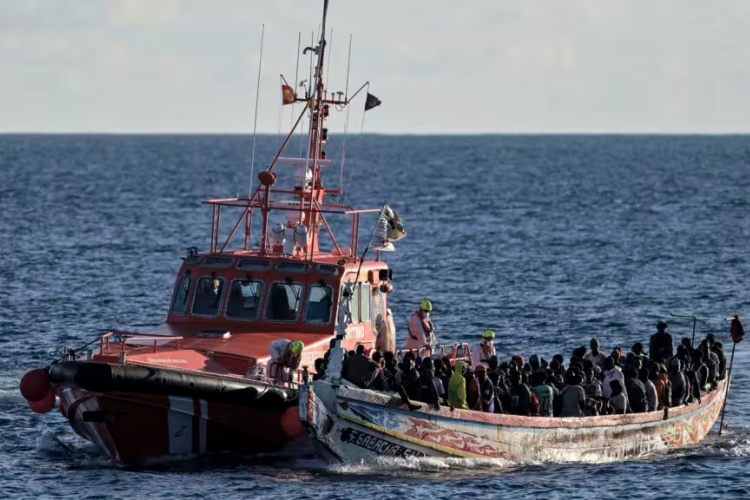
Gambiaj.com – (BANJUL, THE GAMBIA) – More than 1,500 migrants, including hundreds of Gambians, reached Spain’s Canary Islands on Saturday in the deadliest and busiest period of arrivals recorded in a single day since the migration route from West Africa became a major gateway to Europe. The 1,580 arrivals, many of them from The Gambia, Senegal and Guinea, surpassed the previous daily record of 1,461 set on 7 November 2020.
The arrivals were recorded across three islands, with El Hierro receiving the overwhelming majority. Provisional figures compiled by Spain’s EFE news agency from Maritime Rescue services and port assistance teams showed that 1,327 people arrived on El Hierro, 203 on Gran Canaria and 50 on Tenerife.
For The Gambia, the figures underline the continuing scale of irregular migration along the Atlantic route and the risks faced by young people and others attempting the dangerous journey to Europe in overcrowded wooden boats, locally known in Spain as as cayucos.
Several of the boats involved in Saturday’s arrivals had departed from Gambian coastal communities, including Brufut and Gunjur, highlighting the country’s continued prominence as a departure point for migrants heading towards the Canary Islands.
One of the first boats to reach El Hierro carried 148 people from Senegal and The Gambia, including 18 women and 12 suspected minors, after a six-day journey from Kayar in Senegal.
Another boat carrying 85 people, including 12 women and 12 children from The Gambia, Senegal and Guinea-Bissau, had departed from Brufut after a seven-day voyage.
A further boat carrying 97 people from The Gambia, Senegal and Guinea, including 27 women and 16 minors, had also set off from the Gambian coast six days earlier.
The largest single group arrived at 17:26, when a rescue vessel brought 240 people ashore on El Hierro. The passengers, from The Gambia, Senegal and Guinea, included 12 women and 36 children. They had departed from Gunjur in southern The Gambia six days earlier.
Another vessel carrying 203 people, including 18 women and 37 children, was brought to Arguineguín on Gran Canaria. The boat had also departed from Gunjur and was intercepted approximately 185 kilometres south of El Hierro.
The final recorded arrival on El Hierro took place shortly after 11pm, when 92 people from The Gambia, Senegal, Guinea and Guinea-Bissau were brought ashore following a six-day journey from The Gambia. The group included 12 women, six children, a four-month-pregnant woman and an 18-month-old child.
Women And Children Among The Arrivals
The scale of Saturday’s arrivals was accompanied by a significant number of vulnerable passengers. Provisional figures indicated that at least 120 women and 173 children were among those who reached the three islands.
Among them was a six-month-old baby aboard a boat that had traveled from Mboro in Senegal. Other groups included pregnant women and very young children who had endured several days at sea in overcrowded and often dangerous conditions.
Fifteen boats were assisted across the three islands during the day, with six Maritime Rescue vessels and two Guardia Civil patrol boats involved in the operations. Additional rescue vessels joined the operations on Sunday, bringing the number deployed in the area over the weekend to ten.
Atlantic Migration Route Remains A Major Challenge
The Canary Islands have become one of the principal entry points into Europe for migrants departing from West Africa. The Atlantic crossing is particularly dangerous because of its length, unpredictable weather and the condition of many of the boats used.
For Gambians, the latest arrivals bring renewed attention to the human and social consequences of irregular migration, particularly the continued departure of people from coastal communities such as Brufut and Gunjur.
The figures also highlight the regional nature of the migration crisis, with passengers from several West African countries frequently travelling together on the same boats.
The Canary Islands authorities had previously declared a social emergency over the pressure created by migrant arrivals and the challenges of providing reception and assistance, particularly for unaccompanied minors.
Saturday’s total of 1,580 people represents a new daily record, surpassing the 1,461 arrivals recorded in November 2020, when Arguineguín in Gran Canaria was the principal point of disembarkation.
While the provisional figures are still subject to confirmation, the latest arrivals underscore the continuing scale of the Atlantic migration route and the urgent challenges facing both West African departure countries and European destination authorities.
Editorial note: The supplied report does not establish the exact number of Gambian nationals among the 1,580 arrivals. The story therefore distinguishes between people who departed from The Gambia and those identified as Gambian nationals, rather than treating the two categories as identical.













Leave a Reply