


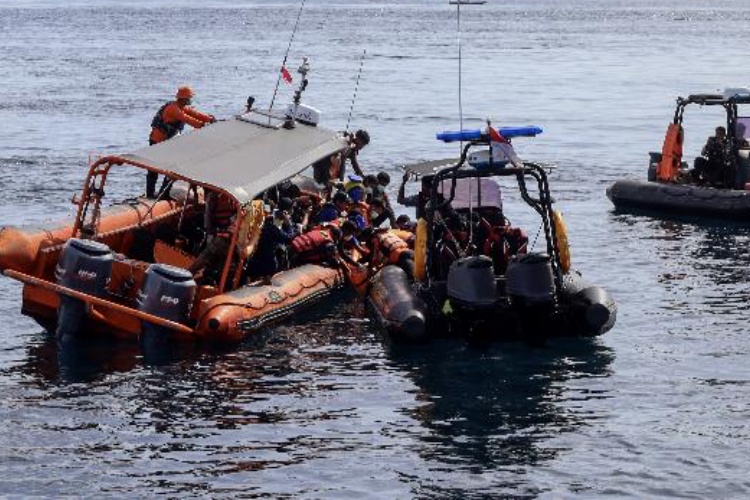
Gambiaj.com – (BANJUL, The Gambia) – Five years later, a forgotten maritime drama resurfaces. Shortly after midnight on August 4, 2021, a fishing vessel known as BRIKA began disappearing beneath the Atlantic off the Gambian coast.
There was no television coverage. No dramatic live broadcasts. No official commission of inquiry. And unlike many maritime disasters, there were no fatalities to force the incident into international headlines.
Yet what unfolded that night was one of the most remarkable rescue operations in recent maritime history in Senegambia, one that exposed both the extraordinary professionalism of seafarers and the persistent opacity surrounding parts of West Africa’s industrial fishing fleet.
Five years later, as Senegal honors the crew of the passenger ferry Aguène for their bravery, the story also raises uncomfortable questions about the vessel they saved, the regulatory systems governing industrial fishing, and why the circumstances surrounding the sinking remain largely undocumented.
A vessel with two identities
Even before it sank, BRIKA presented something of a mystery.
Official diplomatic communications issued by Indonesia’s Ministry of Foreign Affairs and its embassy in Dakar identified the vessel as a Spanish fishing boat.
Yet throughout the rescue operation and in regional records, the vessel was widely described as flying the Gambian flag at the moment of the accident.
The apparent contradiction reflects a practice common within West Africa’s industrial fishing sector.
Many foreign-owned fishing vessels operate through joint ventures or local registration arrangements that allow them to fish under national licenses within countries’ Exclusive Economic Zones.
Ownership, technical management, or insurance may remain tied to companies abroad, in this case, linked to Spanish interests, while the vessel is then operated under Gambian registration for licensing purposes.
Unlike large merchant ships, BRIKA also lacked a prominent International Maritime Organization (IMO) number visible on global commercial tracking platforms such as MarineTraffic.
For many smaller industrial trawlers operating in West African waters, this is not unusual. Vessels below certain tonnage thresholds often rely solely on national fisheries registration rather than the international merchant shipping identification system.
While legal under certain regulatory frameworks, such arrangements often make it difficult for the public to trace ownership structures, operational responsibility, and safety oversight after accidents occur.
That complexity would become evident after BRIKA disappeared beneath the sea.
A routine voyage interrupted by a desperate call
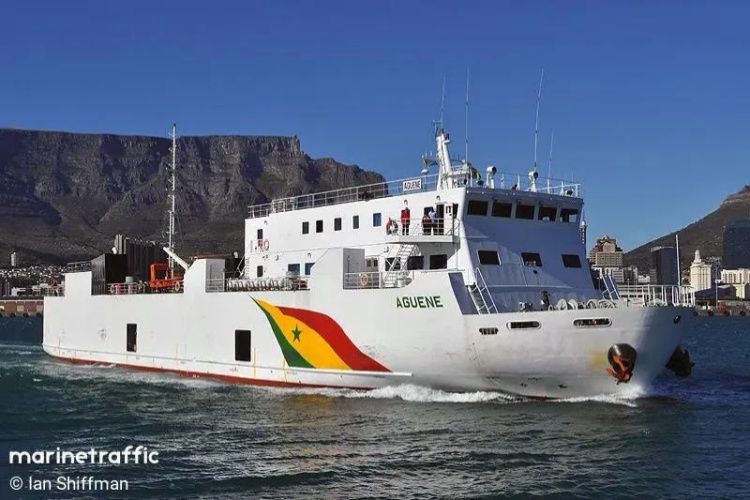
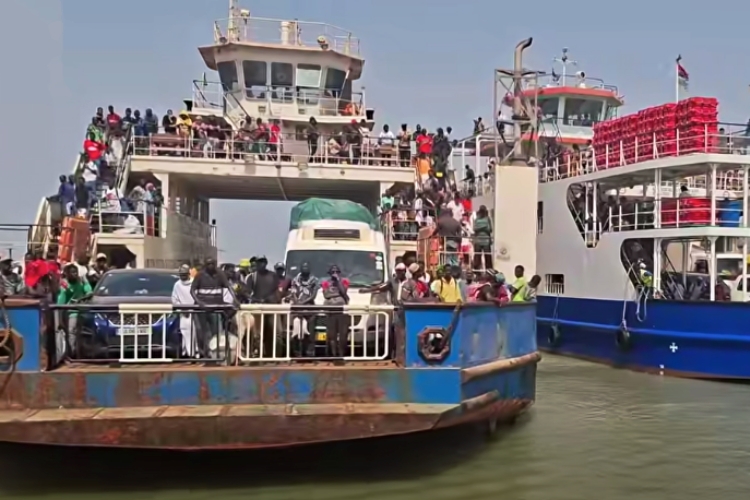
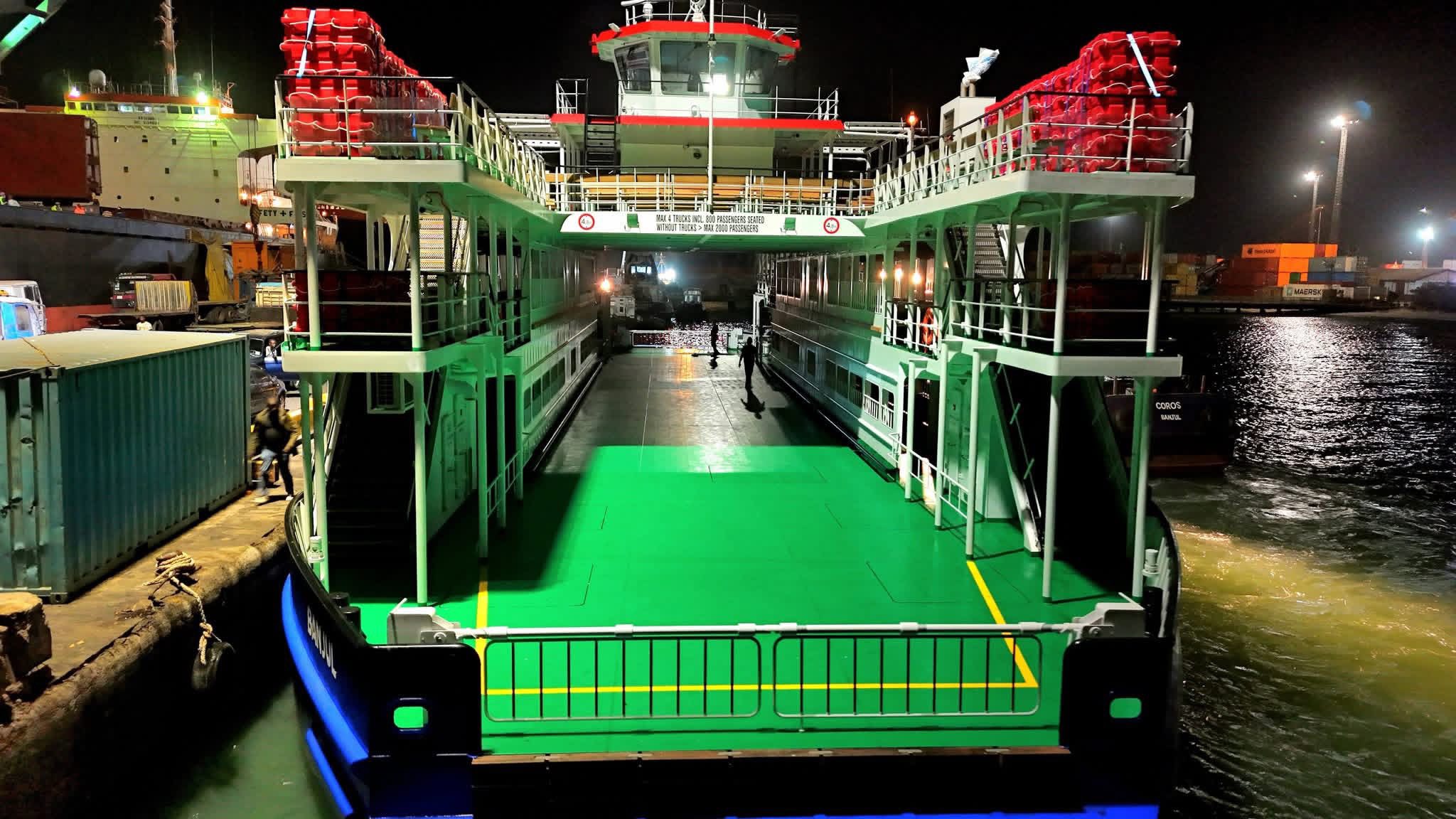
Aguène, the Senegalese vessel that rescued the distressed crew of the BRIKA
On August 3, 2021, the Senegalese freight and passenger vessel Aguène, operated by COSAMA SA, departed Ziguinchor at 2 p.m. on its scheduled commercial voyage to Dakar.
Everything about the departure had been routine.
Captain Thione Fally Sène had completed the standard safety inspections. The vessel was seaworthy. Equipment functioned normally. Watertight doors were secured. Lifeboats were ready.
On board were 149 passengers, including children and infants, along with 17 crew members, security personnel, a river pilot, and more than 222 tonnes of cargo.
Nothing suggested the voyage would become a rescue mission.
Then, at precisely 11:12 p.m., the officer on watch received an emergency distress call over VHF radio.
A nearby fishing vessel – BRIKA – was taking on water.
Its reported position placed it barely one nautical mile away.
Racing against time
Captain Sène immediately established radio contact.
The message was alarming.
Water was flooding the fishing vessel through a hull breach.
The crew feared they would not stay afloat much longer.
Following maritime protocol, the captain repeatedly attempted to alert Senegalese naval authorities and the Elinkine station on VHF Channel 69 and MF/HF frequencies.
No response came.
With every passing minute, the chances of the fishing vessel remaining afloat diminished.
Rather than wait indefinitely for assistance that might never arrive, Captain Sène gathered his senior officers.
Together, they made a decision that would define the night.
They would suspend their commercial voyage and carry out the rescue themselves.
Into the darkness
The decision transformed the passenger ferry into an emergency rescue vessel.
Within minutes, the crew prepared and launched a rescue boat into the darkness.
Night-time maritime rescues rank among the most dangerous operations at sea.
Visibility is limited.
Sea conditions become harder to judge.
A mistake during transfer can send both rescuers and survivors into the water.
Yet the Aguène crew proceeded with remarkable discipline.
Shortly after midnight, navigation equipment was reconfigured for close-quarters operations.
The ferry carefully anchored in approximately 30 meters of water, positioning itself to receive survivors safely while maintaining stability.
What followed was nearly three hours of painstaking rescue work.
Twenty-seven lives
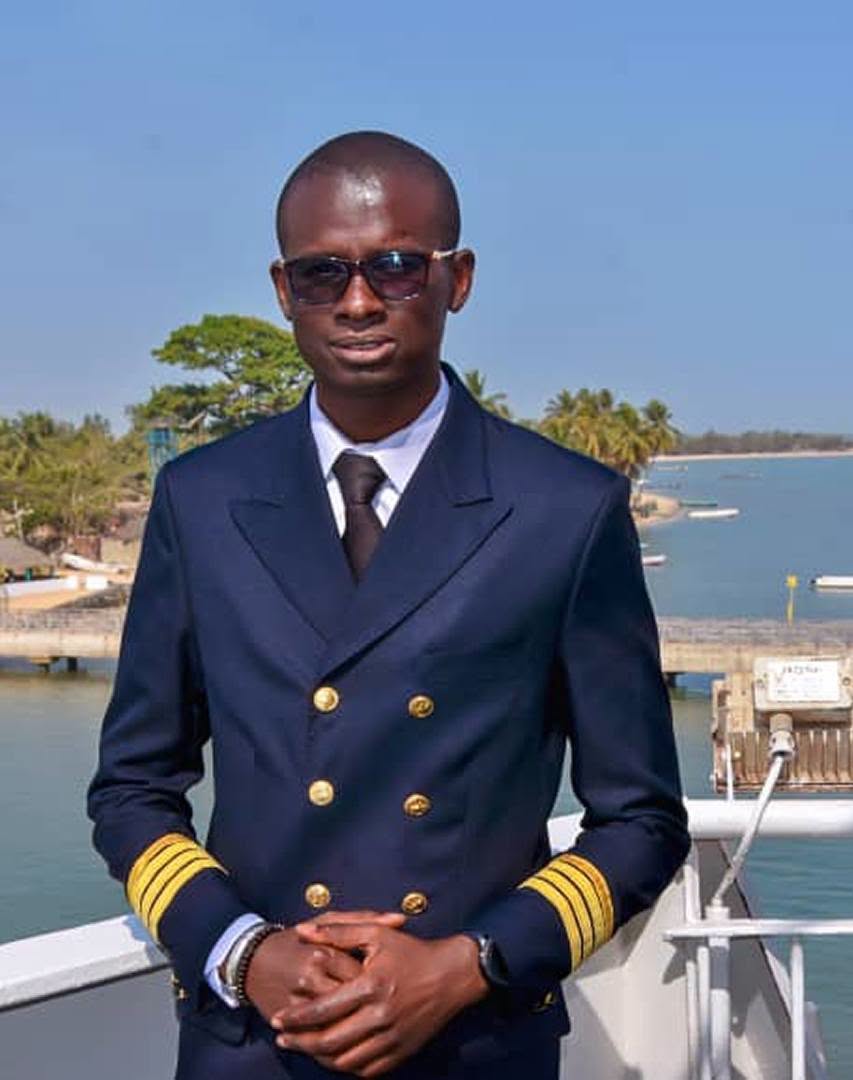
Senegal’s National Agency for Maritime Affairs (ANAM) formally honored Captain Thione Fally Sène and his crew
The survivors could not all be evacuated at once.
Instead, the rescue unfolded in carefully managed waves.
At 12:34 a.m., the first group, 11 exhausted fishermen, arrived aboard Aguène.
At 1:03 a.m., another 10 followed.
Nearly an hour later, at 1:58 a.m., the final six were brought aboard.
Each return trip required the rescue boat to head back into darkness toward a vessel steadily sinking beneath the waves.
There was no rushing.
No panic.
Only precision.
By 2:04 a.m., every member of BRIKA’s crew had been safely evacuated.
The rescue boat returned.
The anchor was weighed.
At 2:15 a.m., Aguène resumed its interrupted voyage to Dakar.
The passenger manifest had grown unexpectedly, from 149 passengers to 176 people, including 27 rescued fishermen from Senegal, Indonesia, Guinea-Bissau, Mali, Sierra Leone, and Spain.
Everyone survived, but questions remained
Unlike many maritime disasters, there was no tragic loss of life.
All crew members survived.
Among them were seven Indonesian nationals who were later accommodated in Dakar before being repatriated by their government, arriving safely in Jakarta on August 23, 2021.
Yet once the rescue ended, public information about the sinking became remarkably scarce.
The reported cause, a hull leak or structural breach that allowed water to flood the vessel, appeared straightforward.
What remains unclear is why the flooding became uncontrollable, whether mechanical failure, maintenance shortcomings, or structural damage contributed, and whether broader regulatory lessons were identified.
No public maritime inquiry has ever been released by Gambian or Senegalese authorities.
Because the incident resulted in no fatalities, the investigation appears to have been handled internally between the operating company and marine insurance investigators responsible for settling the vessel’s loss.
That may be procedurally common for insured fishing vessels, but it leaves significant gaps in public accountability.
Without a published investigation, there is little opportunity for regulators, fishermen, or maritime safety experts to understand whether similar risks continue to exist elsewhere in the region’s fishing fleet.
Recognition that arrived years later
For Captain Thione Fally Sène and his crew, recognition came only five years after the rescue.
During celebrations marking the International Day of the Seafarer on June 25 this year, Senegal’s National Agency for Maritime Affairs (ANAM) formally honored the captain and his crew for what it described as exemplary professionalism and courage.
The award recognized more than individual bravery.
It acknowledged a decision made collectively by an entire crew to interrupt a commercial voyage, place themselves at risk, and save strangers without waiting for official rescue services.
Beyond heroism
The story of BRIKA is ultimately about more than one vessel that sank.
It illustrates both the strengths and weaknesses of maritime governance in West Africa.
On one hand, it highlights the unwritten code that binds professional mariners: when a distress call comes, every vessel has a duty to respond, regardless of nationality or commercial schedule.
On the other hand, it exposes how opaque ownership structures, dual registration arrangements, and the absence of publicly available investigation reports can leave important safety questions unanswered even after major incidents.
Five years after BRIKA slipped beneath the Atlantic, the fishing vessel has largely faded from public memory.
The crew that saved its 27 occupants has not.
Their actions stand as a reminder that, even amid regulatory ambiguity and institutional silence, courage and professionalism at sea remain the final line of defense when everything else fails.






Leave a Reply