


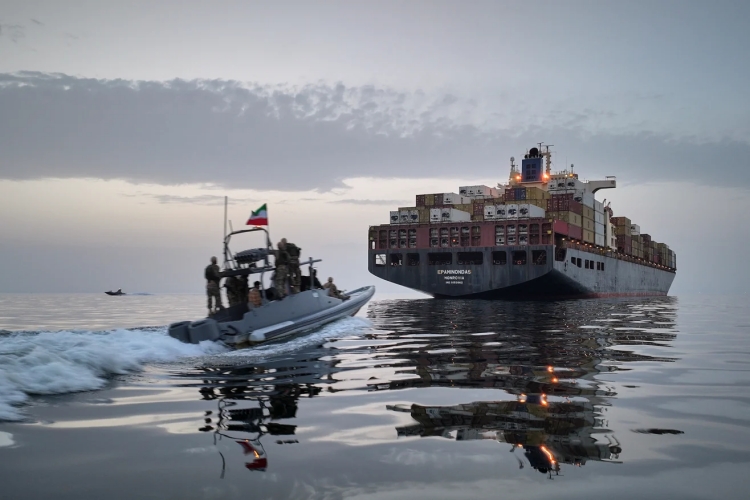
Gambiaj.com – (TEHRAN, Iran) – Iran has moved to formalize its control over the strategically vital Strait of Hormuz by introducing new rules requiring ships to seek authorization before transiting the waterway, a development analysts say could fundamentally reshape global energy trade and hand Tehran enormous geopolitical leverage.
According to documents seen by CNN, Iran’s newly established Persian Gulf Strait Authority (PGSA) has begun issuing a mandatory “Vessel Information Declaration” form that all ships must complete before entering the strait. The move comes months after Tehran warned that vessels passing through the narrow chokepoint without approval from the Islamic Revolutionary Guard Corps (IRGC) navy could face attack.
Tehran Introduces Mandatory Transit Approval System as Oil Chokepoint Becomes Strategic Revenue Tool
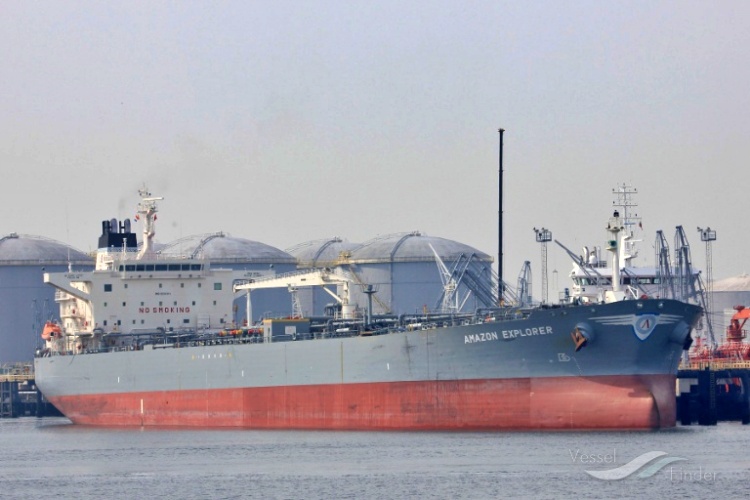
The Strait of Hormuz, located between Iran and Oman, carries roughly one-fifth of the world’s oil and liquefied natural gas supplies. Any long-term Iranian control over the corridor is expected to have far-reaching consequences for global fuel prices, shipping insurance costs, and international trade flows.
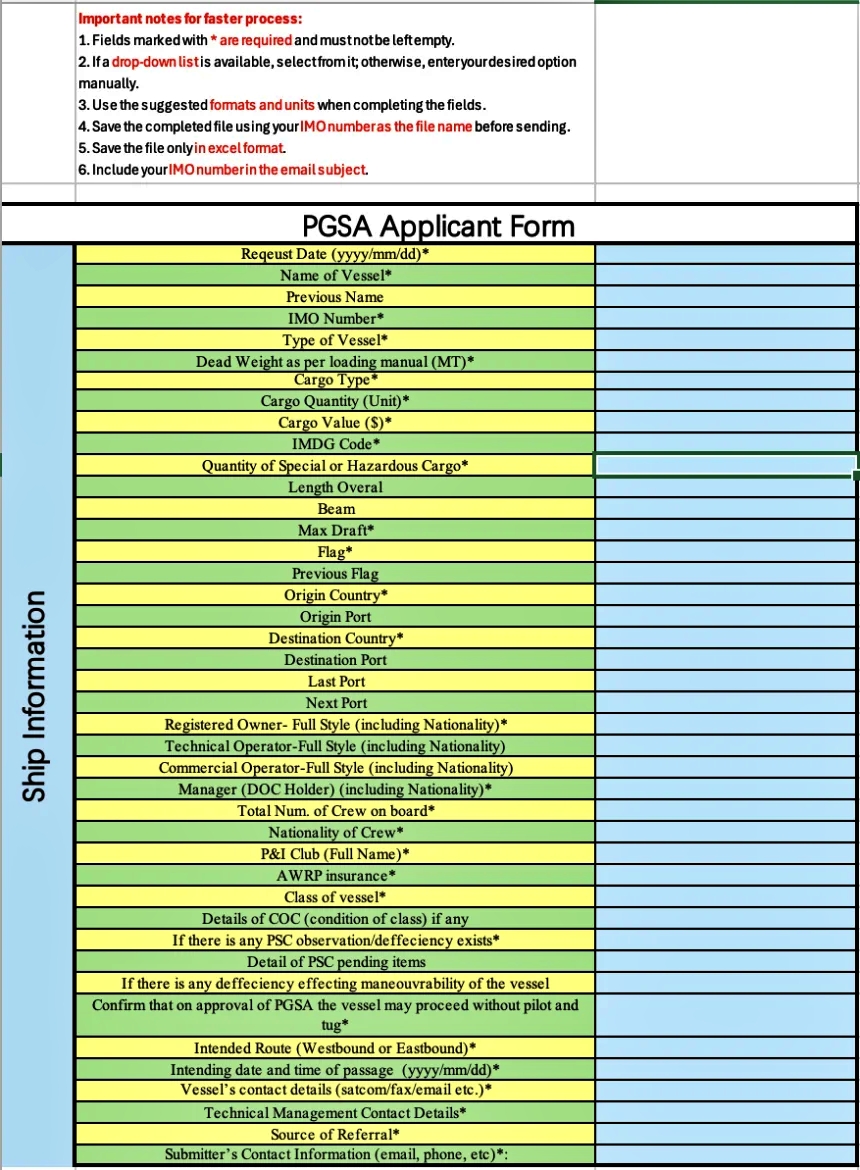
Iran sets out a set of rules for shipping in the Strait of Hormuz. Lloyd’s List Intelligence
Under the new system, vessels must disclose extensive details, including ownership, crew nationalities, cargo information, destination, and previous vessel names, before being granted passage.
Shipping analysts say the measure marks a dramatic shift from the previous open-navigation arrangement that existed before the escalation of conflict between Iran, the United States, and Israel earlier this year.
“This formalizes the structure and appears to be a play by Iran to normalize its authority over transits,” said Richard Meade of maritime intelligence service.
Iranian authorities have not officially stated whether ships will be charged for passage, but reports indicate Tehran may already be demanding up to $2 million per vessel.
If enforced systematically, the policy could effectively transform the strait into a major revenue stream for Iran as it seeks funds to rebuild infrastructure damaged during recent military strikes.
The development also raises serious legal and diplomatic concerns. The US Treasury Department has already warned that payments made to Iran or the IRGC for safe passage would violate US sanctions for American entities and institutions.
Analysts say Iran’s strategy appears aimed not only at security control but also at monetizing one of the world’s most important maritime chokepoints.
Iran’s Supreme Leader, Mojtaba Khamenei, has openly linked control of the strait to what he described as a “new regional and global order under the strategy of a strong Iran.”
In statements posted this week, Khamenei argued that foreign powers should have no role in the Persian Gulf and pointed specifically to “using the leverage of closing the strait” as part of Iran’s broader geopolitical vision.
Global Shipping Traffic Collapses Amid Fears Iran Could Permanently Control Key Energy Route
The new rules are already affecting global shipping activity. Maritime data shows traffic through the strait has collapsed sharply, with only 40 ships crossing during the week ending May 3, compared to a pre-war average of around 120 crossings per day.
On Thursday, tanker and freight movement through the chokepoint was reported to be nearly nonexistent as tensions between Tehran and Washington deepened.
Industry experts warn that even partial Iranian control over Hormuz could permanently disrupt global energy markets.
Matt Wright of marine intelligence firm Kpler estimated that, under long-term Iranian dominance of the waterway, shipping activity may recover to only about half of previous export capacity, making full normalization unlikely.
The consequences are already being felt globally. Oil supply disruptions linked to the closure of the strait have triggered sharp increases in energy prices, with US gasoline prices reportedly climbing above $4.50 per gallon for the first time in four years.
The situation has also left thousands of civilian sailors stranded in the Persian Gulf.
“Mariners are not soldiers,” Dimitris Maniatis, CEO of maritime risk consultancy Marisks, told CNN. “They are civilians managing global trade. They should not be caught in a situation like this.”
The United States has repeatedly stated that it would not accept permanent Iranian control over the chokepoint. However, analysts warn that Tehran’s increasingly institutionalized authority over Hormuz may prove difficult to reverse if the current conflict continues.








Leave a Reply