



Gambiaj.com – (BANJUL, The Gambia) – Political parties have again questioned discrepancies in figures released by the Independent Electoral Commission (IEC) for the supplementary voter registration exercise, seeking explanations for differences between the total number of registrations announced by the Commission and the data shared with political parties.
The issue was raised during the IEC’s August 2026 stakeholder forum, where opposition party representatives pressed the Commission to clarify the figures presented for the recently completed registration exercise.
A representative of the United Democratic Party (UDP) challenged the IEC’s announcement that the supplementary voter registration exercise recorded 212,095 registrations, arguing that the electronic data provided to political parties reflected substantially fewer records.
According to the UDP representative, the flash drive distributed by the Commission contained 179,445 records. Even after taking into account deleted duplicate registrations and additional registrants, the figures still did not reconcile with the total of 212,095 announced by the IEC.
“Our concern is the 212,095. We want to know where those figures are coming from,” the representative said, calling on the Commission to provide a detailed breakdown of the statistics.
Representatives of other political parties echoed the concern, urging the IEC to release detailed data on edited records, replacement voter cards, reprinted cards, damaged cards, and deleted duplicate registrations to allow parties to independently verify the Commission’s figures.
IEC Explains the Figures
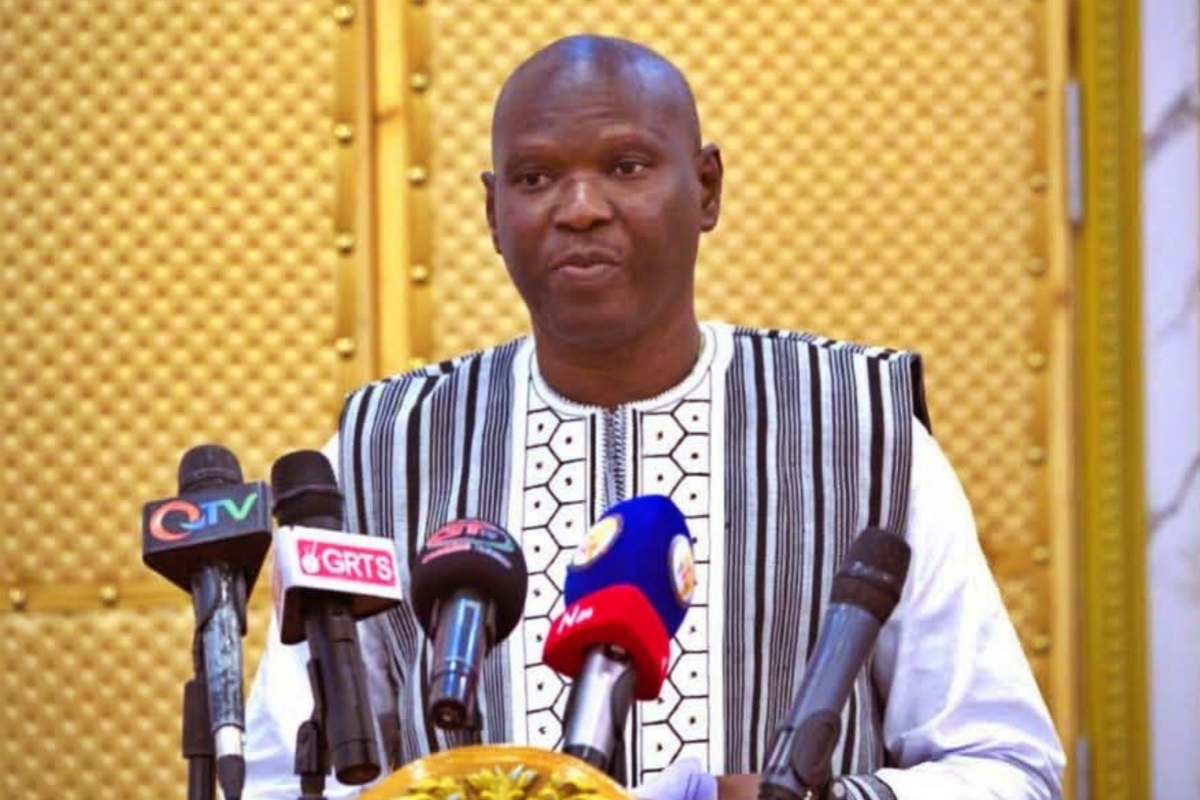
Responding to the concerns, IEC Chief Executive Officer Sambujang Njie said the figure of 212,095 represented the total output generated during the supplementary voter registration exercise before the final verification and validation of the data.
He explained that the total comprised not only new voter registrations but also edited records, replacement and reprinted voter cards, damaged cards, and other processing outputs generated during the exercise.
Mr. Njie stressed that no eligible voter had been omitted from the provisional supplementary register after data processing, except those removed because of confirmed double registration.
“There is no registered voter who has been omitted from the provisional register after the processing of the data, except those deleted because of double registration,” he said.
He added that the provisional register remains subject to the ongoing revising court process, during which objections and appeals are being heard, and that the final register would be shared with all registered political parties once the legal process is completed.
IEC Defends Integrity of Process
IEC Vice Chairman Cherno M. Jallow also defended the Commission’s handling of the exercise, assuring stakeholders that the integrity and credibility of the voter register remained paramount.
“I can assure you that I would not be a party to anything that would impact the integrity and credibility of the voter register,” Mr. Jallow said.
He further stated that the Commission had “nothing to hide” and remained committed to carrying out its constitutional mandate in accordance with the country’s electoral laws while maintaining public confidence in the electoral process.
The exchange comes as the IEC intensifies preparations for The Gambia’s 2026 presidential election. Once the revising courts conclude their work, the validated supplementary register will be merged with the 2021 register to produce the final register of voters for the election.












Leave a Reply