


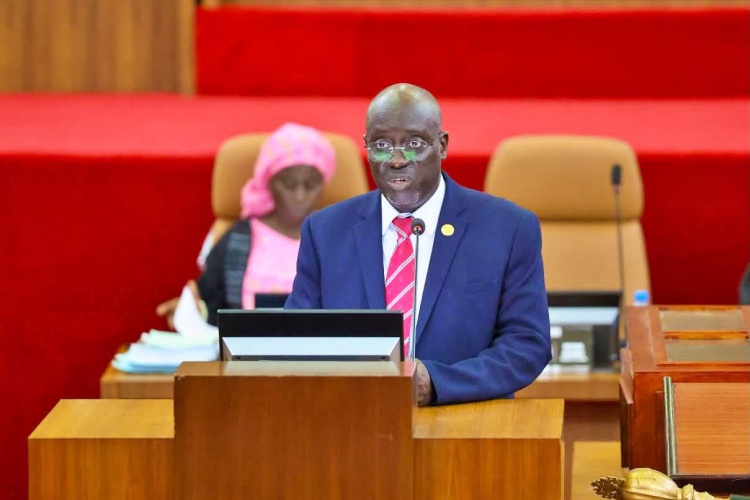
Gambiaj.com – (BANJUL, The Gambia) – The Gambia’s debt servicing bill is projected to rise to D16.17 billion in 2027, with interest payments on domestic debt expected to increase by 34 percent, the government has told the National Assembly.
Mod K. Ceesay, Minister of Trade, Industry, Regional Integration and Employment, who appeared on behalf of Finance and Economic Affairs Minister Seedy Keita during debate on the 2027 budget estimates, acknowledged that projected domestic debt interest payments would exceed government spending on education.
“I will not stand here and pretend this is a comfortable position. It is not,” Mr Ceesay told lawmakers.
The projected D16.17 billion debt servicing bill represents a 20.2 percent increase from the D13.46 billion projected for 2026. According to the minister, the increase is driven largely by higher interest payments on domestic debt.
He said debt servicing would account for approximately 33 percent of the government’s total projected revenue in 2027, underscoring the growing pressure of debt obligations on public finances.
Government defends borrowing
Responding to concerns over the country’s rising debt burden, Mr Ceesay argued that comparisons between the current administration’s debt position and those of previous governments should take into account the debt relief and restructuring arrangements secured by earlier administrations.
He said previous governments had benefited from debt cancellation, while the current administration had largely received debt restructuring rather than outright cancellation.
The minister also defended government borrowing, arguing that it had financed public infrastructure, including roads, hospitals and the expansion of electricity supply.
He said the assets created through borrowing should be considered when assessing the country’s overall debt position.
Pressure on public spending
Mr Ceesay said the government remained committed to fiscal consolidation, stronger domestic revenue mobilisation and the management of contingent liabilities linked to state-owned enterprises and public-private partnerships.
However, the projected rise in debt servicing is expected to further constrain the government’s fiscal space as it prepares its 2027 spending program.
The minister’s acknowledgement that debt servicing will exceed education spending highlights the growing competition for limited public resources, with the government facing the challenge of meeting its debt obligations while continuing to finance essential services.
The 2027 budget estimates are currently before the National Assembly, where lawmakers are scrutinising the government’s proposed revenue and expenditure plans for the coming fiscal year.











Leave a Reply