


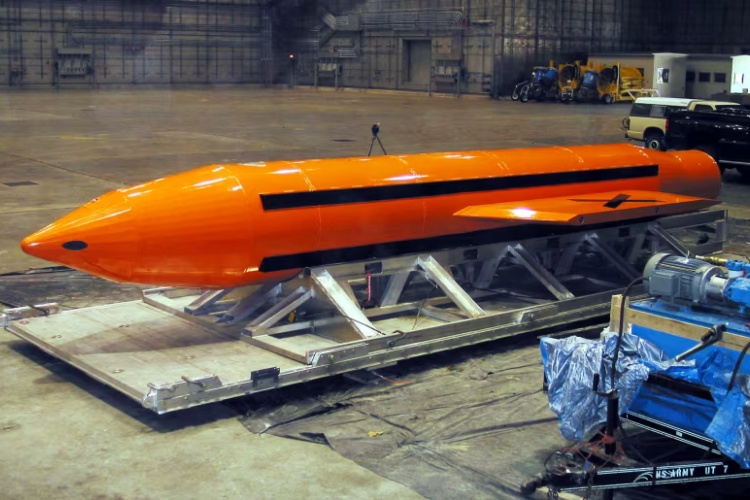
Gambiaj.com – (WASHINGTON, United States). The United States military has developed new strike options that could include the use of the GBU-43/B Massive Ordnance Air Blast bomb, widely known as the “Mother of All Bombs” or MOAB, against Iranian energy infrastructure and nuclear sites, according to multiple US officials familiar with military planning.
The potential deployment of the 21,600-pound bomb would represent a significant escalation in the conflict, which has continued for more than six months despite Washington’s efforts to find a way to bring the fighting to an end.
US officials told CNN that President Donald Trump has ordered the military to prepare additional strike packages against Iranian targets, including “a lot of energy infrastructure” and possible use of the MOAB. One source said the plans could be carried out before US forces begin withdrawing from the US Central Command area of responsibility.
Another official said military plans for potential strikes on Iranian nuclear sites, including Pickaxe Mountain, specifically include the MOAB as one of the available options.
Questions Over Military Effectiveness
Despite its enormous destructive power, military officials and analysts have questioned whether the MOAB would be effective against Iran’s most heavily fortified nuclear facilities.
The GPS-guided weapon is designed to produce a massive blast over a wide area, but it is not a deep-penetration bomb. Sources said it may therefore be unable to destroy facilities buried deep underground and protected by layers of granite.
One source familiar with military planning described the MOAB primarily as a weapon capable of producing a major psychological effect and clearing large areas, rather than penetrating deeply buried targets.
The bomb could nevertheless cause extensive destruction at the surface, raising concerns about civilian casualties if it were used against infrastructure near populated areas.
Political Pressure To End The War
The potential plans come as Trump faces political pressure to bring the conflict to an end. Republicans are preparing for the US midterm elections, while the war has become increasingly unpopular among sections of the American public.
Trump has publicly said he would not take new military action before the midterms, although administration officials have privately acknowledged uncertainty over whether that position could change.
The president has also stopped short of declaring victory, saying the United States still has unfinished business in Iran.
According to US officials, the White House and military planners have been examining options that could provide Trump with what one official described as a “symbolic” victory while creating an opportunity to end the conflict.
Some military options have reportedly been characterized internally as a “fireworks show” designed to provide an off-ramp from the war, even if they do not achieve all of the original military objectives.
MOAB’s Psychological Role
The MOAB was developed during the Iraq War and was initially conceived partly as a psychological weapon intended to intimidate enemy forces and encourage surrender.
The United States first used the weapon operationally in 2017, when Trump authorized its deployment against Islamic State positions in Afghanistan. The strike targeted an underground tunnel complex and, according to US and Afghan officials at the time, killed 36 Islamic State fighters without civilian casualties.
Military officials could face similar questions over the necessity and effectiveness of the weapon if it is deployed against Iran.
The Pentagon has continued preparing for a range of possible scenarios, including potential Iranian retaliation, while US officials say Trump has not expressed an interest in sending American ground troops into Iran.
A White House official said the administration does not comment on sensitive military plans but reiterated that Trump is keeping “all options on the table” to prevent Iran from obtaining a nuclear weapon.
The Pentagon said it develops plans for “a wide range of operational scenarios” to implement presidential and defense leadership directives and ensure mission success.


















Leave a Reply