


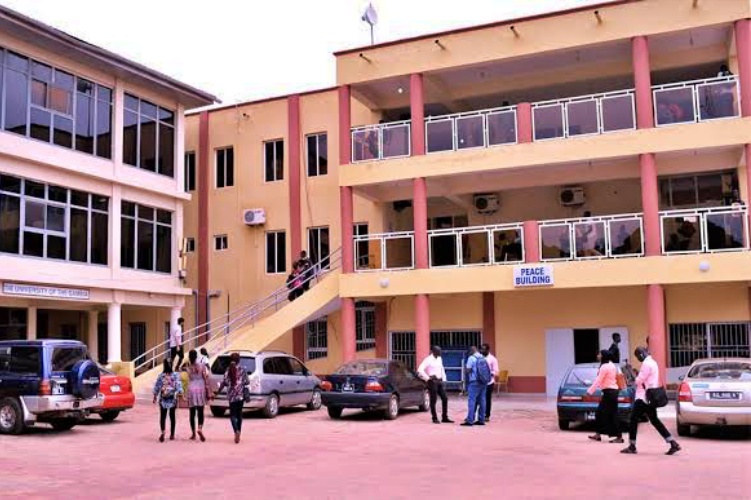
Gambiaj.com – (KANIFING, THE GAMBIA). The University of The Gambia is heading into a potentially tense Monday as students prepare to take to the streets despite a government intervention aimed at addressing the very grievances and other problems at the Faraba Campus that triggered the protest.
The University of The Gambia Students’ Union (UTGSU) says it will proceed with a peaceful demonstration on October 26, arguing that weeks of engagement with university authorities have failed to deliver meaningful improvements in students’ daily lives.
The protest is expected to bring students together at the Peace Building at the University Chancery in Kanifing from 9:00am, with the union calling for concrete action on transportation, catering, water supply and internet connectivity.
The decision to proceed has created an unusual situation: the government announced a package of immediate measures on Saturday, just two days before the planned demonstration, but the students have maintained that the problems have persisted for too long for another set of assurances to halt their action.
Government Moves As Protest Gains Momentum
The government’s intervention came after a high-level stakeholder meeting on Saturday to consider the concerns raised by UTG students.
The Ministry of Higher Education, Research, Science and Technology announced that catering services would be restored from Monday, using the previous caterers or alternative providers while the university completes its procurement process for a longer-term arrangement.
The government also announced additional water dispensers and directed NAWEC and university management to work on sustainable solutions to improve water supply.
On internet access, the university is expected to engage telecommunications providers and maximize the use of the Gambia Research and Education Network to improve connectivity for teaching, research and innovation.
Transportation has perhaps been the most immediate intervention. The Gambia Transport Service Company is expected to deploy its full fleet of 20 buses from Monday in an effort to ease the difficulties experienced by students.
The government has urged students and other stakeholders to continue with dialogue and constructive engagement as the measures are implemented.
But the announcement has not persuaded the students’ union to call off the protest.
A Crisis Of Confidence
For UTGSU, the issue is no longer simply whether government has promised solutions. It is whether students can trust that the latest commitments will translate into services they can actually experience on campus.
The union says it has spent weeks engaging the authorities without obtaining satisfactory outcomes.
“Patience must not be mistaken for weakness, and silence must not be demanded in the face of unresolved concerns,” UTGSU said.
The union maintains that access to transportation, food, potable water and reliable internet are basic requirements for students rather than privileges that should require prolonged negotiation.
It has therefore directed that no lectures take place at Faraba Campus on Monday and that no buses operate on the Faraba route during the protest.
That position places the government’s latest measures under immediate scrutiny. The success of the intervention may now depend not only on whether the promised services are delivered, but also on whether students believe the measures represent a durable solution rather than a response to mounting pressure.
Protest Gains Wider Student Support
What began as a UTGSU call for action has also attracted support from several student associations, giving the protest a broader institutional base within the university.
The School of Social Sciences and Humanities Students’ Association, the School of Business and Public Administration students through ECOMANSA, the Law Students’ Association, the School of Agriculture and Environmental Sciences Students’ Association, the Nursing Students’ Association, the Pan-African Students’ Association and the Journalism Students’ Association have all expressed solidarity with the protest.
The associations have cited largely the same concerns: inadequate transportation, the absence of a functioning cafeteria, inadequate access to potable water and unreliable internet connectivity.
The School of Social Sciences and Humanities Students’ Association has also raised concerns about reports that some lecturers may be threatening students with academic consequences for participating in the protest or missing classes.
It has warned that credible cases of intimidation or academic retaliation would be taken seriously, while calling on students to remain peaceful and respect due process.
The School of Business and Public Administration has similarly sought to reassure students that efforts would be made to address academic activities missed because of participation in the protest.
Monday’s Test
The government’s announcement means Monday’s demonstration will be more than a protest over poor services. It is likely to become a test of whether the latest commitments can begin to rebuild confidence between students, university management and the government.
For the authorities, the immediate challenge is implementation. The promised 20 buses, restored catering, additional water facilities and improved internet connectivity will now be measured against students’ experience on the ground.
For UTGSU, however, the protest is about accountability as much as immediate relief.
The union has called on students to participate peacefully and has warned them against damaging property, threatening anyone or allowing themselves to be provoked.
“Let our unity, conduct, and clear demands demonstrate the seriousness of our concerns,” it said.
With several student associations now behind the action, the authorities face a difficult balancing act: demonstrate that the weekend measures are genuine and immediate while avoiding a confrontation with a student body that believes it has already waited long enough.
The outcome of Monday’s protest could therefore determine whether the government’s latest intervention becomes the beginning of a lasting resolution or simply another chapter in the long-running dispute over conditions at the University of The Gambia.















Leave a Reply